History of Windham New Hampshire

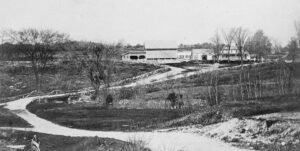
Residence of William H Anderson of Windham, New Hampshire

Leonard A. Morrison’s *The History of Windham, New Hampshire*, published in 1883, chronicles the town’s evolution from early settlements in the 18th century to the late 19th century. It highlights Windham’s roots in the Scotch-Irish Londonderry community and examines various aspects of local life, including land grants, education, and political developments. The work also documents significant historical events and includes extensive genealogies of the area’s early settlers and their descendants, drawing from comprehensive local records and archives.

Early Records of Londonderry, Windham, and Derry, NH

Early Records of Londonderry, Windham, and Derry, N.H. 1719-1762, Vol. 1 title page

The sources from which the Early Records of Londonderry, Windham, and Derry, N.H. have been drawn are Volumes I and II of the old town books. These old town books include minutes, ear markings, surveyors and homestead records, tax lists, inventory lists, accounts, school records and other miscellaneous records.

Sabots and slippers

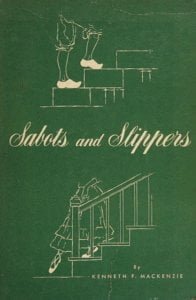
Sabots and Slippers cover

Sabots and slippers is a fancy title for a history and a genealogy of the ancestors of Kenneth F. Mackenzie born 7 Oct 1882 in Truro, Nova Scotia the son of Hugh Mackenzie and Jean Walker Blanchard. He married 23 June 1910 Aileen Sinclair. The families lived in Nova Scotia and New England.

The Settlers of Narraguagus Valley Maine

Narraguagus Valley Some Account of its Early Settlement and Settlers

The early settlement of the Narraguagus River in Washington County, Maine, involved significant developments in nearby towns such as Steuben, Milbridge, Harrington, and Cherryfield. Established between 1791 and 1816, these towns evolved from former townships. Key early settlers included Jabez Dorman, John Densmore, Ichabod Willey, and Samuel Colson, who arrived around 1757. Their families contributed to the growth of the region, establishing roots and communal records that reflect the intertwined histories of these communities. Notably, many surnames from the early settlers persist in the area today.

Campbell Genealogy of Narraguagus Valley Maine

Narraguagus Valley Some Account of its Early Settlement and Settlers

Between 1766 and 1768, Alexander Campbell relocated from Damariscotta to Steuben, where he established the first mill at Tunk. Born in 1731, he married Betsey Nickels and had several children. The family moved to Shipyard Point around 1772, eventually building a house on a hill in 1790. Active in the Revolutionary War, Campbell served as an adviser to Col. John Allan. He passed away in 1807, leaving behind a large family with multiple descendants contributing to the region’s history.

Descendants of Rev James Keith of Bridgewater MA

Walkover Shoe

The Keith family from Bridgewater, MA, boasts a lineage tracing back to Rev. James Keith, who began ministering there in 1661. They were integral to the area’s development, with roots in the early colonial settlement of the Old Colony. Descendants like Franklin Keith contributed significantly to Brockton’s business landscape, particularly in shoe manufacturing. The family, linked to Scottish nobility, has produced numerous distinguished individuals over centuries, underscoring their lasting impact on the community and its growth.

Genealogical and Family History of Vermont

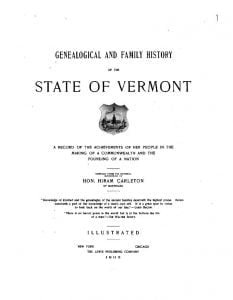
Genealogical and Family History of the State of Vermont vol 1

Hiram Charlton took on the publication of the Genealogical and Family History of the State of Vermont for Lewis Publishing. In it, he enlisted the assistance of living residents of the state in providing biographical and genealogical details about their family, and then he published all 1104 family histories in two distinct volumes.

Surnames Abbott to Austin

This document contains genealogical statements regarding various individuals and families of Creek, Choctaw, Chickasaw, and Mississippi Choctaw descent who sought recognition and enrollment in tribal rolls. The records, primarily from 1909 reports, detail claimants’ ancestry, enrollment issues, and tribal affiliations. Many individuals were denied enrollment due to factional disputes, legal technicalities, or failure to apply within deadlines. The document includes references to official reports and affidavits, offering insights into the complexities of Native American citizenship and land rights during the early 20th century.

List 2, Creeks

List of Creeks and Creek Freedmen, whose names were omitted from final rolls because no application was made or by reason of mistake or oversight. Shows the names of 62 persons of Creek blood and of 2 Creek freedmen all of whom except 10 are minors. Since the approved rolls of Creek citizens by blood contain 11,967 names, and the rolls of Creek freedmen contain 6,837 names, it is seen that the percentage of omissions is remarkably small.