History of Bolton Connecticut

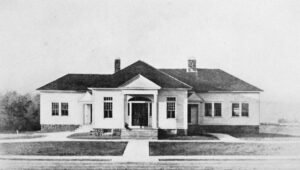
Bolton Connecticut Hall and Library

This history of Bolton, Connecticut, is a commemorative sketch prepared by Samuel Morgan Alvord for the town’s 1920 bicentennial. It emphasizes the role of small New England communities in carrying Pilgrim and Puritan traditions into the broader nation. The narrative outlines the earliest land dealings, shaped by General Court grants and by the complicated claims arising from the large tracts associated with Joshua, son of Uncas, the Mohegan sachem. Following Bolton’s incorporation in 1720, the account turns to the organization of the Congregational Church, including the town’s early call to Jonathan Edwards and the long service of Rev. Thomas White. The work then follows Bolton’s civic, religious, and household development and closes with notes on its industries and leading residents.

Vital Records of Coventry Connecticut 1711-1844

Coventry Connecticut Vital Records 1711-1844, title page

This volume brings together the vital records of Coventry, Connecticut, covering the years 1711 to 1844. The opening section outlines the early history of Coventry’s settlement, beginning with the land grant from Joshua, son of Uncas, chief of the Mohegans, and the subsequent action by the General Assembly to organize and name the town. The main body of the work arranges the records alphabetically by surname, listing names, dates, and family relationships, with occasional notes on illegitimacy, prior residence, or military service. Together, these records preserve key details of the town’s earliest generations. Included are entries drawn from both town and church sources.

Vital Records of Mansfield Connecticut 1703-1850

Mansfield Connecticut Vital Records 1703-1850, title page

This volume contains a carefully prepared transcription of the vital records of Mansfield, Connecticut, covering the years 1703 to 1850. Compiled by Susan W. Dimock, its purpose is to preserve and make accessible the town’s early historical data. That information includes lists of births, baptisms, marriages, and deaths drawn from both town and church records. The introductory section outlines Mansfield’s early history, beginning with its origins in land once held by a Mohegan chief. The main body of the work arranges the records alphabetically by surname, listing names, dates, and family relationships, with occasional notes on illegitimacy, prior residence, or military service.

Abbe-Abbey Genealogy

A genealogical dictionary of the first settlers of New England vol 1

The “Abbe-Abbey Genealogy” serves as a comprehensive and meticulously compiled homage to the heritage of the Abbe and Abbey families, tracing its roots back to John Abbe and his descendants. Initiated by the life-long passion of Professor Cleveland Abbe, this genealogical exploration began in his youth and expanded throughout his illustrious career, despite numerous challenges. It encapsulates the collaborative efforts of numerous family members and researchers, including significant contributions from individuals such as Charles E. Abbe, Norah D. Abbe, and many others, each bringing invaluable insights and data to enrich the family’s narrative.

Olcott Family of Norwich Vermont

Hon. Peter Olcott, born on April 25, 1733, in Bolton, Connecticut, moved to Norwich, Vermont, in the 1770s. He was a prominent community leader, serving in various public offices including first justice of the peace and Lieutenant Governor. His influence helped establish the town’s first meeting house and burying ground. Olcott was also active in military affairs during the American Revolution. He died on September 12, 1808, leaving a legacy through his numerous children and significant contributions to Norwich’s early governance and development.

Johnson Family of Norwich Vermont

The Johnson Family played a pivotal role in the early history of Norwich, Vermont. Captain Hezekiah Johnson, born in 1724 in Woburn, Massachusetts, was an original proprietor and early settler, established near the Pompanoosuc River. He held numerous offices, including selectman, and contributed to the town’s development and safety during the Revolutionary War. Johnson was also generous to Dartmouth College. He passed away in 1806, leaving a legacy through his children, including Samuel Slafter Johnson and Dorothy, who married Jeremiah Hedges, further intertwining family connections in the community.

Cushman Family of Norwich Vermont

The Cushman family, tracing its origins to Robert Cushman in 1621, played a significant role in early New England history. Solomon Cushman, a sixth-generation descendant, moved to Norwich, Vermont, in 1768. A renowned marksman and Revolutionary War veteran, he later settled in Tunbridge, where he died in 1799. Another Solomon Cushman arrived in Norwich shortly after, bringing his family. Joseph Cushman, Solomon’s brother, also settled in Norwich and served in the Revolutionary War before passing away at age eighty-nine in 1848.

Biography of Doctor Thomas S. Brigham

Doctor Thomas S. Brigham, born in Coventry, Connecticut, in 1769, was the eldest son of Honorable Paul Brigham. He moved to Norwich at age twelve and likely studied medicine with Doctor Joseph Lewis. Brigham married Polly Dana and practiced medicine in Norwich before relocating to Amesbury, Massachusetts, where he married again and had five more children. After practicing in Maine, he and his family remained apart following his departure from Norwich. Brigham gained considerable recognition in his medical career before his death in 1821.

Biography of Paul Brigham

Hon. Paul Brigham, born January 17, 1746, in Coventry, Connecticut, served as a Captain in the Continental Army from January 1777 to April 1781, participating in significant battles such as Germantown and Monmouth. After marrying Lydia Sawyer in 1767, he moved to Norwich, Connecticut, in 1782, where he built a notable residence on Brigham Hill. Brigham’s commitment to his country and his community is well-documented, with a diary providing insights into his experiences during the Revolutionary War. He died in 1810.

Biography of Honorable Daniel Buck

Daniel Buck, born on November 9, 1753, in Hebron, Connecticut, opened Norwich’s first law office in the mid-1780s after serving in the Revolutionary War. He became a respected attorney and public servant, representing Norwich at the 1791 convention considering Vermont’s admission to the Union. Buck served in the Vermont legislature and one term in the U.S. Congress. Despite his early success, his later years were marked by financial difficulties and personal struggles, leading to his death in Chelsea on August 16, 1816.

Boardman Family of Norwich Vermont

Samuel Borman emigrated from England to Wethersfield, Connecticut, in 1639, where he held various official roles until his death in 1673. A preserved letter from his mother, Julian, reveals family connections and concerns. His lineage includes Capt. Nathaniel Boardman, who relocated to Norwich, Vermont, in 1775 with his family. Doctor Nathaniel Boardman, his son, furthered the family legacy in Vermont and his descendants contributed to public service in Massachusetts. Halsey J. Boardman, a notable descendant, played significant political roles in Boston during the late 19th century.

Migration of Families out of Norwich VT

In the late 18th and early 19th centuries, Norwich, Vermont, experienced significant emigration, leading to a notable decline in its population. Initially home to 40 families in 1771, the town saw many residents relocate to newer settlements, such as Royalton and Randolph, during and after the Revolutionary War. Prominent families, including the Hibbards and Carpenters, contributed to the establishment of towns in northern Vermont and beyond. By the 1800s, the trend of outmigration intensified, marking a long-term shift in the region’s demographic landscape.

First Settlements in Norwich Vermont

The early settlement of Norwich, Vermont, began in 1762 when Samuel Slafter’s son, John, explored the area, reporting its fertile land and water sources. In 1763, after receiving his father’s rights, he commenced clearing lots but faced challenges, as his initial choice proved unsuitable. By 1765-66, a few families settled permanently, including the Hutchinsons and Manns, establishing homes and farms. Pioneers endured various hardships, yet they built foundations for a thriving community, characterized by a homogeneous population primarily from Connecticut.

The Proprietors of Norwich Vermont

The early proprietors of Norwich, Vermont, largely hailed from Connecticut towns such as Mansfield and Tolland, with some from New Hampshire and Massachusetts. While many grantees did not settle personally, they transferred their rights to their sons or younger acquaintances. Key early settlers included Captain Hezekiah Johnson and Jacob Fenton. The proprietors diligently organized land surveys, established roadways, and incentivized settlement through financial support, ultimately fostering rapid growth in the new township. Meetings continued until 1770, addressing land divisions and mill constructions.

The Founding of Norwich Vermont

In August 1761, the proprietors of the newly chartered township of Norwich, Vermont, convened in Mansfield, Connecticut, to initiate settlement in a largely uninhabited wilderness. They aimed to cultivate a six-square-mile tract along the Connecticut River, supported by the post-French and Indian War boom in population and security. The proprietors received their charter from New Hampshire’s Governor Wentworth and established conditions for land cultivation, including provisions for education and religion, while also reserving land for the governor.

Norwich Vermont an Independent Township

The political organization of America began with the Township, particularly in New England, where towns emerged as independent entities with self-governing rights in the mid-17th century. Town meetings served as foundational democratic institutions, allowing citizens to elect officials and manage local affairs. Norwich, Vermont, exemplified this tradition, organizing its town government in 1761 before any settlers arrived. Its early record-keeping and governance practices reflect a commitment to law, order, and community engagement, which have shaped its ongoing civic structure.

The Descendants of Daniel and Hannah Edwards of Coventry CT

The following short genealogy has been transcribed from The Descendants of Rufus Edwards and His Wife Ruth Huestis Edwards: A Genealogical Record, by Jennie Melissa Patterson Davidson. In the actual manuscript Rufus is the 5th generation, so I’ve titled this page The Descendants of Daniel and Hannah Edwards of Coventry CT, which is more reflective of the entire manuscript.

Biographical Sketch of John Henry Haskins

John Henry Haskins, born in 1843 in N. Wilbraham, Massachusetts, was a roofing contractor who founded J. H. Haskins Roofing Co. in Cleveland in 1878. He served as a sergeant in Company A of the 1st Connecticut Cavalry during the Civil War. Haskins was educated at Chapman Academy in Ellington, Connecticut, married Mary Carlisle in 1865, and had eleven children. He was involved in various professional organizations and served as president of the board of trustees at Franklin Avenue Methodist Episcopal Church.

Biography of D. P. Chapman

D. P. Chapman, born in 1836 in Connecticut, established a notable orange grove in Riverside, California, after a diverse career that included mercantile ventures and military service during the Civil War. He served in the Ninety-third Illinois Volunteer Infantry, where he rose to Sergeant before being wounded. After the war, he was active in state politics and worked as a general agent for a life insurance company in Pittsburgh for over twenty years. In 1887, he settled in Riverside, where he cultivated his successful orchard and became a respected community member. He married Carrie Olmsted and had five children.