Seneca County New York Genealogy

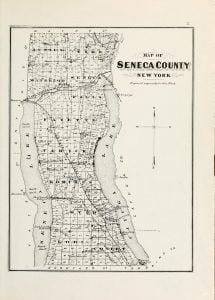
1876 Map of Seneca County NY

A guide and directory to Seneca County New York genealogy, containing both online and offline resources for genealogy and historical research. This article contains sources of genealogical data about Seneca County such as biographies, cemetery records, census records, church records, court records, family records, land records, military records, naturalization records, and vital records.

Seneca County New York Newspapers

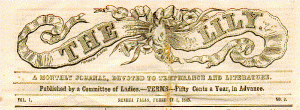
Masthead of the Lily in Seneca Falls

Seneca County’s newspaper history began with early settlers who had limited access to publications. The Ontario Gazette and Genesee Advertiser, the Impartial American, and The Expositor were among the first papers, starting between 1797 and 1806. George Lewis launched the Seneca Patriot in 1815, marking the area’s journalism struggle. Despite the lack of digitized historical papers, microfilm exists, potentially accessible through local societies. Newspaper archives are essential for genealogical research, providing unique insights into ancestors’ lives across various towns.

A History of Seneca Falls New York Newspapers

Ovid Bee Newspaper

In 1829, O. B. Clark launched the Seneca Falls Journal, establishing the village’s first newspaper amid rising support for its anti-Masonic and anti-Jacksonian themes. Various publications followed, including the Seneca Farmer and the Seneca Falls Register, reflecting the evolving political landscape. Over the decades, numerous titles emerged and merged, including the Seneca County Courier and the Seneca Falls Reveille, each documenting significant local events and serving as valuable resources for genealogists and historians alike, preserving the community’s rich history.

A History of Waterloo New York Newspapers

Masthead of the Lily in Seneca Falls

George Lewis, the first printer in Seneca County, initiated the Seneca Patriot in 1815, later renaming it The Ovid Gazette. After relocating the county seat to Waterloo in 1817, he produced The Waterloo Gazette, the village’s first newspaper. Throughout the years, various publications emerged, including The Waterloo Enunciator, The Seneca Farmer, and The Waterloo Observer, reflecting local political sentiments and events. Many of these papers are preserved in collections, offering vital insights for genealogists and historians researching the area’s history.

A History of Interlaken New York Newspapers

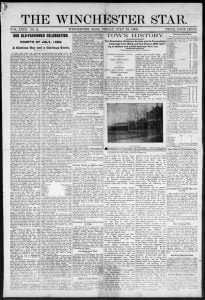
Winchester Star

The post details the history of eight newspapers from Interlaken, New York, spanning from 1822 to 1994, highlighting their significance for genealogists. It outlines key publications such as the Seneca County Sentinel and the Interlaken Review, emphasizing their role in documenting local history. The piece also mentions the Interlaken Historical Society’s 2006 index, which serves as a crucial resource for accessing these newspapers, available in various libraries and historical societies. Overall, the content provides a rich tapestry of local journalism’s evolution in Interlaken.

History of the Seneca County New York Press

Masthead of the Lily in Seneca Falls

The history of the press in Seneca County reflects the broader narrative of American journalism’s evolution, characterized by local newspapers that documented societal changes and opinions. The first publication, the Seneca Patriot, emerged in 1815, followed by various newspapers that reflected political trends from Federalism to Democratic ideals. Notable figures, such as Amelia Bloomer, contributed to the media landscape with publications advocating reform. Though many papers faced struggles with sustainability, they played pivotal roles in shaping public discourse and preserving local history, ultimately illustrating the press’s enduring influence in the county.

A History of Ovid New York Newspapers

Ovid Bee Newspaper

The history of newspapers in Ovid, New York, dates back to 1815 with George Lewis’s Seneca Patriot, later renamed The Ovid Gazette. Over the years, various publications emerged, including The Ovid Bee and The Ovid Independent. These newspapers served as crucial resources for genealogists, housing valuable records on local marriages and deaths. Numerous repositories, such as the Edith B. Ford Memorial Library and Cornell University, house microfilm and original issues, allowing researchers to access this rich historical material.

History of Seneca County New York

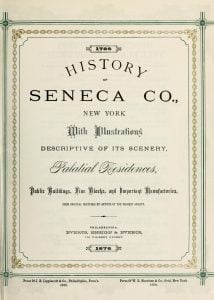
History of Seneca County New York

The 1876 manuscript “History of Seneca County, New York” offers a detailed account of the county’s first 75 years, featuring numerous chapters on its early history. It includes 35 biographies of early settlers, complemented by pencil engravings of individuals and their homes. The work also chronicles the individual townships and lists Union Army participants during the Civil War. Illustrations throughout depict Seneca County’s scenery, buildings, and significant local features, enhancing the historical narrative of the area.

Seneca County New York Census Records

1910 New York Census Map

Seneca County New York Census Records – Search and view the US Federal Census Images from 1790-1940 for Seneca County, New York for free. Also provided are lists of any state census available online for Seneca County NY.

Portrait and Biographical Record of Seneca and Schuyler Counties, NY

Portrait and Biographical Record of Seneca and Schuyler Counties New York

An online index to the Portrait and Biographical Record of Seneca and Schuyler Counties, New York, this volume preserves portraits and biographical sketches of prominent local citizens, including many overlooked by public records. Compiled with care for accuracy, it offers valuable material for genealogists and historians, along with biographies of all U.S. presidents.

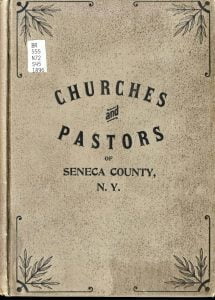
Churches and Pastors of Seneca County New York

Churches and Pastors of Seneca County NY

The sketches in “Churches and Pastors of Seneca County, New York” do not aim for comprehensive history but provide a manual of local churches and pastors as of 1896. Compiled with contributions from local church members and pastors, the book organizes churches alphabetically by denomination and lists them geographically by town. It includes sketches of notable clergymen and highlights the predominance of Catholic churches, which limited their membership lists. The manual serves as a snapshot of the religious landscape of Seneca County at that time.

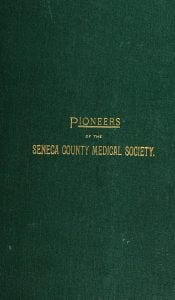
An Historical Sketch of the Seneca County Medical Society

Pioneers of the Seneca County Medical Society

During the anniversary meeting of the Seneca County Medical Society on July 23, 1885, a resolution was passed to compile biographical sketches of its members, aiming to document their history from the county’s early days. A committee was appointed to gather information, relying on communication with current and former members. Despite challenges such as lost records and limited responses, the committee managed to collect enough material to warrant publication, hoping future historians will continue the work. The resulting manuscript includes 75 biographies and an alphabetical list of names.

Seneca County New York Biographies

Seneca County History Newsletter Drawing

In the 1980’s a series of newsletters were published four times a year by Seneca County NY featuring historical information concerning Seneca county and her past residents. The current historian for Seneca County placed these online using PDF files. One of the main features of each edition were biographical sketches of early settlers of Seneca County. This is a list of those biographical sketches linked to the pdf copy of the newsletter.

Seneca County New York Cemeteries

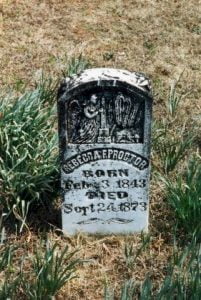
Rebecca Mitchell Proctor Grave Marker

The amount of information available for Seneca County New York cemeteries online is restricted to the number of volunteers willing to photograph and transcribe the records. There does not appear to be any one website which has a complete listing, and in fact, I would say overall there is still a lot of work to be done photographing and transcribing within Seneca County is any of you care to volunteer. The following is, however, the most complete listing available of online transcriptions and photographs.

Saponi Indians

The Saponi Indians, a Siouan linguistic tribe closely related to the Tutelo, likely originated from the term Monasiccapano, meaning “shallow water.” They are historically associated with villages along the Rivanna River in Virginia. Over time, they migrated to Otter Creek and later to the junction of the Staunton and Dan Rivers while fleeing Iroquois attacks. By the 18th century, part of the Saponi moved north to Pennsylvania, while others remained in North Carolina, where they eventually merged with neighboring tribes. Their population dwindled over the centuries, with reports indicating only small numbers by the mid-1700s.

Biography of Dr. Richard W. Padgham

Dr. Richard W. Padgham, born April 11, 1850, in Barbados, had a significant medical career spanning nearly 25 years before his death on February 27, 1911. Originally destined for the clergy, his vocal cord issues redirected him to medicine. After graduating from the Eclectic College in New York in 1899, he practiced in Interlaken and Geneva, New York, gaining a reputation for his expertise in throat and lung diseases. A community-minded individual, he was influential within the Methodist church and involved in local sanitary efforts. He married Elizabeth Clark and had five children.

Biography of Samuel Nagel

Samuel Nagel, born September 15, 1855, in Germany, immigrated to the U.S. at twenty-one, seeking better opportunities. Initially working as a mason and later on a farm, he eventually established a successful contracting business in Geneva, New York. Over twenty-four years, he oversaw the construction of notable buildings, including the Masonic Temple and the largest high school in the area. A Republican and active community member, he credits his success partly to the support of his wife, Anna Katie Loudenslacker. They have five children.

Biography of Rev. James T. Dougherty

In 1687, after the destruction of Gannagaro and Gaudougarae by French forces, the displaced Indian population formed a new village near Canandaigua Lake, which included many Catholics due to prior Jesuit missions. Following the American Revolution, Canandaigua emerged as a key center for commerce and Catholic settlement, with early mass celebrated in homes. Rev. Edmund O’Connor became the first resident pastor in 1849, establishing a church and school. Rev. James T. Dougherty, since 1901, significantly expanded the parish facilities and is deeply respected within the community.

Biographical Sketch of George C. Dorsey

George C. Dorsey, born in 1834 in Ovid, New York, is a prominent wholesale produce merchant based in Geneva. He began his career as a grocery store clerk before partnering with his brother, William, in their grocery business. After becoming the sole proprietor in 1866, Dorsey transitioned to wholesale produce in 1882, achieving significant success. He is known for his integrity and progressive business methods. Dorsey married Emma Bradley in 1864, and they had two children, Charles B. and Florence.

Biography of Diedrich Willers, Jr.

Diedrich Willers, Jr., born on November 3, 1833, in Varick, New York, was a notable political figure who served in various capacities, including Secretary of State. The son of a German immigrant and esteemed minister, Willers’ early education was shaped by both work and study. He began his political career as a clerk under several secretaries of state before being appointed private secretary to Governor Horatio Seymour during the Civil War. His successful tenure included overseeing the 1875 state census, and he was recognized for his dedication and capability throughout public service.