Early Mississippi Marriages 1800-1900

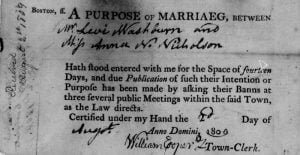
Marriage Intention

The following database represents a collection of 151,208 early Mississippi marriage records. The earliest occurs in 1800, the latest in 1900. The counties represented in the database: Adams, Amite, Carroll, Claiborne, Copiah, Franklin, Harrison, Hinds, Itawamba, Jefferson, Lafayette, Lauderdale, Lawrence, Leake, Lowndes, Madison, Marshall, Monroe, Noubee, Noxubee, Pontotoc, Rankin, Sunflower, Tippah, Tishomingo, Warren, Wilkinson, Winston, Yalobusha, and Yazoo.

Slave Narrative of Rev. Wamble

Rev. Wamble, born in 1859 in Mississippi, grew up as a slave in the Westbrook household, which owned over 200 slaves. His mother died after a brutal whipping, and he experienced both harsh treatment and some kindness as a slave. He was hidden as a child to prevent being taken by the Westbrooks. Post-Civil War, he faced educational and economic challenges but eventually became a minister and a father of numerous children. He settled in Gary, Indiana, where he continues to lead an active life.

Slave Narrative of Wayne Holliday

Wayne Holliday, born in 1853 in Aberdeen, Mississippi, reflects on his life as a former slave and railroad worker. His family belonged to the Holliday plantation, where they lived comfortably and were treated kindly. Holliday recalls his childhood, playing with both Black and white children, and describes his parents’ roles and his father’s skills as a carpenter. After the Civil War, he worked on the I.C. Railroad, raised a family, and sent his children to school, expressing gratitude for their success and his peaceful memories.

Slave Narrative of Pet Franks

Pet Franks, a 92-year-old ex-slave from Aberdeen, Mississippi, reflects on his life and experiences during slavery and the Civil War. He recalls his childhood near Bartleys Ferry and the kindness of his white owners, particularly Mr. Harry Allen and Jimmy Tatum. Pet describes his active lifestyle, tending to his garden and chickens, and his disdain for current societal behaviors. He shares memories of community gatherings, religion, and life post-war, emphasizing his loyalty to his white employers. Despite challenges, he finds contentment in solitude and interactions with familiar white neighbors.

Slave Narrative of Dora Franks

Dora Franks, an ex-slave from Aberdeen, Mississippi, recalls her life under slavery and the significant events surrounding the Civil War and her subsequent freedom. Born to a mother from Virginia and a father who was her young master, she faced discrimination due to her lighter skin. She describes the harsh realities of slave life, including punishment and limited freedom, yet also highlights moments of kindness from her white mistress. After the war, she struggled with life in the fields before marrying. Franks reflects on her faith and concerns for the younger generation’s moral decline.

Slave Narrative of Anna Baker

Anna Baker, an 80-year-old former slave from Mississippi, recounts her experiences during slavery and the years following the Civil War. Born near Tuscaloosa, Alabama, she grew up under Master Morgan Clemens, who valued her for her intelligence. After emancipation, Baker was reunited with her mother, Harriet, and learned to read and write. Now living alone in Aberdeen, she relies on a government loan for her home and looks forward to potential assistance from old age pensions, maintaining her faith in the Lord.

Slave Narrative of Jane Sutton

Jane Sutton, an 84-year-old ex-slave from Gulfport, Mississippi, reflects on her life in bondage on Marse Jack Berry’s farm in Simpson County. Born in 1840, she recounts the relationships with her family, her experiences with the Berry family, and the lack of severe punishment compared to other slaves. After the Civil War, she struggled for independence and maintained ties with her former owners, who had treated her well. Now, she faces hardship in her old age, relying on her daughter and neighbors for support.

Slave Narrative of Clara C. Young

Clara C. Young, a 95-year-old ex-slave from Monroe County, Mississippi, shares her life experiences, recalling her early years and the hardships of slavery. Born in Huntsville, Alabama, she was sold at auction and worked on plantations, where she faced harsh labor and cruelty from overseers. Despite these challenges, she found joy in community gatherings and religious meetings. After the Civil War, Young remained with her former masters for a time, only to later marry and raise a family, reflecting on her life with nostalgia and a sense of loss.

Biography of George W. Sparkes

George W. Sparkes, born in 1819 in Mississippi, settled in California in 1857 after migrating with his family across the plains. He initially wintered at Fort Pueblo before moving on to Salt Lake City and later Diamond Spring, where he built the first house. Sparkes became a prominent pioneer in San Bernardino, acquiring substantial land for ranching and raising livestock. He and his wife, Lorena, raised seven children and remained active members of the Church of Latter-Day Saints, exemplifying the spirit of resilience in pioneer life.

Biography of R. T. Roberds

R. T. Roberds was born in Mississippi in 1837 and became a pioneer, journeying west with his family in 1846. They faced numerous challenges, including interactions with Native American tribes and harsh conditions. After several years of hardship, including living in various forts, they reached California in 1850, where Roberds contributed to establishing a settlement known as Diamond Springs. He later married Harriet Bemis and raised a large family in San Bernardino, where he thrived as a farmer and stock-dealer, leaving a lasting legacy as a valley pioneer.