
Treaty of Nov. 1, 1837

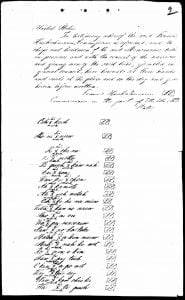
On November 1, 1837, a treaty was signed in Washington between the United States and the Winnebago nation. The treaty included the cession of their lands east of the Mississippi and the relocation of the Winnebago to specified areas west of the river. In compensation, the United States agreed to provide financial support, goods, and provisions totaling $200,000, with specific allocations for individuals and community needs. This treaty aimed to facilitate their removal and establish provisions for their future welfare.
Treaty of Sept. 3, 1839

On September 3, 1839, a treaty was signed between the United States and the Stockbridge and Munsee tribes, addressing land cession and compensation. The tribes relinquished over 23,000 acres of land near Lake Winnebago, with provisions for monetary compensation—totaling over $23,000. This included payments for improvements by the emigrating party and establishment of a school fund for those remaining. The treaty also allowed for a potential westward migration of part of the tribes, supported by the U.S. government.

Treaty of January 15, 1838

On January 15, 1838, a treaty was ratified at Buffalo Creek between the United States and New York Indian tribes, including the Seneca, Cayuga, Onondaga, and others. This treaty facilitated their relocation to designated lands in the Indian Territory, in recognition of their dwindling lands in New York due to white settlement. The U.S. committed to supporting their transition with land allotments and financial assistance. This agreement marked a significant step in the federal policy of relocating Native American tribes westward, reflecting both hope for their future and the pressures of expansion.

Treaty of February 3, 1838

On February 3, 1838, a treaty was signed in Washington between the U.S. government and representatives of the Oneida Indians, specifically the First Christian and Orchard parties. The treaty involved the cession of their land claims in exchange for monetary compensation totaling $33,500, intended to reimburse expenses and support community needs, including building a church. It also reserved 100 acres per individual for their settlements. The U.S. took responsibility for treaty-related expenses, with the agreement becoming binding upon ratification.

Treaty of September 3, 1836

On September 3, 1836, a treaty was established at Cedar Point between Henry Dodge, representing the United States, and the chiefs of the Menomonie nation. The Menomonies ceded approximately four million acres of land along with additional tracts on the Wisconsin River in exchange for annual payments of $20,000 for twenty years, provisions, and various resources. They also relinquished rights from previous treaties, with the U.S. committing to pay certain debts of the tribe. The treaty emphasized the need for the Menomonies to relocate within a year of ratification.

Treaty of February 11, 1856

Page 5 - Treaty of February 11, 1856

On February 11, 1856, a treaty was finalized in Keshena, Wisconsin, between the United States and the Menomonee tribe. This agreement ceded a tract of land for the Stockbridge and Munsee tribes, ensuring their relocation near the Menomonee reservation. The United States committed to compensating the Menomonees for this land at sixty cents per acre, aiming to enhance their welfare. Provisions were included to promote the well-being of the Menomonees and uphold their interests, marking a significant legislative effort amid ongoing changes in tribal relations.

Wisconsin Oneida Land Patents

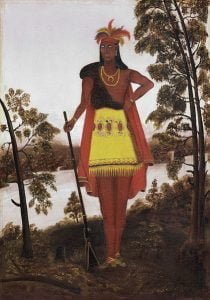
Oneida Chieftain Shikellamy

This document, compiled by Judy White, lists the land patents granted to members of the Wisconsin Oneida Tribe, detailing the names, dates, and respective document and accession numbers for each patentee. It serves as a comprehensive record of land ownership within the tribe, highlighting significant historical transactions and the individuals involved in these land grants. The data spans from 1908 to 1926, reflecting the tribe’s ongoing relationship with land tenure and the legal frameworks surrounding it.

Biographical Sketch of Atlantic A. Moore

Atlantic A. Moore, affectionately known as Lank, played a pivotal role in the establishment of Marion County, Kansas, during his twenty-four years there. Originally from Ohio, he settled in Kansas after serving as a government ambulance driver. He and his brother purchased a trading post at Cottonwood Crossing, later developing Moores Ranch. A prominent community leader, Moore held several political offices, including county treasurer and state legislator. He was married to Nancy Waterman, and they welcomed the first native white child of Marion County. In 1882, he relocated to Arizona.

Biography of Foster Dwight Coburn

Foster Dwight Coburn stands as a towering figure in Kansas agriculture, recognized for his transformative contributions over two decades as secretary of the Kansas State Board of Agriculture. Born in Wisconsin in 1846, Coburn cultivated a deep devotion to farming, which blossomed from his early experiences post-Civil War. His prolific authorship on agricultural topics has established him as a leading authority, while his commitment to service earned him numerous accolades. Despite political invitations, Coburn remained focused on advancing Kansas farming, leaving a lasting legacy in the state’s agricultural history.

Slave Narrative of Laura Ramsey Parker

Laura Ramsey Parker, an 87-year-old former slave from Nashville, recalls her life under the ownership of Mack Ramsey, who she remembers as a fair master. Freed after the end of slavery, she describes her early work as a spinner and weaver before becoming a nurse. Parker recounts her long residence in Nashville and her various occupations, including chambermaid and dressmaker. While she reflects on the past and the challenges faced by the younger generation, she emphasizes her commitment to faith and community.

Biography of Simon Gulick

Simon Gulick, born on August 16, 1856, in Dover Township, has dedicated his life to farming on the land his family settled. His father, Eagleson Gulick, immigrated from Norway in 1843 and contributed to the area’s development. Simon operates 125 acres, specializing in general farming and dairying, while also managing a threshing machine for four decades. Married to Mattie English in 1885, they had six children. A member of the Democratic Party, Simon has served on local boards and remains engaged in community affairs, reflecting on the county’s agricultural history.

Biography of Theodore R.Olson

Theodore R. Olson, born on October 18, 1878, in North Cape, Wisconsin, is a prominent businessman in Racine, recognized for his progressive approach and community involvement. Owner of a successful five and ten cent store, he previously worked in the pharmaceutical industry and as a traveling salesman. Olson has served as alderman and is actively engaged in various fraternal organizations. Married to Millie Kempf in 1908, he remains dedicated to improving his community through civic and charitable endeavors, showcasing a lifelong commitment to public service.

Biography of Rev. John J. Dillon

Rev. John J. Dillon has served as pastor of the Church of Our Lady of Mount Carmel in Baden, Missouri, since December 9, 1915, following a successful tenure at St. Brendan’s Church in Mexico, where he served for sixteen years. Ordained on May 30, 1885, he has dedicated over three decades to pastoral work, building strong community ties and contributing to numerous public initiatives. Under his leadership, the Baden parish has thrived, supported by a well-organized church and a devoted congregation of 170 families.

Biography of Edwin W. Lee

Edwin W. Lee, born on July 1, 1875, in Beloit, Wisconsin, has practiced law in St. Louis for over twenty-two years, consistently advancing in his career. A graduate of Williams College and the St. Louis Law School, he began his legal practice in 1899. Lee specializes in corporation and probate law and is a prominent figure in the legal community. Active in local politics as a Republican, he served as excise commissioner and held two terms as circuit judge, earning widespread respect in St. Louis.

Biography of Rev. Joseph F. Lubeley

Rev. Joseph F. Lubeley, born on September 15, 1873, in Lockhaven, Pennsylvania, was a prominent pastor of Holy Trinity Church in St. Louis. The son of German immigrants, he pursued his education at St. Liborius School and St. Francis College, later studying at the Jesuit University in Innsbruck. Ordained in 1896, he served various parishes in Missouri before assuming leadership at Holy Trinity in 1908. Lubeley was active in civic and church organizations, contributing to community welfare and moral advancement.

Biography of Captain William Mitchell Lewis

Captain William Mitchell Lewis, born in Racine on February 25, 1869, played a pivotal role in establishing the Mitchell-Lewis Motor Company, a major manufacturing enterprise in the U.S. After graduating from Yale in 1891, he served as captain during the Spanish-American War. Once back in Racine, he transitioned from the Wisconsin Wheel Works to automobile manufacturing. Besides his business achievements, Lewis was active in politics, athletics, and community service, notably supporting outdoor facilities for youth, including Lewis Field. He was also a prominent member of several organizations.

Biography of J. W. Trumbull

J. W. Trumbull, born on December 1, 1872, in Caledonia Township, Wisconsin, is a prominent figure connected to Racine’s public interests through his agribusiness and civic engagement. He was raised in a farming family and took over the family farm before transitioning to the Christensen Silo Company in 1911. A dedicated public servant, he served as town clerk for twelve years and as clerk of the Racine County court for four years. Married to Ella Hayek, they have five children and are active members of the Christian Science church.

Biography of William Henry Miller

William Henry Miller, born on November 2, 1847, in Racine, Wisconsin, was the son of Moses and Frances Augusta Miller. His father, a key figure in commerce and the insurance sector, passed away in 1868. At 17, Miller enlisted in the Thirty-ninth Wisconsin Volunteer Infantry during the Civil War. He later entered the insurance business, eventually running a successful agency in Racine. He married Jenny R. Hoy in 1887, and they had two children. Active in civic life, he was a member of the Grand Army of the Republic and the Racine Commercial Club.

Biography of John Storm

John Storm, born on July 13, 1857, in Milwaukee, Wisconsin, is a successful farmer and dairyman in Norway Township. The son of German immigrants Frederick and Christina Storm, he inherited his father’s farming legacy after acquiring his own land in 1878. John has cultivated 120 acres, focusing on general farming and raising Hereford cattle. Married to Annie Neabeauer in 1891, they have four children and are active in their community and the Lutheran church, with John aligning himself with the Democratic Party.

Biography of George Gorton

George Gorton, born in Racine on February 5, 1865, established a successful machine shop in 1892, specializing in fine machine tools and engraving machines. His firm, the George Gorton Machine Company, produces innovative machinery for various industries and has gained international recognition. Gorton also contributes to his community, actively participating in the First Baptist Church and supporting local initiatives, including a significant donation for a new Sunday school building. A dedicated Republican, he has served on the school board and is committed to community improvement.