Treaty of September 15, 1832

On September 15, 1832, a treaty was signed at Fort Armstrong between the United States and the Winnebago nation. The Winnebago ceded land east of the Wisconsin River, receiving in return monetary compensation, educational support for their children, and agricultural assistance. The agreement included a requirement for relocation by a specified date and obligations related to the prosecution of certain individuals. This treaty aimed to establish a framework for peaceful coexistence while addressing the needs of the Winnebago people after their land loss.
Biographical Sketch of Eric Wold

Eric Wold has served as city engineer of Burlingame for four years and currently applies his expertise to San Bruno. With a background in engineering that includes government service and railroad projects, he is enhancing San Bruno’s infrastructure with plans for bridges, sidewalks, and a water system. Born in Norway in 1878, Wold moved to the U.S. as a child, later graduating from the University of Minnesota in 1902. He has been a resident of California for the last decade and is actively involved in local organizations.

Biography of Dr. Isaac R. Goodspeed

Dr. Isaac R. Goodspeed, born on May 30, 1831, in China, Maine, was a prominent figure in San Mateo County for over fifty-six years. After graduating from Bowdoin Medical College in 1854, he practiced medicine in various locations, eventually settling in Pescadero, where he engaged in multiple business ventures and held local offices. He played a significant role in Pescadero’s incorporation into San Mateo County and later became a respected doctor in San Mateo. Goodspeed’s contributions included serving as Coroner, postmaster, and as a surgeon for the County Hospital. He celebrated sixty years of marriage in 1916.

Biography of Elbridge G. Little

Elbridge G. Little, born on August 5, 1807, in New Hampshire, became a notable physician after graduating from Cleveland’s Medical College. He later settled in New Lisbon, Wisconsin, where he emerged as a prominent citizen and amassed significant wealth. His wife, a descendant of the Peabody family, bore him six children, including George Peabody Little, who pursued a diverse career in education, business, and farming. Active in politics and community service, Elbridge held various positions, including Town Treasurer and State Legislature member, and was a lifelong Mason and church Deacon.

Biographical Sketch of Charles A. Corman

Charles A. Corman, born on March 20, 1849, in Manitowoc County, Wisconsin, was the son of Dennis V. and Louisa Reynolds Corman. Educated locally, he began his career as a lumberman before moving to Missouri in 1874, where he operated a dry goods and grocery store for five years. He later established a successful drug and book store. Corman married Isabella Spencer in 1873, and they had three children. He is also a member of the Jamesport Lodge No. 339, I.O.O.F.

Biography of Hon. Ira Colby

Hon. Ira Colby, born January 11, 1831, in Claremont, New Hampshire, emerged as a prominent lawyer and public figure. Descended from distinguished English ancestry, he pursued education at Dartmouth College after teaching in New Hampshire and Massachusetts. A committed Republican, Colby served multiple terms in the New Hampshire legislature, was a county solicitor, and notably declined an appointment as Associate Justice of the Supreme Court. He married Louisa M. Way in 1867 and continued his family’s Methodist legacy through active church involvement.

American Baker Genealogies

The post features genealogies of various American Baker families, detailing their origins, notable individuals, and family connections across states like Massachusetts, Ohio, and Pennsylvania. Among them are Daniel Baker of Ohio, Edward Baker of Massachusetts, and Henry Baker of Pennsylvania, highlighting their migrations, marriages, and descendants. The genealogies also reflect the family’s historical significance, with some members actively participating in significant events, such as the Revolutionary War. This compilation serves as a valuable resource for understanding the lineage and contribution of the Baker families in America.

Algonquian Pictography

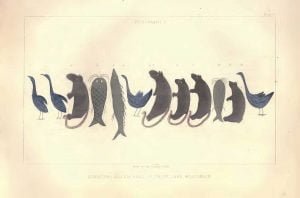
Symbolic Petition of Chippewa Chiefs - Plate 61

The Algonquian tribes, particularly those of the Western Indians, maintained a rich tradition of pictorial inscriptions, which trace back to their migration patterns across North America from Lake Superior to the Atlantic shores. This sustained practice reflects their cultural continuity, anchored in ancestral customs and a profound reverence for their spiritual beliefs. Their religion, centered around a Great Spirit and the balance of good and evil, informed their symbolic expressions. Pictographs served various functions, from commemorating events to expressing unity during delegation, embodying a complex interplay of tradition and innovation in their artistic heritage.

Biography of Gay Hayden

Mr. and Mrs. Gay Hayden were significant pioneers in the Pacific Northwest, known for their resilience in the face of numerous hardships during their migration. Mary J. Hayden, born in 1830 in Maine, married Gay in 1847 and embarked on a challenging journey to Washington Territory in 1850. Their experiences included navigating treacherous conditions, encounters with Native Americans, and enduring the Yakima War. After the conflict, they settled in Vancouver, where Mary became an active community member and advocate for women’s rights.

Biography of Francis Xavier Paquet

Francis Xavier Paquet, born on January 15, 1811, in Quebec, was the sixteenth child of Joseph and Marie Madaline Paquet. Apprenticed in shipbuilding, he emigrated to the U.S. at seventeen, working for the American Fur Company. He later joined the lead mining industry and served in the Black Hawk War, earning commendation from General Scott. Married to Marie Louise Lannadier de Langdeau in 1836, the couple moved to Oregon in 1852, where they became prominent figures with a large family, contributing to their community’s development.

Biography of Natley Dutton

Natley Dutton, an early settler from England, established his family in Maryland following Lord Baltimore’s colonization efforts. His son, John H. Dutton, born in 1790, faced hardship after his father’s death, leading to his apprenticeship as a ship carpenter. In 1818, John and his half-brother Thomas T. Elton journeyed to Missouri, where they first rented land before settling in Montgomery County. John H. Dutton became a respected community leader, serving as a deacon and county judge until his death in 1853, leaving behind a legacy of service and family.

Illinois Indian Land

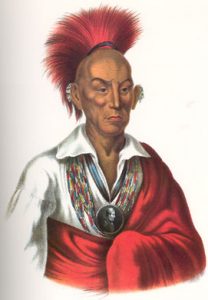
Black Hawk

Black Hawk, also known as Makataimeshekiakiah, was a prominent Sac chief during a tumultuous period of conflict between Native Americans and settlers in the early 19th century. As white settlers encroached on their lands in Illinois, Black Hawk resisted forced removal despite a treaty signed by rival chiefs. His efforts culminated in the Black Hawk War, marked by skirmishes and a tragic final battle. After his eventual surrender and a period of captivity, he lived peacefully until his death in 1838, culminating in a notorious burial and the subsequent theft of his remains.

Biography of Abraham Storle

Abraham Storle, born on August 10, 1857, in Norway Township, is a notable farmer who operates a 217-acre farm. He is the son of Ole and Anna Storle, immigrants from Norway. Ole, a prominent member of the Lutheran church, was active in community affairs, including building a church and assisting during the cholera epidemic. Abraham, who continues the family legacy in agriculture, manages a productive farm with a focus on cattle and hogs. He is also engaged in public matters and supports the Republican Party.

Biography of John Pugh

John Pugh, born September 1, 1847, in Racine, Wisconsin, has had a diverse career, including service as a state game warden, a sailor on the Great Lakes, and a boiler maker. He enlisted during the Civil War and returned to Racine afterward. Married in 1879, he and Catherine Gittings raised seven children. Pugh is dedicated to conservation efforts and has held various public roles, including sheriff. A lifelong Republican and active in the Masonic community, he embodies the changes Racine has experienced throughout his life.

Biography of Frank L. Mitchell

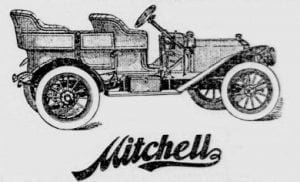
1909 Mitchell Model K

Frank L. Mitchell, born on December 4, 1852, in Kenosha, was a significant figure in Racine’s development. Son of Henry Mitchell, a Scottish immigrant and early wagon manufacturer, Frank advanced through diligent work, eventually becoming a partner in Mitchell, Lewis Company. He played a key role in expanding the business, which was later incorporated as Mitchell-Lewis Motor Company. An influential community leader, he served as Racine’s first native mayor and was actively involved in banking and civic organizations, contributing greatly to the city’s prosperity.