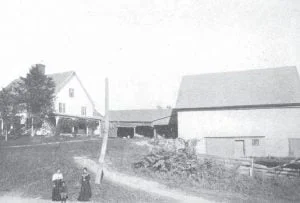
Murdock Family of Norwich Vermont

Hon. Thomas Murdock moved to Norwich from Connecticut in 1767, marrying Elizabeth Hatch and raising a family that included six children. Prominent in local affairs, he held various positions before his death in 1803. His sons, Asahel and Constant, were active voters, with Asahel eventually returning to Connecticut. Jasper, also a son, built an impressive residence at Norwich Plain. The estate changed hands over the years, influencing the town’s development, and remnants of it, including a fish pond, remain part of its history.
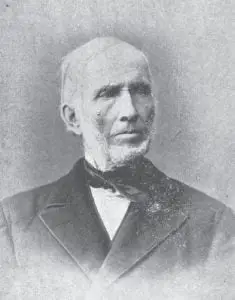
Biographical Sketch of Deacon Israel Newton

Doctor Israel Newton, the inventor of Newton’s Bitters and Newton’s Pills, passed away in January 1856 at the age of seventy-three. A well-educated physician, he was respected in Norwich for his medicines, mechanical talents, and contributions to the community, including building a church organ used for many years. Newton served in various town offices and represented Norwich in the general assembly in 1814. As a deacon of the Congregational church for twenty-five years and a Revolutionary War veteran, he left a notable legacy.

Messenger Family of Norwich Vermont

Nathan and Nathaniel Messenger settled in Norwich, Vermont, in the mid-18th century, with Nathan arriving as early as 1765. Nathan drowned shortly after 1766, while Nathaniel served in the Revolutionary War before leaving for New York around 1805. Nathaniel’s son, Oliver, married Charlotte Smith in 1803, fathering Erastus and Nelson. Erastus resided in the historic Hatch house, raising a large family, which included notable descendants such as current town clerk George Messenger. The connection between the two Messengers remains unclear.

Lord Family of Norwich Vermont

Jonathan Lord, Jr. and David Lord were early settlers in Norwich, Vermont, arriving from Colchester, Connecticut, around 1773. Jonathan, born in 1752, married Mary Smith and had several children, while David, born in 1756, married Hannah Hanks and fathered eight. Notable descendants include John Lord, who lived from 1782 to 1882, and Asa Lord, who moved to Illinois after graduating from Dartmouth. The Lord family has made significant contributions to the community, with multiple generations rooted in Norwich.

Loveland Family of Norwich Vermont

Loveland Homestead, built by Joseph Loveland in 1792

The Loveland family, descendants of original settlers, has maintained a farm in Norwich, Vermont since 1778. Joseph Loveland, born in Connecticut in 1747, established the homestead after serving in the Continental Army. His children, particularly Aaron and David, contributed significantly to the community, with Aaron serving in the legislature and as Chief Judge. Subsequent generations continued the family’s agricultural legacy and civic engagement. Today, the Loveland name reflects a rich heritage tied to local governance, education, and community service, though only a few remain in Norwich.

Biographical Sketch of Doctor Enos Lewis

Colonel William E. Lewis

Doctor Enos Lewis, born on January 19, 1784, in Norwich, was the youngest son of Dr. Joseph Lewis. He studied medicine with his father and graduated from Dartmouth Medical College in 1804. Serving as a U.S. Army surgeon from 1808 to 1810, he later practiced in Norwich after marrying Katurah Denison in 1812. Despite a brief career, he gained recognition for his treatment of spotted fever and contributed to medical education while amassing a significant library. He passed away on September 14, 1823.

Biography of Doctor Joseph Lewis

Doctor Joseph Lewis, born in Old Lyme, Connecticut, in 1746, moved to Norwich, Vermont, in 1767. He practiced medicine for over fifty-five years, often traveling on horseback or snowshoes to treat patients across several towns. Married to Experience Burr, he had eight children, with three sons pursuing medicine. Lewis served as a surgeon’s mate during the 1775 expedition against Quebec and returned to practice after the campaign. He was known for his integrity and dedication until his death in 1833.

Lewis Family of Norwich Vermont

William Lewis, a blacksmith, and his family, including his wife Naomi and eight children, moved to Norwich from Windsor, Connecticut, in 1781 or 1782. Initially settling on a farm now owned by Benjamin Clifford, he later purchased a larger farm, expanding it to 250 acres. He was actively involved in local governance, serving as moderator and selectman multiple times. William Lewis passed away on December 15, 1806, with his wife Naomi having died earlier on April 28, 1803. Their son, Joseph, was the eldest.

Biography of General William E. Lewis

Colonel William E. Lewis

General William E. Lewis was born on May 25, 1815, and served his community tirelessly in various public offices from 1838 until his death on January 5, 1892. A dedicated public servant, he held the position of town clerk for forty-nine consecutive terms and represented Norwich in the state legislature multiple times. Additionally, he was active in the State Militia, rising to the rank of Brigadier-General. His contributions to the town were recognized posthumously, highlighting his integrity and commitment to public service.

Johnson Family of Norwich Vermont

The Johnson Family played a pivotal role in the early history of Norwich, Vermont. Captain Hezekiah Johnson, born in 1724 in Woburn, Massachusetts, was an original proprietor and early settler, established near the Pompanoosuc River. He held numerous offices, including selectman, and contributed to the town’s development and safety during the Revolutionary War. Johnson was also generous to Dartmouth College. He passed away in 1806, leaving a legacy through his children, including Samuel Slafter Johnson and Dorothy, who married Jeremiah Hedges, further intertwining family connections in the community.

Hutchinson Family of Norwich Vermont

The Hutchinson family, one of the early settlers in Norwich, Vermont, traces its roots back to Massachusetts in the late 1620s. Abijah Hutchinson, a descendant, settled in Windham before moving to Norwich in 1765 with his son Samuel. They cleared land for farming and eventually made a permanent settlement. Samuel and his wife Jemina had several children, continuing the lineage. John Hutchinson, a soldier in the Continental Army, and his descendants include notable figures and various branches in New York and beyond.

Biography of Doctor Horace Hatch

Doctor Horace Hatch, born on May 23, 1788, in Tunbridge, Vermont, graduated from Dartmouth College in 1814 and earned his M.D. in 1817. He practiced medicine in Norwich for twenty years before moving to Burlington, where he continued for another two decades. In 1861, he took a position in the Treasury Department, actively supporting Vermont soldiers in hospitals. He relocated to New York City in 1865, passing away on October 28, 1873. Known for his benevolence, he was survived by his notable son, A. S. Hatch.

Biography of Honorable Reuben Hatch

Reuben Hatch, born on July 7, 1763, in Preston, Connecticut, moved to Norwich with his father early in life. He attended Dartmouth College but left due to health issues, later becoming a successful farmer in Tunbridge, Chelsea, and Weathersfield. Hatch owned significant properties, including a large brick house and a tavern. He represented Tunbridge and Chelsea in the General Assembly and married Eunice Dennison, with whom he had ten children. Hatch passed away on January 5, 1818, in Norwich.

Biographical Sketch of Captain Joseph Hatch

Erastus Messenger House

Captain Joseph Hatch settled in Norwich with his brother John, building a log cabin and later a frame house, which became the first of its kind in the area. He acquired substantial land and had two marriages, first to Elizabeth Brown, yielding two children, and then to Hannah Freeman, with whom he had six children. Hatch passed away in 1811 at age 73, following the deaths of both wives. His contributions include the Erastus Messenger House, erected around 1773.

Biography of John Hatch, Esq.

John Hatch, Esq., born on June 9, 1727, in Preston, Connecticut, was an influential early settler in Norwich, Vermont. He served as selectman and town clerk from the 1760s until 1780, also holding the role of county surveyor for Cumberland County. A skilled surveyor, he contributed significantly to the town’s layout and infrastructure. Married to Sarah Richards in 1748, they had nine children together. Hatch passed away on April 24, 1806, shortly after his wife.

Biography of Reverend Samuel Goddard

Samuel Goddard, born in Sutton, Massachusetts, on July 6, 1772, faced limited educational opportunities and initially worked in trade before pursuing a religious vocation. Studying under Doctor Seth Payson, he was ordained in 1809 as pastor of a small church in Concord, Vermont, where he expanded the congregation significantly and established missionary work. In 1822, he became pastor of the North Congregational Church in Norwich, Vermont, growing its membership and promoting community welfare. Goddard was known for his devotion, despite personal losses and health challenges, leaving a lasting impact on his community.

The Emerson Brothers of Norwich Vermont

In 1792, Elihu Emerson arrived in Norwich, Vermont, from Westfield, Massachusetts, followed by his brothers Joseph and Thomas. Elihu was a blacksmith and held various positions in the community until his death in 1873 at over a century old. Joseph and Thomas pursued trade, establishing successful stores in Montreal and Detroit, supplying the American army. They also contributed to local construction efforts, including Norwich University buildings. Joseph later became president of the Windsor Bank, which ultimately failed, prompting his departure from Vermont.

Dutton Family of Norwich Vermont

The Dutton family in Norwich traces its roots to Samuel Dutton, born in 1707, who migrated from Connecticut and settled on Dutton Hill. He married Abigail Merriam in 1729 and had multiple wives, fathering eight children. His lineage includes Daniel Benedict Dutton, who returned to Norwich after time in Stowe, and Deacon John Dutton, a lifelong farmer and community leader active in the Legislature. The family’s legacy continues through his wife, Harriet Anna Lord, and their surviving children, Charles and Hattie.

Biography of Doctor Ira Davis

Doctor Ira Davis, born around 1797 in Dracut, Massachusetts, began his medical practice in Norwich Plain in 1830, serving the community until his death in 1873. In addition to his medical career, he was active in local journalism, co-editing the Vermont Enquirer, and was instrumental in establishing the Episcopal church and Norwich University. A politically engaged figure, he served as town clerk and postmaster. He married three times, fathering several children, including Doctor George Davis, a physician in Manchester, New Hampshire.

Biographical Sketch of Moses Davis

Moses Davis married Sarah Sawyer in Dracut, Massachusetts, on April 6, 1785. He moved to Hanover, New Hampshire, around 1806 and later to Norwich by 1814. Davis fought in the Revolutionary War, participating in the Battle of Lexington, and possibly the Battle of Bunker Hill. He served at Fishkill in 1777 and at Valley Forge in 1778, and was among the guards for Major Andre prior to his execution. His total military service exceeded two years.