Ancestors of Lawrence Dowse of Legbourne England
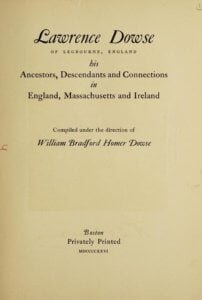
Lawrence Dowse of Legbourne, England : his ancestors, descendants and connections in England, Massachusetts and Ireland; compiled under the direction of William Bradford Homer Dowse.

Lawrence Dowse of Legbourne, England : his ancestors, descendants and connections in England, Massachusetts and Ireland; compiled under the direction of William Bradford Homer Dowse.
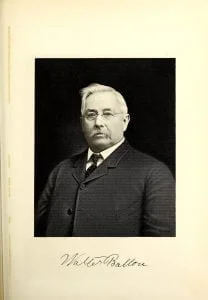
Walter Ballou, born on February 20, 1835, in Cumberland, Rhode Island, played a significant role in North Attleboro’s jewelry industry. Descended from a distinguished family with Norman-French roots dating back to the Battle of Hastings, he became a partner in R. Blackinton Co. in 1862. Walter’s inventive spirit led to notable advancements in jewelry manufacturing. He married Ann E. Briggs, and they had three children. A respected community figure, he remained integral to the company’s success and legacy throughout his life.
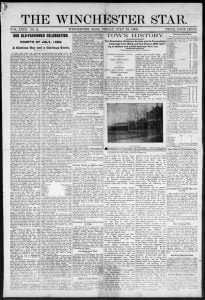
Chronicling America is a Website providing access to information about historic newspapers and select digitized newspaper pages, and is produced by the National Digital Newspaper Program (NDNP). NDNP, a partnership between the National Endowment for the Humanities (NEH) and the Library of Congress (LC), is a long-term effort to develop an Internet-based, searchable database of U.S. newspapers with descriptive information and select digitization of historic pages. Supported by NEH, this rich digital resource will be developed and permanently maintained at the Library of Congress. An NEH award program will fund the contribution of content from, eventually, all U.S. states and territories.

This database contains War Department casualties (Army and Army Air Force personnel) from World War II for Vermont. Information provided includes serial number, rank and type of casualty. The birthplace or residence of the deceased is not indicated. An introduction explaining how the list was compiled, a statistical tabulation, and the descriptions of the types of casualties incurred are also included.
The Spare family, established in New Bedford from its origins in Boston-Canton, is marked by notable figures such as Dr. John Spare, a Civil War surgeon and prominent local physician. Following him, his son, John V. Spare, emerged as a successful merchant and community leader. The family’s lineage traces back to Samuel Spare, who arrived from England in the early 18th century. The Spares have contributed significantly to local business and civic life, emphasizing industry and service across generations.
Small Town Papers gives you access to the people, places and events recorded in real time over the decades or even centuries! Browse and search the scanned newspaper archive from 1846 up to the current edition! Their archives contain millions of names of ancestors not found anywhere else. Enhance your Ancestry research with their high resolution scanned newspaper archive. Find distant relatives and discover your ethnic heritage by reading the articles about family and friends written back in the day.
John Dexter Flint, a prominent merchant and philanthropist of Fall River, Massachusetts, was born on April 26, 1826, in North Reading. A son of modest means, Flint’s industrious spirit led him to establish a successful business in tin and hardware, which expanded to include furniture. A devoted churchman, he contributed generously to various charitable endeavors and was a key player in local banking and mill enterprises. Flint’s death on August 28, 1907, marked the loss of a respected leader whose legacy continues to shape Fall River’s community.
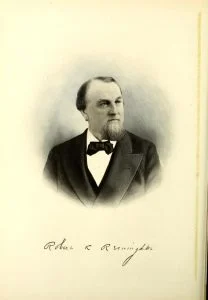
Robert Knight Remington, born in 1826 in Grafton, MA, was a prominent philanthropist and businessman in Fall River, known for his integrity and dedication to community service. His ancestors, including John Remington, settled in Haverhill, MA, in 1661 before establishing roots in Rhode Island. Throughout his life, Remington championed temperance and youth education, contributing significantly to local missions and religious efforts. He was married twice and left behind a legacy through his children, influencing business and civic life in Fall River.
John Paull was a prominent businessman in Taunton, leading the successful hay and grain firm, John Paull Co. for over fifty years. He was part of a well-established family, with roots tracing back to William Paull, a Scottish weaver who settled in Taunton in the 17th century. John’s lineage includes notable figures like his son, who participated in the Revolutionary War. After his death in 1908, his wife, Abbie, continued to manage the business and contributed to the community through music and charitable work.
The Dwelly family of Fall River, MA, traces its origins back to Richard Dwelly, who settled in Scituate in the mid-17th century. Notably, Dr. Jerome Dwelly, a well-respected physician, significantly contributed to the community for over sixty years. His son, Frank H. Dwelly, excelled in mill management, serving as treasurer for Tecumseh and Ancona companies. The family’s story weaves through generations, marked by professional accomplishment and community service, with both Jerome’s medical innovations and Frank’s business acumen shaping Fall River’s landscape.
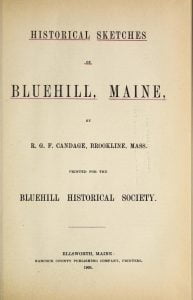
Bushrod W. Hinckley, born in Thetford, Vermont, was a prominent lawyer in Blue Hill, Maine, serving multiple terms in the legislature and as a collector of customs. He married Sarah F. Wilcox, and they had four children. Hinckley, an influential member of his community, died in 1869. His son, Dea. Joseph Hinckley, also a key figure in town, contributed significantly to the local church and community until his death in 1884. The Hinckley family legacy continued through their descendants, notably in local property ownership.

This post discusses the historiography of early Indian conflicts in New England, highlighting the contributions of William Hubbard, Church, Belknap, and Palfrey. It critiques Hubbard’s narrative as tedious and emphasizes Palfrey’s general overview, noting the limited focus on Indian-hostilities. The text outlines the periods of peace and subsequent violence, particularly referencing the impact of French and Indian alliances on English settlers from 1688 onward. It suggests the narrative is intended to offer a comprehensive account of these tumultuous interactions, from the Pequod Wars through French incursions.
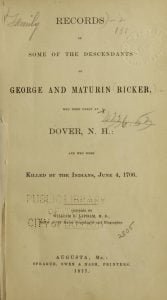
The descendants of two brothers, George and Maturin Ricker of Dover NH who’s descendants resided principally in New Hampshire and Maine.

The classic work often cited by more contemporaneous authors on early New England families and the records of them found within the Principal Probate Registry, Somerset House, Strand, the Public Record Office, Fetter Lane, and the British Museum, Bloomsbury, while on a visit in London during the summer and fall of 1879.
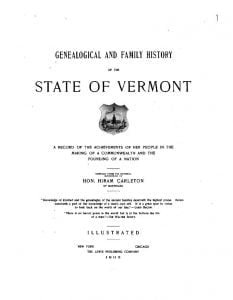
Hiram Charlton took on the publication of the Genealogical and Family History of the State of Vermont for Lewis Publishing. In it, he enlisted the assistance of living residents of the state in providing biographical and genealogical details about their family, and then he published all 1104 family histories in two distinct volumes.
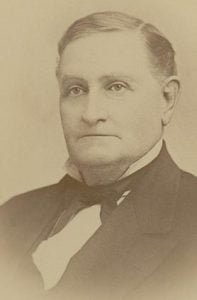
General Lewis S. Partridge, born in 1818 in Norwich, Vermont, engaged in mercantile business early in life, including running the Union Hotel. He attended Norwich University from 1833 to 1836. Partridge was active in politics, serving as Adjutant General of Vermont and representing Norwich in the General Assembly. He held the postmaster role at various times and was a delegate to the Democratic National Convention. He married twice, fathering nine children, and passed away in Norwich on May 22, 1885.
Hon. Peter Olcott, born on April 25, 1733, in Bolton, Connecticut, moved to Norwich, Vermont, in the 1770s. He was a prominent community leader, serving in various public offices including first justice of the peace and Lieutenant Governor. His influence helped establish the town’s first meeting house and burying ground. Olcott was also active in military affairs during the American Revolution. He died on September 12, 1808, leaving a legacy through his numerous children and significant contributions to Norwich’s early governance and development.
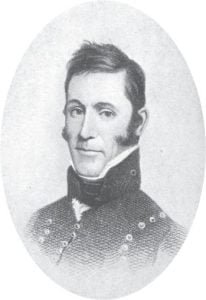
Captain Alden Partridge, born on February 12, 1785, in Norwich, was a pioneering educator and military figure. He attended Dartmouth College and graduated from West Point, later serving as a captain in the U.S. Corps of Engineers. Partridge advocated for the integration of physical training in education and founded schools based on his innovative principles. His contributions shaped modern educational practices, emphasizing practical knowledge and agriculture. He married Ann Elizabeth Swasey and passed away on January 16, 1854, leaving a lasting legacy in education and public service.
Samuel Partridge, Sr., born in 1721 in Preston, Connecticut, settled in Norwich, Vermont, around 1765 with his wife, Ruth Woodward, and their children. They established a hill farm that remained in the family’s possession for three generations until sold in the early 20th century. Samuel served as a lieutenant in the local militia during the Revolutionary War, and he passed away in 1826. His descendants included several who also fought in the war, ensuring the family’s legacy in Norwich.
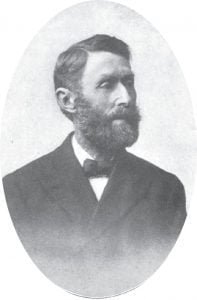
Rev. N. R. Nichols served as pastor of the Congregational church in Norwich village from February 1880 to May 1904, following a seven-year term in Barnet, Vermont. His nearly 25 years in Norwich were marked by significant growth, evidenced by 195 new church members. Beyond his pastoral duties, Nichols contributed to community welfare and served as a trustee of the Norwich public library, honoring his late wife with a memorial door at its entrance. He was celebrated for his impactful life and service in the community.