Who Really are the Cherokees?

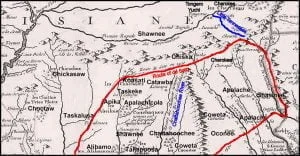
1718 French Map of North America - Detail

In his dissertation, archaeologist Bennie Keel confronted pressures from North Carolina to claim Cherokees had been in the region for 1,000 years, yet he found limited evidence before 1720, suggesting a gap in their historical record. Earlier towns identified in North Carolina and Tennessee often carried Creek or other Indigenous names, indicating possible cultural connections. The historical narrative of the Cherokees’ presence before the 18th century remains elusive, with European maps and archaeological findings contradicting claims of their long-standing habitation in the region.

Tuskegee Indians

The Tuskegee Tribe, with an uncertain name possibly linked to the term “taska,” meaning warrior, was originally located near the Coosa and Tallapoosa Rivers and also on the upper Tennessee River. Historically, they appear in records as early as 1540 with references to settlements named Tasqui and Tasquiqui. The Tuskegee divided into bands, one eventually merging with the Cherokee, while another settled in present-day Alabama. Their name remains significant in locations such as Tuskegee, Alabama, known for the Tuskegee Normal and Industrial Institute.

Tuskegee Tribe

Robert Seale Map

The Tuskegee Indians, historically located near the confluence of the Coosa and Tallapoosa rivers, spoke a distinct dialect different from Muskogee. As European settlers encroached in the 17th century, the Tuskegee fragmented into several bands, with some absorbing into the Cherokee. Their settlements were marked on early maps, and references indicate their presence on the Tennessee River and surrounding areas. Over time, this tribe’s cultural and linguistic identity diminished, leading to their eventual migration and assimilation with nearby tribes, particularly the Creeks.