
Slave Narrative of Frank Cannon

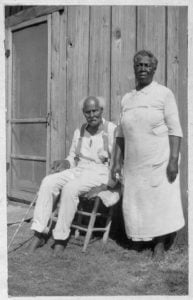
Frank Cannon, interviewed by Miss Irene Robertson in Palestine, Arkansas, reflects on his life as a slave born on a farm in Mississippi. His family, purchased from a speculator, was brought from South Carolina. He recounts life on the plantation, including the absence of formal education, communal meals, and the supervision of a white preacher. Cannon describes his father’s blacksmith work and the varying treatment among slaves. He observes changes in children’s behavior and concludes that while conditions varied, some were treated well, while others faced cruelty.
Slave Narratives – Memorandum

On June 9, 1937, Henry G. Alsberg, Director of the Federal Writers Project, requested State Directors to submit copies of laws and customs related to slavery. This includes regulations on slaves and free Negroes, laws regarding the importation and escape of slaves, advertisements for sales, and records of manumission. He emphasized the importance of contemporary accounts from newspapers and books that detail events among African Americans during slavery and Reconstruction. These materials will aid in understanding the historical context of slavery narratives.

Slave Narratives – Modification of Instructions

In a memorandum dated July 30, 1937, Henry G. Alsberg provided guidance for interviewing ex-slaves by emphasizing quality over quantity. Interviewers should focus on a few subjects, foster relationships, and explore a wide range of topics. They are advised to avoid bias and encourage comprehensive storytelling, emphasizing post-freedom experiences. Additional suggestions from a September 8 memorandum encouraged collecting family traditions and using significant historical events as reference points to enhance the reliability of the narratives. This approach aims to create richer, more meaningful documentation of ex-slave experiences.

Slave Narratives – Negro Dialect Suggestions

On April 14, 1937, George Cronyn, Associate Director of the Federal Writers Project, communicated with Mr. Edwin Bjorkman regarding narratives from ex-slaves. He expressed satisfaction with the quality of these stories and requested natural, unposed portraits of the subjects. Additionally, he included suggestions for simplifying the spelling of Negro dialect to enhance readability without entirely abandoning its authentic speech. The letter also emphasized the importance of documenting historical records related to slavery, such as court records and sale prices.

Selected Records, Bearing on the History of the Slave Narratives

This document highlights critical communications from the Federal Writers Project between April and September 1937, focusing on the collection of slave narratives. It includes directives and feedback from key figures such as George Cronyn and John A. Lomax regarding methodologies, dialect usage, and the importance of capturing ex-slaves’ stories authentically. Emphasizing the narratives’ historical significance, Cronyn encourages the identification and collection of similar accounts, asserting that their publication could greatly benefit both historians and literary endeavors.

Stories told in the Language of the Ex-Slaves

The editor emphasizes the importance of accurately recording the dialect of ex-slaves while avoiding excessive spelling variations that might confuse readers. He advocates for truth to idiom over exact phonetic transcription, highlighting the need for clarity and consistency in language. The editor suggests maintaining the vividness of ex-slave speech without editorial embellishment, urging exclusion of derogatory terms. Ultimately, his aim is to present these narratives in a way that resonates with contemporary readers, capturing the essence and authenticity of the ex-slave experience.

Slave Narratives – Supplementary Instructions

The Works Progress Administration’s Federal Writers Project aims to gather firsthand accounts from ex-slaves, encouraging open discussions about their experiences during slavery. Interviewers are advised to ask detailed questions about enslaved individuals’ lives, memories, and customs, while allowing for natural conversation. Important topics include family background, daily life, work experiences, and societal interactions. Collectors must accurately document these narratives without editorializing. A sample interview illustrates the personal recollections of an ex-slave, depicting both the hardships and community life during that era.

WPA Slave Narratives

James Boyd

The WPA Slave Narratives, compiled by the Library of Congress from 1936 to 1938, provide firsthand accounts from surviving slaves, offering a vital perspective on Southern culture and the complexities of slavery. Despite inherent biases and transcription challenges, these narratives capture the lived experiences, thoughts, and emotions of former slaves, enriching our understanding of their relationships and life under bondage. This collection serves as essential evidence for scholars and enhances the narrative of American history by including the voices often overlooked in traditional accounts.

The Flight – Fugitive Blacksmith

On a quiet November Sabbath in Maryland, a fugitive blacksmith grapples with the emotional turmoil of leaving his beloved family behind while contemplating his escape to freedom. Weighed down by fear of consequences for his family and uncertainty about navigating towards Pennsylvania, he resolves to keep his plans secret. After a series of harrowing encounters with pursuers and the pressure of being recaptured, he struggles with the ethics of lying to protect his liberty. Ultimately, he reflects on the painful contradictions of seeking freedom from slavery.

The Good Woman of the Toll Gate – Fugitive Blacksmith

In this account, a fugitive slave recounts his journey after escaping. He arrives at a toll gate attended by a kind widow, who directs him to a Quaker named W.W. Seeking refuge, he finds compassion and support, receiving food, shelter, and employment. During his six-month stay, he also begins to learn reading and writing, illuminating the profound ignorance slavery had inflicted upon him. Despite the looming threat of recapture, W.W.’s kindness and guidance significantly impact his life, highlighting the moral courage of individuals in slaveholding America.

Preface – Fugitive Blacksmith

The narrative outlines reflections on slavery, emphasizing that its fundamental injustice lies in the chattel principle, which dehumanizes individuals. The author critiques the perception of “kind and Christian masters,” arguing that even the mildest slavery perpetuates degradation and oppression. He shares poignant personal stories, notably of enslaved individuals like Rachel and the Edmondson sisters, who faced dire consequences due to the system. The author calls for a deeper understanding of the inherent wrongness of slavery itself, rather than mere sympathy for enslaved people’s conditions.

Seven Months’ Residence – Fugitive Blacksmith

After escaping slavery, the narrator sought refuge with a Quaker farmer, where he worked for seven months, developing a deep interest in education and religion. Despite the isolation and lack of formal teaching, he engaged in self-study while contemplating the plight of enslaved individuals he left behind. His struggle for spiritual reconciliation led him to realize the dual nature of his bondage: both physical and spiritual. This awakening fueled his commitment to advocate for the freedom and upliftment of others in similar situations, culminating in his eventual role as an educator.

The Feeding and Clothing of the Slaves – Fugitive Blacksmith

The slaves were provided with limited food, primarily salt pork, herrings, and cornmeal, which they had to prepare themselves due to a lack of resources. Clothing was minimal, with slaves receiving only a few garments and no basic comforts or religious guidance. Despite some attempts for religious instruction by outside parties, such efforts were met with resistance from masters. The decline of slaveholding families was noted, with subsequent generations showing diminishing moral and financial stability, causing slaves to worry about their future under new, often harsher, masters.

The Family I Left in Slavery – Fugitive Blacksmith

The author reflects on their family left behind in slavery, consisting of their parents and eleven siblings, all owned by their master. After their escape, the family faced increased hardship, including being sold to Virginia, then New Orleans, and ultimately re-enslaved after gaining legal rights to freedom. It details the manipulative legal and social structures underpinning slavery, the author’s efforts to secure their family’s freedom, and the eventual division of the family, illustrating the profound personal and systemic impacts of slavery on families.

A Dreary Night in the Woods – Fugitive Blacksmith

The narrator, a fugitive blacksmith, recounts his harrowing escape through a dark, wet forest after enduring torment from captors. For hours, he traverses challenging terrain, battling fear and hunger, while evading search parties. As dawn breaks, he hides in a small barn, worrying about discovery from both a barking dog and searching men. Despite the discomfort and anxiety, he perseveres, reflecting on his plight as a runaway slave. He emerges strengthened, yet burdened by uncertainty about his future and freedom.

Appendix – Fugitive Blacksmith

In 1844, J.W.C. Pennington penned two poignant letters reflecting his deep anguish over slavery and his separation from family. He expressed profound sorrow for their plight and emphasized that his escape was a fulfillment of God’s will. In a letter addressed to his former master, he articulated his view that slavery is morally indefensible and implored for a re-evaluation of its acceptability. Pennington’s reflections highlight his enduring hope for his family’s spiritual and physical liberation through faith and the gospel.

My Birth and Parentage – Fugitive Blacksmith

The author recounts their birth in Maryland, a slave-holding state, detailing early experiences of separation from family and the harsh realities of enslaved childhood. With parents owned by different masters, they illustrate the emotional and physical abuse faced, including the cruelty of overseers and the tyranny of the master’s children. The narrative highlights a pivotal moment of trauma involving their father, which ignited a deep desire for freedom. This culminated in a decision to escape from slavery, prompted by unbearable conditions within their household.

The Fugitive Blacksmith

James Pennington

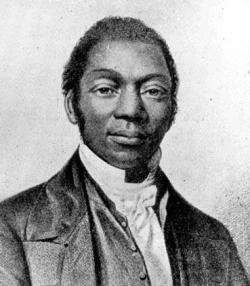
James W. C. Pennington, a former slave from Maryland, chronicles his life in his autobiography, detailing his harrowing escape from bondage and subsequent role as a Presbyterian minister in New York. His narrative, rich with personal experiences and challenges, evokes strong empathy from readers as he recounts significant moments, including his interactions with his family and the conditions of slavery. The text serves as both a stirring personal account and a broader commentary on the realities of enslaved life in America.

Buying and Selling Slaves

In the Purchase Region during slavery, slave trading occurred irregularly, primarily at owners’ homes, with prices influenced by the age and health of the slaves, sometimes reaching up to $1,000 for strong young males. Sales often resulted in heartbreaking separations of families, particularly between mothers and children. Living conditions varied widely among slaves, reflecting the dispositions of their owners. Additionally, relationships between white owners and enslaved women were not uncommon, complicating familial ties. Following emancipation, some former slaves chose to remain with their owners rather than face the uncertainties of freedom.

Myth at Uncle Tom’s Cabin

In Garrard County, the myth surrounding the celestial event of 1833 is illustrated through a story involving young Tom at the Old Thomas Kennedy farm, depicted in Uncle Tom’s Cabin. While playing cards, boys are interrupted by a slave announcing that the heavens are falling. Curious, young Tom investigates the claim, witnessing the meteor shower firsthand. Alarmed, he retreats to the main house, seeking sanctuary on a feather bed and praying for assistance amidst the striking spectacle.