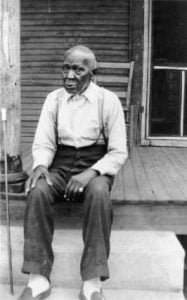
Slave Narrative of Walter Calloway

Walter Calloway

Walter Calloway, an 89-year-old former slave, reflects on his life during an interview in Birmingham, Alabama, in 1937. Born in Richmond, Virginia, in 1848, he recounts being sold to a plantation owner in Montgomery, where he faced hard work but relatively fair treatment. He describes witnessing the Civil War’s impact and the destruction caused by Union raiders. Although emancipation brought freedom, he notes that many former slaves, including himself, continued to work just as hard under difficult circumstances. Calloway’s narrative captures the resilience and hardships of ex-slaves.
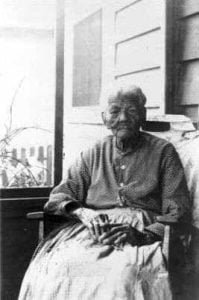
Slave Narrative of Charity Anderson

Charity Anderson, age 101

Charity Anderson, a 101-year-old former slave, recounts her life in Monroe County, Alabama, during the antebellum period. Born at Belles Landing, she describes her experiences under the care of Mr. Leslie Johnson, her white owner, whom she remembers as kind. Despite her frail health, Aunt Charity shares fond memories of her youth and duties in the Johnson household. She contrasts her past with the present, lamenting the loss of respect and manners in today’s society while expressing gratitude for her well-being and community support.

Slave Narrative of Maria S. Clemments (Clements)

Old Slave

Maria Sutton Clemments, recalling her life from her childhood in Lincoln County, Georgia, recounts her experiences as a enslaved person before and after the Civil War. She describes the harsh labor conditions, the looming threat of sale, and the emotional toll of family separations. Freedom arrived unceremoniously, and she describes the struggle to adapt in a land stripped of resources. After the war, she faced hardship, poverty, and the racial violence of the Ku Klux Klan. Despite her challenges, she remains resilient, relying on faith and community support.

Slave Narrative of James (Jim) Davis

James (Jim) Davis, born on Christmas morning in 1840 in North Carolina, recounts his life as a slave under Peter Davis, who he describes as benevolent. Jim worked from a young age, later sold to a speculator and moved to Texas. He escaped, joining Union forces as the Civil War ended. After the war, he moved to Arkansas, where he raised a large family and worked for the railroad for nearly five decades. Now, at 96, he reflects on his life struggles, health issues, and continued desire to work.

Slave Narrative of Mrs. C. Hood

In her narrative, Mrs. C. Hood recounts her grandmother’s experiences during the Civil War, illustrating the tension and danger of the era. Despite Union troops stealing from her, Mrs. Hood’s grandmother bravely reclaimed her beloved mare from soldiers. Additionally, she shares a story of her mother’s compassion towards an elderly slave named Old Tom, whom she secretly fed during food shortages. This act of kindness eventually led to Old Tom being given to her mother after her marriage, highlighting the bonds formed amidst the harsh realities of slavery.

Slave Narrative of Elphas P. Hylton

Elphas P. Hylton, a Union soldier from Lawrence County, recorded in his Civil War diary his experiences from July 17 to July 24, 1864. He noted witnessing a review of three thousand Black soldiers, which he found disheartening. His dissatisfaction with the military environment grew, prompting his desire to leave the area, referred to by him as a “negro hole.” Eventually, Hylton and his unit moved to a new camp near Danville, which he greeted with relief.

Slave Narrative of Mr. McIntosh

Mr. McIntosh, a progressive farmer with a significant food supply, was associated with the Rebel Army during the Civil War. His slave, Henry McIntosh, was drafted into the Union Army against his will but returned home after service. Following Henry’s departure, McIntosh struggled to manage his farm and enlisted a local youth, Mr. Wooton, for assistance. He also transferred another slave to his son-in-law, John Hyden, who operated the first store in their community.

Slave Narrative of W. B. Morgan

In Anderson County, Mr. W.B. Morgan recalls anecdotes from his experiences managing a livery barn and employing Black workers. He shares humorous tales about Kie Coleman, who was often drunk, and his quirky beliefs about funerals. Morgan also recounts an instance involving Bill, a superstitious one-legged employee, who expressed discomfort sharing the barn with the hearse, underscoring the cultural significance of funerals in their community. These stories reflect the complex interplay of humor, race, and societal attitudes of the time.

Biography of Alfred Richardson

In 1864, Alfred Richardson, a colored man, became the first to live in Warfield, a town that previously excluded Black residents. After being injured in a skirmish, he received care from locals who grew to appreciate him. Richardson transitioned from a paper hanger to a successful barber, ultimately owning property in Warfield. His contributions to the community earned him respect, and he was regarded as a valued citizen at the time of his passing.

Slave Narrative of Sam and Louisa Everett

Sam and Louisa Everett, now aged 86 and 90, recall their harrowing experiences of slavery near Norfolk, Virginia, where they endured the brutality of the McClain plantation. They were married under cruel circumstances orchestrated by their master, Big Jim, who exploited the slaves mercilessly. Both faced grueling labor, often under threat and violence, until they were freed in 1865. Afterward, they settled in Boston, Georgia, and eventually moved to Florida, where they now live with their son, burdened by their past but still remembering the horrors of their enslavement.

Slave Narrative of Mrs. Duncan

In her narrative, Mrs. Duncan recounts a perilous journey back to the Campbell family after the Civil War, fleeing threats from her old master. Upon arrival, she was welcomed with compassion and later worked as a house girl. Mrs. Duncan shares folk beliefs and practices from her life, including the use of silver dimes for protection against witchcraft and her experiences with witch doctors. She emphasizes the importance of these traditions for her family, highlighting their connection to both healing and the afterlife.

Slave Narrative of Aunt Adeline

Aunt Adeline, born into slavery around 1848 in Hickmon County, Tennessee, reflects on her life serving the Parks family over five generations. She recalls her early experiences, including performing for stagecoach passengers and her strong bond with her mother, Liza. Despite the oppressive environment, she was treated well and remained loyal to the Blakely family after the Civil War. Her narrative highlights the challenges of slavery, the impact of the Civil War on families, and her perseverance, as she continues to lead an active life in her later years.

Slave Narrative of Sweetie Ivery Wagoner

Sweetie Ivery Wagoner recounts her early life as the daughter of Betty and Louis Ivery on a large Arkansas plantation owned by Newt Titsworth. Her father, a Creek Indian, was enslaved and married to a slave woman. Sweetie describes the good treatment of slaves by Titsworth, who employed them in various tasks, and the abundance of food provided. Post-war hardships followed, leading to separation from her siblings. She reflects on her family’s Indian heritage and her mother’s education in reading, alongside a strong devotion to religion.

Slave Narrative of Moses Smith

Moses Smith, born in New Orleans, was sold to Master Jack Dunn and moved to Paris, Texas, where he worked on Dunn’s farms alongside twelve other slave families. His family lived in a modest two-room log cabin. Despite the hardships, he recalled moments of kindness from the Dunns, particularly the mistress. Moses attempted to run away but ultimately returned. After the Civil War, he worked for a local doctor and later formed a family with a woman named Lula, having three children together.

Slave Narrative of Eliza Whitmire

Eliza Whitmire, born in 1833 in Georgia, recounts her life as a slave on a Cherokee plantation owned by George Sanders. She vividly describes the forced removal of Cherokees in 1838 and the hardships faced during their journey to the Indian Territory. After the Civil War, she settled in Oklahoma and witnessed significant historical events, including the founding of Tahlequah and interactions with Cherokee leaders. Eliza reflects on the relative kindness of her Indian masters compared to whites and the struggles of freed slaves in adjusting to freedom.

Slave Narrative of Hula Williams

Hula Williams, born in Arkansas in 1857, recounts her mother Emmaline’s life as a slave on the Burns plantation in Mississippi before moving to Arkansas. She describes her father as the overseer Kelly and shares stories of cruelty, including the tragic fate of fellow slaves like Boyl Green, who chose death over submission. Williams also reflects on family, faith, and changing social norms, contrasting her upbringing with the behavior of modern youth. Her narrative highlights resilience and the impact of Christian values in her life.

Slave Narrative of R. C. Smith

R. C. Smith, a former slave and now a prophet, recounts memories of his life under slavery, the hardships faced, and his family’s history, including his father’s resistance to being whipped. He reflects on his youth, his father’s kindness from their master, and the transition to freedom after the Civil War. Despite struggles, including the loss of family during the war, he achieved independence and became a cowboy. Smith also shares visions and experiences of spiritual significance, believing in his prophetic abilities and treasure hunting endeavors.

Slave Narrative of Robert Williams

Robert Williams reflects on his life as a slave, recalling his early years in Mississippi and the pain of being separated from his family. He shares memories of working under various masters, the hardships of slave life, and the Civil War’s impact on his world. After emancipation, he navigated a new life while still tied to his former master, learning the value of work and the significance of freedom. Williams acknowledges the importance of education and his desire to read, expressing pride in Abraham Lincoln’s role in their liberation.

Slave Narrative of Sarah Wilson

Sarah Wilson, born in 1851 in Summers County, Tennessee, recounts her childhood as a slave. Separated from her mother at a young age, she remembers life on a plantation where she performed domestic chores and contributed to garden upkeep. Wilson describes the harsh realities of slavery, including witnessing brutality and the impact of the Civil War. After the war, she married William Young, later moved to Arkansas, and established a farm. At 86, she reflects on faith, freedom, and her family’s journey.

Slave Narrative of Milton Starr

Milton Starr, born on February 24, 1858, in the Cherokee Nation, details his upbringing as a slave under his master and father, Jerry Starr—a half-breed Cherokee. Unlike many slaves, he was treated well and raised alongside the Starr family, with little knowledge of the broader slave experience. His mother, Jane Coursey, was taken by the Starrs from Tennessee and returned there after gaining freedom. The narrative underscores the complexities of Cherokee slavery and family dynamics within this context.