
Indian Wars of New England

Indian Wars of New England

This post discusses the historiography of early Indian conflicts in New England, highlighting the contributions of William Hubbard, Church, Belknap, and Palfrey. It critiques Hubbard’s narrative as tedious and emphasizes Palfrey’s general overview, noting the limited focus on Indian-hostilities. The text outlines the periods of peace and subsequent violence, particularly referencing the impact of French and Indian alliances on English settlers from 1688 onward. It suggests the narrative is intended to offer a comprehensive account of these tumultuous interactions, from the Pequod Wars through French incursions.
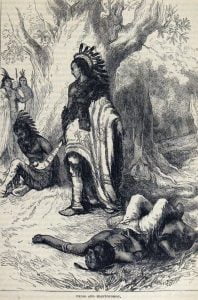
Quarrel between the Narragansetts and Mohegan

Uncas and Miantonomoh

The Pequots made a final attempt to reclaim their homeland, but were decisively defeated and scattered. Uncas of the Mohegans emerged powerful through alliances and warfare, ultimately executing Miantonimo, the Narragansett chief, after a surprise attack. Despite his military prowess, Uncas faced continuous skirmishes with rival tribes and the escalating mistrust of the English against the Narragansetts. The Mohegans, aligned with the colonists, navigated a contentious path that led to the decline of their tribes, marked by loss of land, identity, and dignity amidst colonization.

Mohegan Tribe

Uncas and Miantonomoh

The Mohegan, an Algonquian tribe, originated along the Thames River in southeastern Connecticut, claiming territories in parts of Massachusetts and Rhode Island. Emerging under Chief Uncas after the Pequot defeat in 1637, the Mohegan allied with English settlers, asserting control over rival territories. As colonial expansion progressed, they focused on a reservation near modern Mohegan and Norwich, leading to population declines through migration and intermarriage. Although their numbers dwindled to around 100 by the early 1800s, they maintained cultural traditions such as the Green Corn festival.

Mohegan Indian Chiefs and Leaders

Uncas and Miantonomoh

The article discusses influential Mohegan and New England Indian leaders, highlighting their significant contributions to the region’s history. Key figures include Samson Occom, a Mohegan minister who helped establish Dartmouth College; Caleb Cheeshateaumuch, the first Native Harvard graduate; Uncas, a prominent sachem whose alliances shaped tribal conflicts in the 17th century; and Oneka, Uncas’s son, who continued his father’s legacy. Their stories reflect the complexities of Native leadership amidst colonial pressures and changing tribal dynamics.

Connecticut Indian Tribes

Uncas and Miantonomoh

The Mahican Indians occupied Litchfield County’s northwest corner while the Mohegan, a distinct tribe of the Algonquian stock, settled primarily in the upper Thames River valley. The Mohegan played a significant role in the Pequot War, with Uncas, their chief, rising in prominence after the Pequot’s defeat. Other tribes like the Nipmuc and Pequot also inhabited Connecticut, with the latter known for their destructive conflicts with settlers. Native populations significantly declined due to wars and colonization impacts, yet some remnants still exist today.