
The Spokanes in Council

On September 24, 1858, Colonel G. Wright reported on the successful assembly of the Spokane nation, where various chiefs expressed remorse for their past actions against U.S. interests and willingly accepted terms for peace. The meeting revealed a shift in attitudes, particularly from Mil-kap-si, who had previously taken a defiant stance. The Spokane and affiliated tribes pledged to uphold their treaty obligations and maintain friendship with the U.S. Father Joset’s efforts in facilitating this understanding were acknowledged as instrumental in achieving peace.
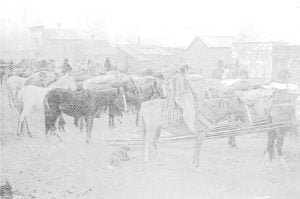
Jocko Reservation

Charlot's band on the March

In December 1890 and January 1891, Special Agent Horatio Seward reported on the Jocko Reservation’s Indian tribes, including the Flatheads, Pend d’Oreilles, and Kalispels. The reservation spans 1,433,600 acres and is largely self-sufficient, with most Indians engaging in farming. Despite some dependency on government aid, the community displays signs of progress in agriculture, education, and housing. The report highlights issues such as alcohol-related crime and a heavy death rate among the population, influenced by external societal factors.

Kalispel Indians

The Kalispel Indians, known by various names including Pend d’Oreilles for their distinctive shell earrings, were a part of the Salishan language family. Their territory spanned the Pend Oreille River and surrounding areas, extending eastward into parts of Canada. The tribe was first documented by Lewis and Clark in 1805. Over time, they experienced significant changes, including missionization and land surrender in 1855. The Kalispel have historical ties to several regional names, reflecting their cultural legacy.

Kalispel Tribe

The Kalispel Tribe, also known as the Pend d’Oreilles, is a Salish group located in northern Idaho and northeastern Washington. Historical estimates of their population varied, with Lewis and Clark reporting around 1,600 individuals in 1805. By 1851, the tribe was divided into two main groups: the Lower Lake Kalispel and the Upper Lake Kalispel, with populations of 520 and 480 respectively. In the early 20th century, their numbers had decreased significantly, with 640 Upper Pend d’Oreilles and 197 Kalispel under various agencies.

Blackfeet Tribe in War

The Blackfeet were originally a peaceful tribe, engaging in limited conflicts until the introduction of horses transformed their way of life. With horses enhancing their capacity to acquire and transport goods, raiding neighboring tribes for horses became a predominant aspect of Blackfoot warfare. This led to about seventy-five years of systematic horse theft expeditions, alongside the occasional battles resulting in casualties. The emergence of horse culture fostered a mindset valuing property and bravery, particularly through the act of “counting coup,” which highlighted individual valor in combat.

Blackfoot Tribe, Past and Present

Fifty years ago, the Blackfoot Tribe, comprising the Piikuni, Blackfeet, and Bloods, commanded vast territories dominated by buffalo herds. Their history reflects a migration from the north, driven south by conflicts, until they thrived on the plains with abundant resources. However, the disappearance of buffalo and the encroachment of white settlers have severely diminished their numbers and way of life. Today, a few remain, navigating the shift from their traditional lifestyle to an uncertain agricultural existence, embodying the poignant intersection of their storied past and a challenging present.