
Tribes of the Pike’s Peak Region

A Comanche Village

The Pikes Peak region has seen a succession of tribes throughout its history, including the Ute, Comanche, Kiowa, Cheyenne, Arapaho, and Sioux. Evidence indicates that these tribes, primarily nomadic, moved through and fought over this territory, which was rich in game. The Jicarilla Apache also frequented the area, maintaining relations with the Ute. Early Spanish records hint at these dynamics, although much of the prehistoric occupation remains speculative. The region’s diverse tribes engaged in trade, warfare, and cultural exchanges that shaped their interactions with one another and with incoming settlers.
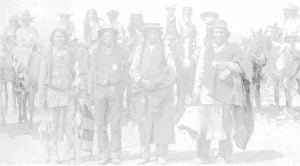
Jicarilla Apache Reservation

Jicarilla Apaches: Governor and Rulers in the Foreground

In September 1890, Special Agent George B. Meston reported on the Jicarilla Apache Reservation in New Mexico, home to 808 individuals. Spanning 416,000 acres, the largely unallotted land features timber and grazing areas, although agricultural activity is limited. The Apaches primarily engage in stock raising and some farming, with modest output recorded. The community remains culturally distinct with practices such as polygamous marriages and a lack of formal schooling. Their health is reportedly fair, though malnutrition and substance use are noted concerns.

Jicarilla Apache Tribe

The Jicarilla Apache Tribe, an Athapascan group, is historically noted for their basketry skills. They have inhabited the mountainous regions of southeast Colorado and northern New Mexico, with their origins tied to local rivers and the Taos area. First labeled by Spaniards in the 18th century, the tribe faced challenges from hostile relations with both Spanish settlers and neighboring tribes, leading to periods of conflict and forced relocations. Eventually, they were settled on a designated reservation in the Tierra Amarilla region, where they remain today.