Acton Massachusetts History
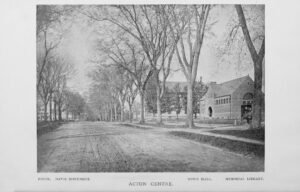
Acton in History traces the town’s development from its beginnings as Concord Village in the seventeenth century through its emergence as a modest industrial community. It gives particular attention to the religious life of the town, including the building of early meetinghouses and the long ministries of figures such as the Rev. John Swift and the Rev. James T. Woodbury. The work devotes substantial space to Acton’s role in the Revolution, especially the events at the North Bridge in 1775 and the loss of Captain Isaac Davis and his company of minute-men. It also follows the growth of local industries, from blacksmithing and cooperage to the far-reaching effects of the Fitchburg Railroad after its arrival in 1844. Later chapters include brief sketches of notable residents in the 1880s. Throughout, the narrative weaves in discussions of Acton’s everyday life, civic engagement, and social values.