
Society of Mississippi Choctaw 1914

The records from the National Archives published in November 1935 list members of a society connected to the Mississippi Choctaw, including their names, spouses, marriage dates, and addresses. Contributors Jackie Matte, Pat Creel-Kendrick, and Dusty provided this historical information, though the exact nature of the Society remains unclear. The detailed list reflects the community’s connections and heritage in the region, highlighting the significance of preserving Choctaw family histories and their interactions in Mississippi.
McKennon Roll Index

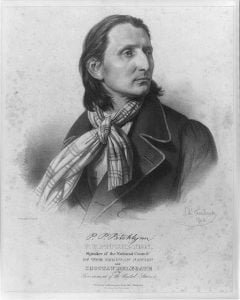
P.P. Pitchlynn, Speaker of the National Council of the Choctaw Nation and Choctaw delegate to the government of the United States

The McKennon Rolls were a specific list created by the Dawes Commission; a group responsible for identifying members of the Choctaw tribe in Mississippi. These rolls were supposed to include all the people who were officially recognized as Choctaw by the government in 1913.

List of Mississippi Choctaw, Who Received Scrip in Lieu of Land

This document lists the Mississippi Choctaw Indians who received scrip in lieu of land as mandated by the 1842 Congressional act, which compensated them under the 1830 treaty. The list includes patentees’ names, patent dates, and additional remarks, including the rights granted to family members. It reflects a significant aspect of the Choctaw’s historical struggle for land and their adaptation to new legal frameworks during the 19th century.

Regulations Governing Unrestricted Alienation of Lands for Town Site Purposes in Indian Territory

The document outlines regulations established by the Commission to the Five Civilized Tribes for the unrestricted alienation of lands designated for town-site purposes in the Indian Territory. It includes procedures for landowners from the Creek, Choctaw, Chickasaw, and Cherokee nations to petition for land alienation, detailing required information about the land and owners, and stipulating that approval from the Secretary of the Interior is necessary. The regulations also address the responsibilities of the Commission in reviewing petitions and ensuring financial accountability during land transactions.

Rules of Practice in Choctaw, Chickasaw and Cherokee Cases

The “Rules of Practice” established by the Commission to the Five Civilized Tribes in March 1903 outline procedures for contesting land allotments in the Choctaw, Chickasaw, and Cherokee nations. These rules dictate how contests can be initiated, requirements for complaints, service of notices, and protocols for trials. They ensure proper documentation and provide guidelines for appeals and motions for rehearing or review of decisions. The rules aim to facilitate fair and orderly legal processes regarding land disputes among these tribes.

Choctaw Allotment Contest Cases, 1904-1906

A historical table lists Choctaw allotment contest cases appealed from decisions of the Commission to the Five Civilized Tribes and the Commissioner to the Five Civilized Tribes, showing how each case was decided, any action by the Commissioner of Indian Affairs or Secretary of the Interior, and the status of each appeal as of May 31, 1906.

Decision Rendered William C. Thompson

On April 7, 1905, the Office of the Secretary confirmed the enrollment of William C. Thompson and his family as citizens of the Choctaw Nation. Their applications stemmed from a 1904 decision that denied claims of identity as Mississippi Choctaws. However, a review found Thompson qualified by bloodline, derived from Margaret McCoy. Legal opinions supported his rights, indicating previous misclassification by the Commission to the Five Civilized Tribes. Thompson’s wife, Sarah, and nephew, William R., also gained enrollment, establishing their rightful connections to the Choctaw Nation.

Decision Rendered Thornton D. Pearce

On March 19, 1904, the Commission to the Five Civilized Tribes concluded that Thornton D. Pearce should be enrolled as a citizen of the Choctaw Nation by intermarriage. Despite being a white man, Pearce married Choctaw citizen Parmelia A. Folsom in 1883 and resided continuously within the nation since 1878. Although he remarried after Folsom’s death, precedents indicate that his rights should not be revoked due to this subsequent marriage. The Acting Commissioner of Indian Affairs endorses this decision, affirming adherence to the governing treaty and laws.

Decision Rendered in Richard B. Coleman, et al

The Office of the Secretary affirmed the decision of August 8, 1904, regarding the enrollment of Richard B. Coleman and his family as citizens of the Choctaw Nation. The majority of the Commission found them entitled to enrollment by blood, dismissing allegations of fraud related to their admission. Legal opinions confirmed the validity of the 1889 act granting citizenship, stating that the original claims of descent were not substantiated by sufficient evidence of deceit. The decision allows the applicants to be enrolled and is upheld despite motions for reconsideration.

Decision Rendered James S. Long et al

On February 23, 1906, the Assistant Secretary reversed a previous commission decision denying citizenship applications from James S. Long, Joseph Long, and Forbis Long as Choctaw Nation members. Although Lula F. Long’s application was dismissed due to her death before a pertinent date, the other three were deemed eligible owing to their status as descendants and residents of the nation. This decision followed interpretations of tribal law and historical precedents of recognizing absentee Choctaws who settled in the nation.

Decision Rendered in James M. Buckholts, et al

On February 24, 1904, the Acting Secretary affirmed the decision of the Commission to the Five Civilized Tribes to enroll James M. Buckholts and his children, Rebecca and Alice Dwight, as citizens by blood of the Choctaw Nation. This decision was based on their lineage from William Buckholts, a recognized Choctaw citizen since 1872, despite protests from the Choctaw Nation regarding the initial application process. Evidence supported that the recognition of William’s citizenship implicitly included his descendants, leading to the approval of their enrollment.

Decision Digest – F – I

The post discusses various legal principles regarding land allotments and ownership rights, particularly in the context of fraud, gifts, and inheritance. Key cases illustrate issues such as fraudulent filings, the implications of inadequate consideration at sales, and the significance of improvements made to land. It emphasizes the importance of good faith in filing for land, the rights of guardians, and the standing of noncitizen spouses. The decisions also touch upon the conditions necessary for establishing ownership of improvements and the transfer of property rights.

Decision Rendered Ella Jones

On August 9, 1904, the Acting Secretary of the Office of Indian Affairs directed the enrollment of Ella Jones as a citizen by intermarriage of the Choctaw Nation, despite an earlier rejection. The decision was based on a recommendation from the Commissioner of Indian Affairs, which asserted that the applicant did not need to adhere to the Choctaw Nation’s marriage laws to gain citizenship. Notably, no arguments were filed by either the applicant or the Choctaw Nation regarding her case.

Decision Rendered Emma McMenamin

On February 3, 1905, the application of Emma McMenamin for citizenship in the Choctaw Nation was officially rejected. The decision, influenced by the opinion of the Assistant Attorney-General, highlighted that her rights could not be established through intermarriage, as both she and her husband were considered non-Indigenous. Existing laws and treaties indicated that citizenship required a connection by blood to the Choctaw Nation, which McMenamin lacked. This ruling reaffirmed the boundaries set by tribal citizenship laws.

Digest of Decisions Rendered, 1904 – 1906

The post discusses various legal principles and decisions regarding land allotments, abandonment, and appeals related to the Five Civilized Tribes, focusing on cases of contested land titles and the process of appeal. Key topics include the requirements for establishing abandonment, the authority of agents in land transactions, and the necessity of specific assignments of error in appeal cases. Additionally, it addresses the rights of Chickasaw freedmen concerning land ownership and improvements. The decisions illustrate the complexities of land rights and the legal considerations involved in allotment cases.

Decisions Rendered Loula West

On February 15, 1905, a communication from the Office of the Secretary addressed the case of Loula West, who sought enrollment in the Choctaw Nation after being denied by the citizenship court. The Assistant Attorney-General argued that the Commission to the Five Civilized Tribes had jurisdiction to examine her claim independently of previous rulings. This assertion emphasized that the prior judgments lacked validity due to jurisdictional issues, thereby entitling West to present her case for enrollment based on historical precedents.

Benjamin J. Vaughn Decisions Rendered

On April 1, 1905, the Office of the Secretary addressed the applications of Benjamin J. Vaughan and his children for enrollment in the Chickasaw Nation. Vaughan claimed citizenship through intermarriage with recognized citizen Emily Burney. Previous dismissals of their applications were deemed incorrect following new legal opinions that allowed for reconsideration based on merits. However, insufficient evidence regarding Vaughan’s marriage and children’s citizenship necessitated additional testimony before final adjudication. The record was returned for further review.

Choctaw and Chickasaw Enrollment Cases

On January 2, 1906, the Commissioner to the Five Civilized Tribes established procedures for individuals seeking enrollment as citizens of the Choctaw or Chickasaw Nations based on recent Attorney-General opinions. Petitioners must submit a sworn written petition detailing their claims and serve copies to the respective tribal attorneys, who will have 15 days to respond. Hearings may follow if deemed necessary. Decisions will ultimately be sent to the Secretary of the Interior for review, impacting future enrollment and land allotments.

Choctaw and Chickasaw Agreement, July 1, 1902

The Act of July 1, 1902, ratifies an agreement between the United States and the Choctaw and Chickasaw tribes, made on March 21, 1902, outlining land allotments and governance. It establishes processes for appraising and allotting land to tribal members, defines citizenship criteria, and provides for the reservation of specific lands. It also addresses the rights of Chickasaw freedmen, enrollment procedures, and the management of coal and asphalt deposits. The agreement requires ratification by the tribes and the U.S. Congress.

Act June 21, 1906 – Choctaw and Seminole

The Act of June 21, 1906, addresses financial provisions for the Choctaw and Seminole tribes, detailing permanent annuities for various necessities such as education, governance, and infrastructure, totaling over $30,000 for the Choctaws and $28,500 for the Seminoles. It also includes amendments to previous acts concerning enrollment applications and the judicial organization in the Indian Territory. Land management provisions and the removal of restrictions on property sales are noted, alongside authorizing the Secretary of the Interior to oversee specific financial and organizational matters.