History of Long Beach, California

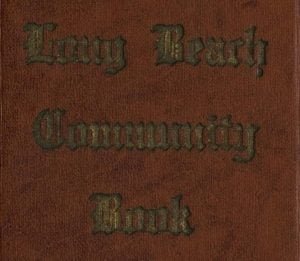
Long Beach Community Book

The “Long Beach Community Book,” authored by Walter H. Case and published in 1948 by A.H. Cawston, is an extensive exploration of the history and development of Long Beach, California. The book is divided into two main sections: a historical narrative and biographical sketches. The first part of the book offers a detailed account of Long Beach’s evolution from its early beginnings to a thriving city. It covers various aspects of the city’s growth, including its geographical advantages, municipal governance, public facilities, educational institutions, and notable events such as epochal oil discoveries and the impact of wartime activities. The narrative also addresses challenges faced by the city, such as land subsidence and the major issue of tideland rights. The second part of the book comprises biographical sketches of significant Long Beach citizens, both past and present, highlighting their contributions to the community.

A History of Sayville, New York

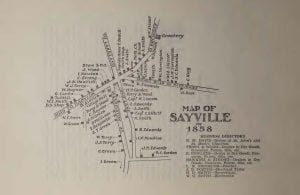
Map of Sayville, New York, in 1858

In the heart of Suffolk County, New York, lies a village with a history as rich as the soil upon which it stands. “A History of Sayville, New York,” penned by Clarissa Edwards in 1935, is an invaluable chronicle that sheds light on the early days of this often-overlooked locale. Published by the Suffolk County News Press, this work is a testament to the enduring spirit of Sayville, a village that has woven itself into the fabric of American history, yet remains scarcely mentioned in conventional historical texts.

A History of Seneca Falls New York Newspapers

Ovid Bee Newspaper

In 1829, O. B. Clark launched the Seneca Falls Journal, establishing the village’s first newspaper amid rising support for its anti-Masonic and anti-Jacksonian themes. Various publications followed, including the Seneca Farmer and the Seneca Falls Register, reflecting the evolving political landscape. Over the decades, numerous titles emerged and merged, including the Seneca County Courier and the Seneca Falls Reveille, each documenting significant local events and serving as valuable resources for genealogists and historians alike, preserving the community’s rich history.

History of the Seneca County New York Press

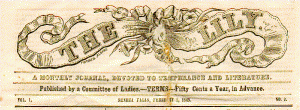
Masthead of the Lily in Seneca Falls

The history of the press in Seneca County reflects the broader narrative of American journalism’s evolution, characterized by local newspapers that documented societal changes and opinions. The first publication, the Seneca Patriot, emerged in 1815, followed by various newspapers that reflected political trends from Federalism to Democratic ideals. Notable figures, such as Amelia Bloomer, contributed to the media landscape with publications advocating reform. Though many papers faced struggles with sustainability, they played pivotal roles in shaping public discourse and preserving local history, ultimately illustrating the press’s enduring influence in the county.

Suydam, Robert F. – Obituary

Robert Francis Suydam, 41, passed away in Madras, Oregon, on September 3. Employed by the First National Bank, he previously resided in La Grande. Born in 1926, he served in the Korean War and was active in the Episcopal Church and Masonic Lodge. He married Beverley Bull in 1954 and is survived by her, their children, and other family members. Funeral services are scheduled for September 8 at Crippin and Daniels Funeral Chapel, with burial at Hillcrest Cemetery, La Grande.

Suydam, Arnold F. – Obituary

Arnold Frances Suydam, 43, manager of Eddys Bakery, died on July 31 due to injuries from an automobile accident the previous evening. He was making a delivery related to the Chief Joseph Days celebration when the incident occurred. A lifelong resident of La Grande, born on April 16, 1906, he is survived by his wife Bernice, son Robert, daughter Barbara Jean, parents Frank and Mrs. Suydam, a brother, and a sister. Services took place on August 3, with burial at the City Cemetery.