
North America Indian Names of Places in Mississippi, Alabama, Georgia, Florida, and Louisiana

The post examines the significance and origins of North American Indian place names in Mississippi, Alabama, Georgia, Florida, and Louisiana, particularly those derived from the Choctaw and Chickasaw languages. It highlights how these names reflect the rich cultural and linguistic heritage of the Native American tribes, while noting that many translations have become corrupted over time. The text provides numerous examples of place names alongside their original meanings, illustrating the deep historical connections embedded in the geography of the region.
Views on the Choctaw and Fables – North American Indians

In 1723, the Choctaw territories spanned from the Mississippi River to the Black Warrior and included over sixty towns, with an estimated twenty-five thousand warriors. Their fables, known as Shukha Anump, reflect moral lessons, akin to Aesop’s. One fable recounts a turkey and a terrapin, illustrating that arrogance can lead to downfall, as the underestimated terrapin outsmarts the turkey. The author emphasizes that the ancient Indians valued traits like truth, honor, and hospitality, suggesting their readiness for civilization and Christianity, despite skepticism from others.

Missionaries among the Native Americans

Missionaries, notably Rev. Cyrus Kingsbury, began their work among the Choctaws in 1818, establishing the first Protestant mission in the region. Initially met with goodwill, the missionaries faced challenges, including local superstitions, exemplified by the tragic killing of a woman accused of witchcraft. Over time, the missionaries gained the trust of the Choctaws, promoting education and moral teachings. Their efforts led to the formation of schools, churches, and local governance, fostering a significant spiritual and social transformation among the Choctaw Nation.

The Discovery Of This Continent: It’s Results To The Natives

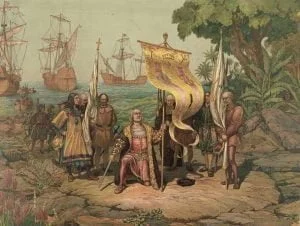
Columbus Landing on Hispaniola

In 1470, Christopher Columbus married Dona Felipa, daughter of a renowned navigator, and settled in Porto Santo, where they shared dreams of discovering lands to the West. Their ambitions fueled Columbus’s determination, leading to his 1492 voyage that resulted in the European discovery of the Americas. However, this event marked the beginning of devastation for native peoples, introducing warfare, disease, and colonization that would decimate their populations and cultures, ultimately transforming their rich, diverse societies into shadows of their former selves.

Slave Narrative of John Cole

John Cole, an 86-year-old ex-slave from Athens, Georgia, recalls his life under slavery and the changes brought by the Civil War. He describes the hard work on the Oglethorpe plantation, the social life of enslaved people, and their coping mechanisms. Cole reflects on the arrival of Union soldiers, which brought an end to slavery, but he remained tied to the land, working for his former master for two decades without pay. He shares insights on superstitions and attributes his long life to avoiding smoking and drinking.