Abington Massachusetts Marriage and Death Records

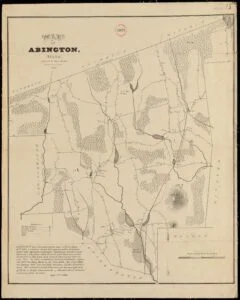
1830 Map of Abington, Massachusetts

Volume 2 of the Abington, Massachusetts vital records compiles marriage and death records up to 1850, complementing Volume 1, which contains birth records. Established in 1712, Abington’s boundaries have shifted, affecting historical jurisdiction. Extensive research from town records, cemeteries, and family Bibles ensured comprehensive documentation, including the identification of Black families recorded by given names. The volume is organized alphabetically by marriages and deaths.

Abington Massachusetts Birth Records

1830 Map of Abington, Massachusetts

Volume 1 of the Abington, Massachusetts vital records details births recorded in the town up to 1850, featuring comprehensive research from town records, cemeteries, and church documents. Established in 1712, Abington’s jurisdictional changes may affect genealogical searches. The records also include separate listings for Black families, primarily by given names. Additionally, various surnames are cataloged, emphasizing the need to consider alternate spellings. For marriages and deaths, researchers should consult Volume 2.

Vital Records of Bellingham, Massachusetts

Vital Records of Bellingham Massachusetts to the year 1850

Alphabetical indexes to the vital records of Bellingham, Massachusetts, up to the year 1850, supplemented by information from bible records, church registers, cemetery inscriptions and other private sources to include the diary kept by Samuel Wight and his daughters.

Medway Massachusetts vital records

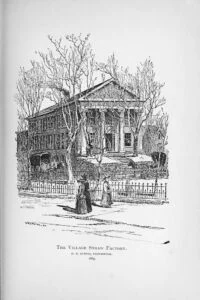
Medway Village Straw Factory

Alphabetical indexes to the vital records of Medway, Massachusetts, up to the year 1850, supplemented by information from church registers, cemetery inscriptions and other private sources to include Rev. Dr. Jacob Ide’s account of Marriages and Deaths, 1814-1849.

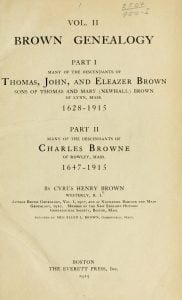
Brown Genealogy

Brown Genealogy

In 1895, Cyrus Henry Brown began collecting family records of the Brown family, initially with the intention of only going back to his great-grandfathers. As others became interested in the project, they decided to trace the family lineage back to Thomas Brown and his wife Mary Newhall, both born in the early 1600s in Lynn, Massachusetts. Thomas, John, and Eleazer, three of their sons, later moved to Stonington, Connecticut around 1688. When North Stonington was established in 1807, the three brothers were living in the southern part of the town. Wheeler’s “History of Stonington” contains 400 records of early descendants of the Brown family, taken from the town records of Stonington. However, many others remain unidentified, as they are not recorded in the Stonington town records. For around a century, the descendants of the three brothers lived in Stonington before eventually migrating to other towns in Connecticut and New York State, which was then mostly undeveloped. He would eventually write this second volume of his Brown Genealogy adding to and correcting the previous edition. This book is free to search, read, and/or download.

Read Genealogy of Newport RI and Freetown MA

Old Families of Southeastern Massachusetts

The Read family, with origins in Newport, R.I., traces back to John Reade, a cordwainer who arrived from England. His descendants played significant roles in Freetown, Mass., establishing a tannery that thrived for generations. Notable family members include Paddock Richmond Read, who became a prominent figure in Fall River before moving to Taunton, where he worked as a photographer. His family continued the legacy of education and service, with several members becoming teachers and community leaders.

Morey Genealogy of Bristol RI and Norton MA

Old Families of Southeastern Massachusetts

The Morey family, established in New England, has roots tracing back to George Morey, who settled in Bristol, Rhode Island, in 1683. The name has various spellings, including Mowry, particularly in Rhode Island. George’s son, also named George, moved to Norton, Massachusetts, where he became an innholder and served in the 1745 Louisburg expedition. His descendants continued to live in Norton, contributing to the community until modern times, with ties to the Paddock Richmond Read lineage through Belinda Copeland Morey.

Holman Family of Attleboro Massachusetts

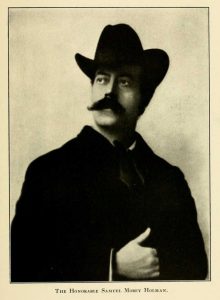
Samuel Morey Holman

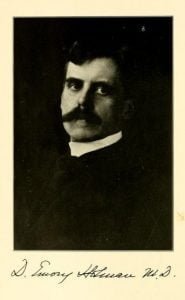
The Holman family has been a significant presence in Massachusetts for over two centuries, deeply involved in the social, religious, and educational spheres of Attleboro. Their lineage traces back to Solomon Holman, an early settler believed to have arrived from Bermuda, whose descendants include notable figures like Rev. Nathan Holman and Dr. David Emory Holman. The family has contributed richly to local and national life, with members excelling in various professions, including ministry, medicine, and the arts, particularly through Samuel Francis Holman, an acclaimed artist in Paris.

Descendants of Charles Little Hauthaway of North Bridgewater MA

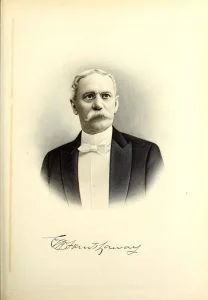
Charles Morton Hauthaway

The Hauthaway family, originating from Charles Little Hauthaway of Roxbury, settled in North Bridgewater in 1828, establishing a legacy in the shoe and blacking industries. Charles, initially a shoemaker, founded C. L. Hauthaway & Sons, which thrived globally, particularly in blacking products. He was deeply involved in his community and various organizations until his death in 1884. His son, Charles Morton Hauthaway, continued this enterprise and served in the Civil War, passing the business to his son, Frank Morton Hauthaway, solidifying the family’s enduring presence in the region.

Holman Family of Attleboro, MA

David Emory Holman

The Holman family of Attleboro, Massachusetts, has a rich heritage spanning over two centuries, tracing back to Solomon Holman, who arrived from the Bermuda Islands in the late 17th century. This lineage produced notable figures, including Rev. Nathan Holman, a long-serving pastor, and prominent descendants like Dr. David Emory Holman and artist Samuel Francis Holman. The family has significantly influenced the social, religious, and educational landscape of Attleboro, with members achieving distinction in various fields and maintaining a legacy of civic engagement and community upliftment.

Descendants of William Swift of Sandwich, MA

Noble Parker Swift

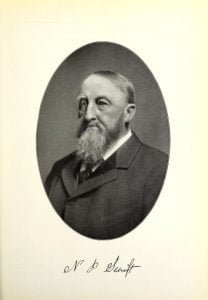
Noble Parker Swift, born September 5, 1830, in Sagamore, Massachusetts, was the last of a prominent lineage of Cape Cod cattle dealers and butchers. Engaging early in his family’s meat business, he expanded into cranberry culture, becoming a notable landowner. A man of integrity and conservative principles, he never sought political office but was respected in local affairs. Swift married Sarah Elizabeth Hallett and had three children. He passed away on July 15, 1911, leaving a legacy intertwined with the development of the meat packing industry.

Descendants of Benjamin S. Atwood of Whitman, MA

Benjamin S. Atwood

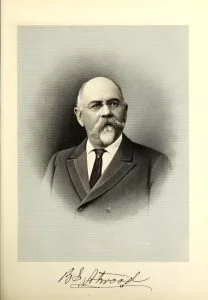
Benjamin S. Atwood, born June 25, 1840, in Carver, MA, was a prominent box manufacturer in Whitman and a respected Civil War veteran. His lineage traces back to John Atwood, an early Plymouth Colony settler. Atwood’s commitment to his community was exemplified by his role in establishing Whitman’s waterworks and his staunch defense of workers’ rights against union pressures. A Republican and active Mason, Atwood’s legacy includes a successful business and a reputation for fairness and integrity, reflecting the values of his forefathers.

Pierce Family of North Bridgewater, MA

chester pierce

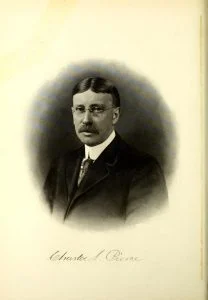
The Pierce family traces its lineage back to England and early New England settlers, notably Richard Pearse, who arrived in America in 1630. The family has produced numerous notable figures, including Charles S. Pierce, a respected Brockton citizen and cabinetmaker, and his sons, George R. Pierce, a successful merchant, and Charles S. Pierce, a prominent manufacturer. Their legacy continues to thrive in North Bridgewater, showcasing a rich history of industriousness, community involvement, and moral integrity, reflected in their contributions to both business and society.

A History of Swan’s Island, Maine

History of Swan's Island

Upon the very threshold of this historical sketch we find ourselves quite destitute of early public records for Swan’s Island. For over half a century from the settlement of this island until its organization as a plantation no municipal records were kept. But we are fortunate that H. W. Small saw purpose in bringing to light many private family records, old deeds showing what lots were occupied by the pioneer settlers; and written mutual agreements, which seem to have been often the result of arbitration on any disputed point where different claims to land conflicted with one another.

A Brief History of Norwich University

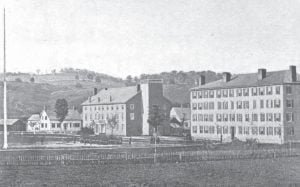
Norwich University 1862 - North Barracks South Barracks

In 1835, the American Literary, Scientific, and Military Academy was incorporated as Norwich University in Vermont. Established by Captain Alden Partridge, the institution was notable for its secular education, free from sectarian influence. It aimed to develop patriotic and educated citizens, emphasizing moral principles and religious respect without imposing specific beliefs. Throughout its early years, Norwich University contributed significantly to the training of military leaders during the Civil War, producing numerous distinguished officers for both the Army and Navy.

Norwich Vermont in the Civil War

During the Civil War, Norwich, Vermont, contributed 185 soldiers to the Union Army, representing over ten percent of its population of 1,759. Of these, 27 men died in service. The town provided substantial bounties totaling around $32,000 to support its troops. Although the community largely supported the war effort, some residents expressed disloyalty, yet over time, many reconciled their past by honoring the fallen soldiers on Memorial Days. Overall, Norwich’s commitment to the Union cause reflected a broader dedication seen throughout Vermont.

Norwich Vermont in the Revolutionary War

Norwich, Vermont provided modest participation in the Revolutionary War, highlighted by its formation of a Committee of Safety in March 1777. Evidence suggests a militia was established as early as 1774. The town contributed to regiments under Colonels Warner and Bedell. Local militias organized for defense amid threats from British forces in 1776, further demonstrating Norwich’s involvement. Despite lacking comprehensive records, the enlistment of local soldiers was significant, along with efforts to protect the community from loyalist activities and contribute to the war effort.

Biography of F. Arthur Morey

F. Arthur Morey, a lifelong resident of Racine, Wisconsin, hails from a distinguished family lineage that traces back to 1626 England. Born in June 1870, he graduated from Racine High School and attended the University of Wisconsin. Morey entered the business world through various roles in wagon companies before joining his father in a real estate and loan business. Following his father’s and brother’s passing, he successfully managed the firm. Married in 1894, he and Alice E. Stephan have three children. Morey is active in both the Masonic fraternity and community service.