
Treaty of August 11, 1827

On August 11, 1827, a treaty was established at Butte des Morts between U.S. Commissioners Lewis Cass and Thomas L. McKenney and the Chippewa, Menomonie, and Winebago tribes. This treaty aimed to define the southern boundaries of the Chippewa territory, resolve disputes involving New York tribes, and delineate jurisdiction over contested lands. It included provisions for education funding and addressed recent conflicts. Ratified by the President and Senate, the treaty emphasized that it would not affect the rights of the New York Indian tribes to their lands.
Biography of Alfred B. Miner

Alfred B. Miner, born in Michigan in 1842, became a leading businessman in Colton, California, where he served as president of the Colton Packing Company. After a decade in Chicago, illness led him to California in 1877, where he excelled in the fruit industry. By 1886, he established the Colton Packing Company, significantly boosting the local economy and supporting local fruit-growers. In addition to his business endeavors, Miner contributed to community infrastructure as president of the Colton City Water Company. He was married to Eliza J. Abbot and had one son, Frank A. Miner.

Oscar Casey, Chickasaw

This record details the applications of Oscar Casey, Scott Casey (Walter Winfield Casey), and others for Chickasaw citizenship through the Dawes Commission (No. 191) in 1896. Claiming descent from Tempie Thomas, a Chickasaw woman, and William Casey, they presented affidavits and a prior Chickasaw court petition. Their application was denied, and no appeal was filed. Later, Scott Casey sought enrollment for himself and his children in 1902 but was rejected due to jurisdictional constraints. Similar cases involving Catherine Whittle, Sarah Whittle, and Eliza Jane Pearce for Choctaw citizenship are also documented, detailing legal proceedings and supporting testimony.

Improvements to Annexed Cherokee Lands

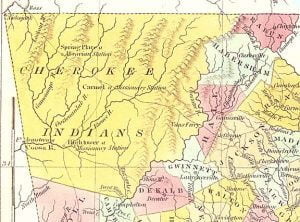
1830 Map of Cherokee Territory in Georgia

The Treaty of May 6, 1828, granted the Cherokee Nation 7 million acres as a permanent home, recognizing their sovereignty while mandating the cession of remaining lands to the United States. As a result, some Cherokee settlers were displaced from previously believed tribal lands. The treaty stipulated that land ceded would be appraised, and cash payments would be made for improvements made by proprietors. Numerous accounts detail the assessed value of various improvements, reflecting the complexities of land and ownership during this period.