History of Newport New Hampshire

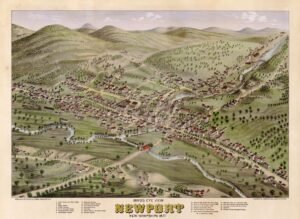
Bird's Eye View of Newport New Hampshire 1877

The History of Newport, New Hampshire, from 1766 to 1878 is a record of Newport’s growth from its early settlement through the close of the nineteenth century. It opens with the original charter and proprietary arrangements and follows the development of Newport’s physical setting, transportation routes, and economy. Particular attention is given to mills, banks, hotels, manufacturing, and the coming of the railroad, all of which shaped the town’s commercial life. The concluding genealogical section identifies families connected with Newport and other chapters provide biographical details that might otherwise be lost.

Vital Records of Sheffield Massachusetts, 1733-1792

Map of Sheffield, Harstville, Southfield and New Marlborough Massachusetts

The vital records of Sheffield, Massachusetts from 1733 to 1792 detail the town’s historical births, marriages, and deaths. While names and dates are transcribed accurately, some wording has been abbreviated for clarity. Marriage records often specify the union of couples, while birth records typically include parental names. Notably, some families lack marriage entries, starting instead with a child’s birth. The records also document a few out-of-wedlock births, emphasizing lineage through parental names, even in adult death records.

Vital Records of Bellingham, Massachusetts

Vital Records of Bellingham Massachusetts to the year 1850

Alphabetical indexes to the vital records of Bellingham, Massachusetts, up to the year 1850, supplemented by information from bible records, church registers, cemetery inscriptions and other private sources to include the diary kept by Samuel Wight and his daughters.

Medway Massachusetts vital records

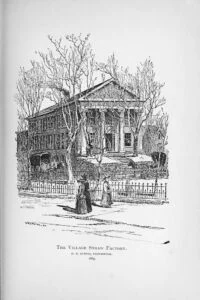
Medway Village Straw Factory

Alphabetical indexes to the vital records of Medway, Massachusetts, up to the year 1850, supplemented by information from church registers, cemetery inscriptions and other private sources to include Rev. Dr. Jacob Ide’s account of Marriages and Deaths, 1814-1849.

History of the Town of Cornwall Connecticut

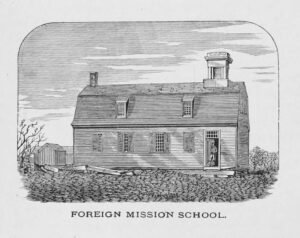
Foreign Mission School, Cornwall, Connecticut

The History of the Town of Cornwall Connecticut is a comprehensive account of the town’s evolution from colonial organization in 1731 to its involvement in national events like the Civil War. They include detailed geographical descriptions, ecclesiastical histories of local churches, and biographical sketches of families such as the Sedgwicks and Golds. The records also reflect social life, farming, early fashion, and the noteworthy Foreign Mission School.

History of Blaine Washington, 1884-1959

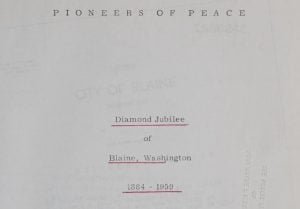
Pioneers of peace - diamond jubilee anniversary, Blaine, Washington, 1884-1959

“History of Blaine Washington, 1884-1959” offers a comprehensive and engaging exploration of Blaine, Washington’s rich history and cultural heritage. Published in 1959 to commemorate the diamond jubilee of Blaine, this book captures the essence of a community that has thrived on the principles of peace and cooperation. Situated in Whatcom County, Blaine’s unique geographical location near the Canadian border plays a pivotal role in its identity, an aspect vividly illustrated through the symbol of the International Peace Arch.

Families of Ancient New Haven

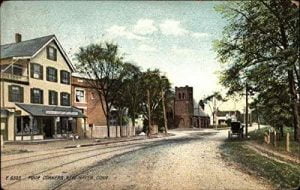
Four Corners New Haven Connecticut

The Families of Ancient New Haven compilation includes the families of the ancient town of New Haven, covering the present towns of New Haven, East Haven, North Haven, Hamden, Bethany, Woodbridge and West Haven. These families are brought down to the heads of families in the First Census (1790), and include the generation born about 1790 to 1800. Descendants in the male line who removed from this region are also given, if obtainable, to about 1800, unless they have been adequately set forth in published genealogies.

The Langlois Family of Prairie du Rocher Illinois

Tracing the descendants of Ettienne Langlois, founder of Prairie du Rocher, proves challenging. He married Catherine Beaudrau and had several children, including Marie Louise and Marie Josefine, among others. Ettienne had two brothers, August and Louis. Pierre Langlois, possibly related, married Catherine Normand Labriere and had two children. His daughter, Marie Louise, entered a marriage contract in 1785. Pierre Langlois passed away in 1789, with his widow managing his estate shortly thereafter.

Messenger Family of Norwich Vermont

Nathan and Nathaniel Messenger settled in Norwich, Vermont, in the mid-18th century, with Nathan arriving as early as 1765. Nathan drowned shortly after 1766, while Nathaniel served in the Revolutionary War before leaving for New York around 1805. Nathaniel’s son, Oliver, married Charlotte Smith in 1803, fathering Erastus and Nelson. Erastus resided in the historic Hatch house, raising a large family, which included notable descendants such as current town clerk George Messenger. The connection between the two Messengers remains unclear.

Hutchinson Family of Norwich Vermont

The Hutchinson family, one of the early settlers in Norwich, Vermont, traces its roots back to Massachusetts in the late 1620s. Abijah Hutchinson, a descendant, settled in Windham before moving to Norwich in 1765 with his son Samuel. They cleared land for farming and eventually made a permanent settlement. Samuel and his wife Jemina had several children, continuing the lineage. John Hutchinson, a soldier in the Continental Army, and his descendants include notable figures and various branches in New York and beyond.

Baxter Family of Norwich Vermont

The Baxter family, originally from Norwich, Connecticut, settled in Norwich, Vermont, in 1777. Elihu Baxter and his wife, Tryphena Taylor, had fifteen children, with twelve surviving to adulthood. Their descendants spread across Vermont and beyond, with several establishing prominent careers. Notable figures include William Baxter, a distinguished lawyer, and James Baxter, a member of the Provincial Parliament in Canada. The family’s influence extended through various trades and professions, with connections maintained in the region into the 19th century.

History of the Industries of Norwich VT

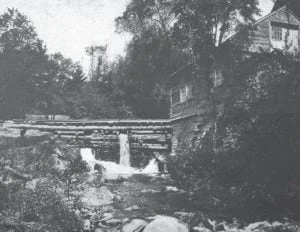
Knapp’s Mill, Norwich, Vermont

The industries of Norwich, VT, while not extensive, have displayed diverse characteristics since the late 18th century. Early establishments included grist and saw mills along Blood Brook, with ownership changing hands over the years. Other ventures featured tanneries, harness and trunk making, and the production of potash and furniture. Notable craftsmen, such as blacksmiths and boot makers, contributed to the local economy. Over time, businesses evolved, leading to the establishment of a creamery in 1888, which later became part of Hood Co.

Migration of Families out of Norwich VT

In the late 18th and early 19th centuries, Norwich, Vermont, experienced significant emigration, leading to a notable decline in its population. Initially home to 40 families in 1771, the town saw many residents relocate to newer settlements, such as Royalton and Randolph, during and after the Revolutionary War. Prominent families, including the Hibbards and Carpenters, contributed to the establishment of towns in northern Vermont and beyond. By the 1800s, the trend of outmigration intensified, marking a long-term shift in the region’s demographic landscape.

Norwich Vermont in the Civil War

During the Civil War, Norwich, Vermont, contributed 185 soldiers to the Union Army, representing over ten percent of its population of 1,759. Of these, 27 men died in service. The town provided substantial bounties totaling around $32,000 to support its troops. Although the community largely supported the war effort, some residents expressed disloyalty, yet over time, many reconciled their past by honoring the fallen soldiers on Memorial Days. Overall, Norwich’s commitment to the Union cause reflected a broader dedication seen throughout Vermont.

Norwich Vermont in the Revolutionary War

Norwich, Vermont provided modest participation in the Revolutionary War, highlighted by its formation of a Committee of Safety in March 1777. Evidence suggests a militia was established as early as 1774. The town contributed to regiments under Colonels Warner and Bedell. Local militias organized for defense amid threats from British forces in 1776, further demonstrating Norwich’s involvement. Despite lacking comprehensive records, the enlistment of local soldiers was significant, along with efforts to protect the community from loyalist activities and contribute to the war effort.

History of the Bridges Between Hanover NH and Norwich VT

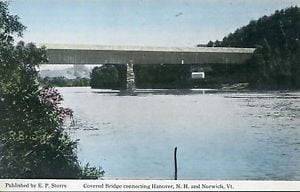
Norwich-Hanover covered bridge

The first recorded crossing of the Connecticut River between Norwich, VT, and Hanover, NH, was in 1765 using a canoe. Following this, ferry services began around 1778, with disputes over ferry rights between the two towns and Dartmouth College. By 1796, the first bridges were established, with significant community efforts aimed at creating a free bridge. Ultimately, following discussions and public support, the Ledyard Free Bridge was constructed in 1859, marking the first free bridge over the river between the two states.

Norwich Vermont and Dartmouth College

Norwich, Vermont, and Dartmouth College share a significant historical bond. Founded around the same time, both institutions benefited from mutual support, with Norwich contributing land and donations for the college’s establishment in Hanover. The founders of Norwich had personal ties with Dartmouth’s founder, Rev. Dr. Wheelock, who nearly chose Norwich as the college’s location. Over the years, Norwich supplied a substantial number of students to Dartmouth, highlighting a close relationship that fostered mutual growth and education amidst the challenges of their early settlements.

List of the Principal Pioneer Settlers in Norwich Vermont

In 1771, the population of Norwich, Vermont, was recorded at 206 people in forty families, highlighting its growth since being chartered by New Hampshire. The town was part of Gloucester County after 1772, previously belonging to Cumberland County. The census showed a predominance of youth, with 92 children under sixteen. The list of pioneer settlers includes notable names such as Daniel Baldwin, Ebenezer Ball, and Medad Benton, many of whom contributed to the establishment of the community by clearing land and building essential structures.

First Settlements in Norwich Vermont

The early settlement of Norwich, Vermont, began in 1762 when Samuel Slafter’s son, John, explored the area, reporting its fertile land and water sources. In 1763, after receiving his father’s rights, he commenced clearing lots but faced challenges, as his initial choice proved unsuitable. By 1765-66, a few families settled permanently, including the Hutchinsons and Manns, establishing homes and farms. Pioneers endured various hardships, yet they built foundations for a thriving community, characterized by a homogeneous population primarily from Connecticut.