Lowell Massachusetts Genealogy

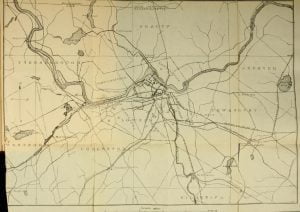
1894 Map of Lowell

Tracing ancestors in Lowell, Massachusetts online and for free has been greatly enhanced by the University of Massachusetts in Lowell which provided digitized version of a large quantity of the Lowell public records. Combined with the cemetery and census records available freely online, you should be able to easily trace your ancestors from the founding of Lowell in 1826 through 1940, the last year of available census records. To add color to the otherwise basic facts of your ancestors existence we provide free access to a wide range of manuscripts on the history of Lowell, it’s manufactures and residents.
Biographies of Western Nebraska

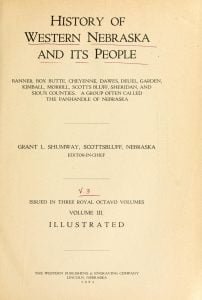
History of Western Nebraska and its People

A historical overview of western Nebraska and its pioneer settlers, this volume highlights the men who helped build counties across the Nebraska Panhandle, including Cheyenne, Box Butte, Deuel, Garden, Sioux, Kimball, Morrill, Sheridan, Scotts Bluff, Banner, and Dawes. It also points readers to biographies, history volumes, and a gallery of 143 photographs.

Business Men of Northern Maine

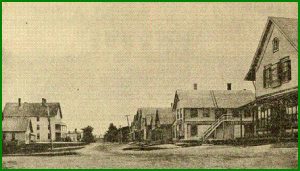
Winn Maine - Main Street looking East

A historical business directory and local history of Northern Maine from 1891, featuring sketches of nine towns including Houlton, Presque Isle, Caribou, and Fort Fairfield. The manuscript profiles businesses, owners, and civic institutions, and includes a gallery of period photographs, town views, and advertisements drawn from the era.

Disbursements to Cherokees under the Treaty of May 6, 1828

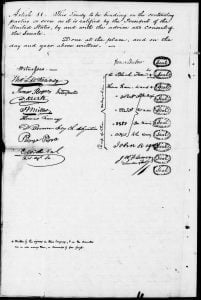
Treaty of May 6, 1828, page 9

An abstract of disbursements made by Cherokee agent George Vashon records payments to 390 Cherokee families, totaling 1,835 individuals, under the fifth article of the 1828 treaty. Between September 1830 and December 1833, Vashon distributed $47,251.75 of the $50,000 congressional grant by War Department drafts, with a slight discrepancy from the actual recorded amount.

Genealogical and Family History of Vermont

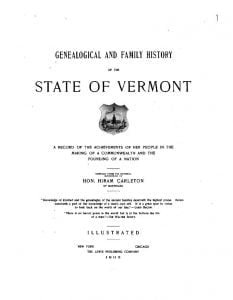
Genealogical and Family History of the State of Vermont vol 1

Hiram Charlton took on the publication of the Genealogical and Family History of the State of Vermont for Lewis Publishing. In it, he enlisted the assistance of living residents of the state in providing biographical and genealogical details about their family, and then he published all 1104 family histories in two distinct volumes.

Portrait and Biographical Record of Seneca and Schuyler Counties, NY

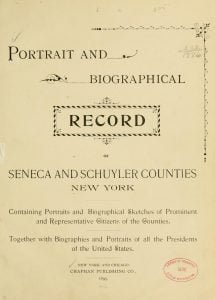
Portrait and Biographical Record of Seneca and Schuyler Counties New York

An online index to the Portrait and Biographical Record of Seneca and Schuyler Counties, New York, this volume preserves portraits and biographical sketches of prominent local citizens, including many overlooked by public records. Compiled with care for accuracy, it offers valuable material for genealogists and historians, along with biographies of all U.S. presidents.

History of the Bridges Between Hanover NH and Norwich VT

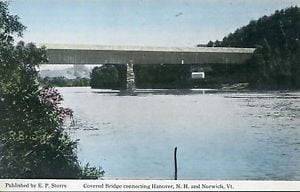
Norwich-Hanover covered bridge

The first recorded crossing of the Connecticut River between Norwich, VT, and Hanover, NH, was in 1765 using a canoe. Following this, ferry services began around 1778, with disputes over ferry rights between the two towns and Dartmouth College. By 1796, the first bridges were established, with significant community efforts aimed at creating a free bridge. Ultimately, following discussions and public support, the Ledyard Free Bridge was constructed in 1859, marking the first free bridge over the river between the two states.

Ridgelawn Memorial Cemetery – Oxford Michigan

This cemetery record from Oxford, west of Burdick Street, lists hundreds of burials collected in September 2001 by Christopher Schnur. The transcription includes names, birth and death dates, military service, family relationships, and epitaphs, offering a detailed historical snapshot of local families, veterans, children, and spouses buried in the cemetery.

Biography of Leland J. Graves, M.D.

Leland J. Graves, M.D., born on May 24, 1812, in Vermont, was a pioneering physician whose innovative treatment methods transformed medical practices in Claremont. A self-taught man, he began practicing medicine after overcoming a debilitating illness that ignited his interest in discovering safer treatments. Known for his compassionate care, he treated the needy without charge, particularly during the Civil War. An influential member of both the medical community and local government, he was dedicated to education and the Baptist church. Graves passed away on February 22, 1891.

Biographical Sketch of Peyton Graves

Peyton Graves, a resident of Pittsylvania County, Virginia, wed Charlotte Pinkard, and together they raised nine children. Their eldest daughter, Jane, became the wife of Thomas Jefferson, a nephew of the former president. Three of their sons—William, John, and Washington—relocated to Montgomery County, Missouri, where William united with Lucy Berger, John with Mildred George, and Washington with Melcina Berger. Most of the remaining children spent their lives in Virginia, with only one exception.

Biographical Sketch of Clarence Graves

Clarence Graves, born on September 20, 1872, in Wyandotte County, Kansas, was the son of Charles and Abbie Graves. He married Effie Griffith in Talala, where he played a key role in the town’s mercantile development due to his strong commercial education. His father, originally from Hancock, Missouri, was the son of a notable attorney. Abbie, Clarence’s mother, had roots in Wyandotte and Shawnee heritage, reflecting a rich family background that influenced Clarence’s community engagement.

Treaty of May 6, 1828

Treaty of May 6, 1828, page 9

The Treaty of May 6, 1828, negotiated by Secretary of War James Barbour, resulted in the Western Cherokee ceding their Arkansas lands to the U.S. in exchange for new territory in present-day Oklahoma, guaranteed to remain theirs forever. Acknowledging the unfavorable conditions in Arkansas amid westward expansion, the treaty aimed to prevent conflict and improve their future. The Cherokee relocated quickly, leaving behind farms for white settlers. The treaty also included provisions for education and compensation for their losses, as the Cherokee sought stability amid increasing pressures.

Clark Co., Ky

The first records of enslaved individuals in Clark County date back to 1783, brought by settlers from Virginia and Maryland. Initially, these fifteen families faced hardships while establishing their community along the Big Stoner. While some slaveholders treated their slaves well, the community did not tolerate cruelty, and laws were enacted to protect enslaved people. Notably, freemen and former slaves formed settlements post-Civil War. The region lacked a formal slave market, with hiring typically occurring on New Year’s Day. Individual accounts reveal complex relationships between enslaved people and their owners, highlighting acts of bravery and loyalty.

Biographical Sketch of Rev. Increase Graves

Rev. Increase Graves served as the first settled minister, obtaining the ministerial lot designated by charter, which is currently the property of H. N. Sollace. Calvin Sollace, originally from Walpole, N.H., graduated from Middlebury College and studied law there before starting his practice in Bridport in 1814. He later held the position of judge for six years.

Slave Narrative of Mary Wallace Bowe

Mary Wallace Bowe, at 81, recalls her childhood during the Civil War in Durham, North Carolina. Sold with her family from one plantation to another, she describes interactions with her owners, particularly Mis Fanny and Mis Virginia. As Union soldiers approached, they hid valuables, showcasing resilience and defiance against threats. Bowe recounts a visit from a peddler who later revealed he was Abraham Lincoln in disguise, eliciting a furious reaction from Mis Virginia. This narrative captures the complexities of slavery and the Civil War’s impact on personal lives.

Biography of Waller W. Graves

Waller W. Graves, born December 17, 1860, in Lafayette County, Missouri, served as a distinguished judge on the Missouri Supreme Court. After initially pursuing a career in teaching, he was admitted to the bar in 1885 and practiced law until his judicial appointments began in 1906. Graves’ tenure included notable cases and was marked by fairness and impartiality. He married Alice M. Ludwick and has three sons, one of whom served with distinction in World War I. Judge Graves is also known for his poultry breeding hobby and is a member of the Knights of Pythias.

Biography of Thomas Graves

Thomas Graves, born September 27, 1827, in Tennessee, is a prominent farmer in Searcy County, Arkansas, renowned for his industriousness and business acumen. A veteran of the Civil War, he served in the Third Arkansas Cavalry and was wounded multiple times. After moving to Arkansas in 1849, he ultimately settled in Searcy County in 1874, where he built a successful farming enterprise on 320 acres. Married to Eliza Englebright in 1857, they are active members of the Cumberland Presbyterian Church and well-respected citizens.

Biography of John D. Graves

John D. Graves, born on August 28, 1847, in Livingston County, Missouri, is a successful farmer and stockman in Stone County. His family has deep roots in American history, with ancestors originating from England and participating in significant historical events, including the Revolutionary War. Graves followed a career in milling and agriculture, eventually owning substantial farmland along White River. He is a Republican, a Mason, and has been actively involved in his community. He married Ellen M. Hosman, and they had five children.