Abington Massachusetts Birth Records

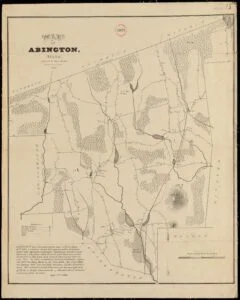
1830 Map of Abington, Massachusetts

Volume 1 of the Abington, Massachusetts vital records details births recorded in the town up to 1850, featuring comprehensive research from town records, cemeteries, and church documents. Established in 1712, Abington’s jurisdictional changes may affect genealogical searches. The records also include separate listings for Black families, primarily by given names. Additionally, various surnames are cataloged, emphasizing the need to consider alternate spellings. For marriages and deaths, researchers should consult Volume 2.
Journal of Rockingham County History and Genealogy 1976-1978

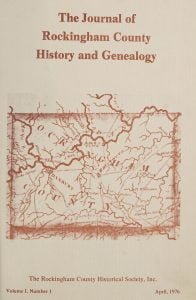
Journal of Rockingham County History and Genealogy vol I, Number 1, April 1976

The Rockingham County Historical Society in Wentworth, NC, publishes the Journal of Rockingham County History and Genealogy twice a year, in April and October. This journal includes articles about the history and genealogical resources of Rockingham County, North Carolina, and the surrounding areas. The historical articles are of high quality and extensively researched. This book covers the first three years of publication, 1976-1978. A full index can be found at the end of each individual volume.

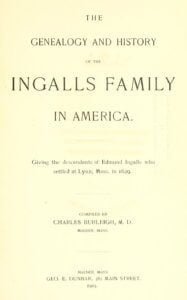
The genealogy and history of the Ingalls family in America

The genealogy and history of the Ingalls family in America

Edmund Ingalls, son of Robert, was born about 1598 in Skirbeck, Lincolnshire, England. He immigrated in 1628 to Salem, Massachusetts and with his brother, Francis, founded Lynn, Massachusetts in 1629. He married Ann, fathered nine children, and died in 1648.

1860 Census West of Arkansas – Creek Nation

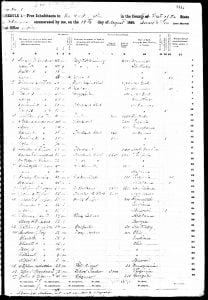
1860 Free Inhabitants Creek Nation Page 1

The 1860 census for the Creek Nation, located west of Arkansas, reveals a diverse array of free inhabitants, including Native Americans from Creek and Seminole tribes. This listing indicates that many individuals either renounced their tribal affiliations or were never granted citizenship. Several entries mark those who married Native individuals but were still denied citizenship, suggesting a complex social structure within the community. The presence of individuals identified by racial categories reflects the intricate interplay of identities during this period.

Hutchinson Family of Norwich Vermont

The Hutchinson family, one of the early settlers in Norwich, Vermont, traces its roots back to Massachusetts in the late 1620s. Abijah Hutchinson, a descendant, settled in Windham before moving to Norwich in 1765 with his son Samuel. They cleared land for farming and eventually made a permanent settlement. Samuel and his wife Jemina had several children, continuing the lineage. John Hutchinson, a soldier in the Continental Army, and his descendants include notable figures and various branches in New York and beyond.

Migration of Families out of Norwich VT

In the late 18th and early 19th centuries, Norwich, Vermont, experienced significant emigration, leading to a notable decline in its population. Initially home to 40 families in 1771, the town saw many residents relocate to newer settlements, such as Royalton and Randolph, during and after the Revolutionary War. Prominent families, including the Hibbards and Carpenters, contributed to the establishment of towns in northern Vermont and beyond. By the 1800s, the trend of outmigration intensified, marking a long-term shift in the region’s demographic landscape.

Norwich Vermont an Independent Township

The political organization of America began with the Township, particularly in New England, where towns emerged as independent entities with self-governing rights in the mid-17th century. Town meetings served as foundational democratic institutions, allowing citizens to elect officials and manage local affairs. Norwich, Vermont, exemplified this tradition, organizing its town government in 1761 before any settlers arrived. Its early record-keeping and governance practices reflect a commitment to law, order, and community engagement, which have shaped its ongoing civic structure.

Biographical Sketch of Roy W. Cloud

Roy W. Cloud, Superintendent of Schools for San Mateo County, has served effectively for nine years, noted for his leadership in expanding the county’s educational system. Born on August 24, 1876, in Crystal Springs, he completed his education locally and graduated from Stanford University. His prior experience includes being a principal and teacher in the area. A member of a prominent local family, Cloud is also actively involved in various fraternal organizations and resides in Redwood City with his family.

1896 St. Regis Indians Census

A June 1896 census of the St. Regis Tribe of Indians of New York Agency, taken by Alexander Solomon for U.S. Indian Agent J. R. Jewell, records 1,161 family members. The document lists households by surname, given name, and number in household, offering a detailed snapshot of the tribe’s community at the time.

Cloud, Carl Wesley – Obituary

Carl Wesley Cloud, born February 22, 1900, in Missouri, was a prominent businessman in Baker City, where he operated the first barber shop in the Baker Hotel. He served in World War II before transitioning to a successful career as a real estate broker. A dedicated family man, he enjoyed outdoor activities and was active in Calvary Baptist Church. Married to Velma Ann Long for 73 years, he passed away on February 12, 1992, and is survived by his daughter, grandchildren, and extended family.

Cloud, Velma Ann – Obituary

Velma Ann Cloud, aged 93, passed away on July 23, 1991, in Baker City, Oregon, after a prolonged illness. Born December 17, 1897, she grew up on her family’s homestead and graduated from Baker High School. Velma married Carl W. Cloud in 1918, celebrating 73 years of marriage. She worked at J.C. Penney and Montgomery Ward and was active in Calvary Baptist Church. Velma is survived by her husband, daughter, grandchildren, and great-grandchildren, and will be remembered for her kindness and community spirit.

Surnames Camp to Cummins

This document contains genealogical statements regarding various individuals and families of Creek, Choctaw, Chickasaw, and Mississippi Choctaw descent who sought recognition and enrollment in tribal rolls. The records, primarily from 1909 reports, detail claimants’ ancestry, enrollment issues, and tribal affiliations. Many individuals were denied enrollment due to factional disputes, legal technicalities, or failure to apply within deadlines. The document includes references to official reports and affidavits, offering insights into the complexities of Native American citizenship and land rights during the early 20th century.

Cherokee by Blood and Newborn, Act of July 1, 1902

The document discusses the enrollment cases of individuals who were entitled to be listed as citizens of the Cherokee Tribe but were omitted due to various reasons, including government oversight. Cherokees by Blood: Jennie Cloud, Joe Kingfisher, case No. 7713; Viola Grazier, case No. 4079; Maggie Beamer, case No. 9365; Jim Wolfe, case No. 10991; Eli Springwater, case No. Memo. 200; Alta May Brassfield, case No. 6415. Cherokee Freedmen by Birth: Lucy Scott, case No. 542.

Rough Riders

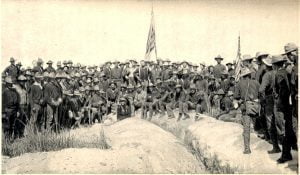
Rough Riders

The compiled military service records of 1,235 Rough Riders, including Theodore Roosevelt, have been digitized. Each record features individual jackets detailing the soldier’s name, organization, rank, and medical records. The records also contain personal information and documentation descriptions. Discharges occurred for various reasons, such as age, ability, discipline issues, or hardship. This initiative provides significant insights into the personnel of the 1st U.S. Volunteer Cavalry during the Spanish-American War.