Death Records of Lee County, Virginia, 1853-1897
This is a transcription of the death records of Lee County, Virginia from 1853-1897. Over 36,000 records are transcribed in this free digital PDF book.

This is a transcription of the death records of Lee County, Virginia from 1853-1897. Over 36,000 records are transcribed in this free digital PDF book.
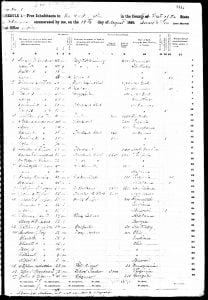
The 1860 census for the Creek Nation, located west of Arkansas, reveals a diverse array of free inhabitants, including Native Americans from Creek and Seminole tribes. This listing indicates that many individuals either renounced their tribal affiliations or were never granted citizenship. Several entries mark those who married Native individuals but were still denied citizenship, suggesting a complex social structure within the community. The presence of individuals identified by racial categories reflects the intricate interplay of identities during this period.
Julia Matilda Boling, born on June 22, 1869, in Georgia to John and Ruth Hall, married James Madison Boling in 1891. James was an esteemed physician and a thirty-second degree Mason, who passed away in 1916. Julia, a woman of means, maintained a home in Tulsa while embracing a life of travel. Her lineage traces back to Major Joseph Martin, a significant Revolutionary War figure whose contributions shaped early military efforts in Virginia, with family ties dating back to the Norman Conquest.
Lillian Carroll Page Boling, born November 23, 1862, in Iowa City, Iowa, passed away on December 13, 1936, in Wallowa, Oregon. Married to George Boling in 1884, they moved to Wallowa in 1902. Lillian was a cherished member of the Christian church and known as “Grandma Boling” for her kindness. She is survived by her daughter, Mrs. James A. Evans, six grandchildren, two great-grandchildren, and several siblings. Her funeral was held on December 15, 1936, with burial alongside her husband.
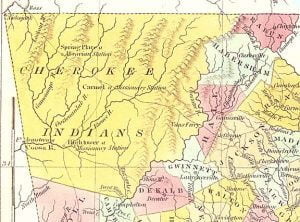
The Cherokee Indians, primarily from the Southeastern U.S., have a rich history marked by their early adoption of a written language and a government structure similar to that of the United States. Despite their forced relocation to Oklahoma in the 1830s, they maintained significant genealogical ties, often intermarrying with Whites. Emmet Starr’s “History of the Cherokee Indians and Their Legends and Folklore” emphasizes personal biographies and genealogies, providing insights into the lives and connections of many Cherokee families across generations, thereby enriching their cultural narrative.