
North America Indian Names of Places in Mississippi, Alabama, Georgia, Florida, and Louisiana

The post examines the significance and origins of North American Indian place names in Mississippi, Alabama, Georgia, Florida, and Louisiana, particularly those derived from the Choctaw and Chickasaw languages. It highlights how these names reflect the rich cultural and linguistic heritage of the Native American tribes, while noting that many translations have become corrupted over time. The text provides numerous examples of place names alongside their original meanings, illustrating the deep historical connections embedded in the geography of the region.
An Historical Sketch of the Tionontates or Dinondadies, now called Wyandots

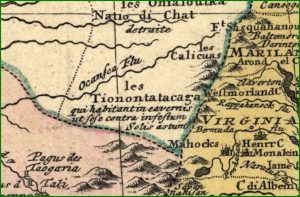
les Tionontatacaga

The tribe which, from the time of Washington’s visit to the Ohio, in 1753, down to their removal to the West, played so important a part under the name of Wyandots, but who were previously known by a name which French write Tionontates; and Dutch, Dinondadies, have a history not uneventful, and worthy of being traced clearly to distinguish them from the Hurons or Wyandots proper, of whom they absorbed one remnant, leaving what were later only a few families near Quebec, to represent the more powerful nation.

Early Exploration and Native Americans

Ferdinand de Soto’s interactions with Native American tribes, specifically the Choctaws and Chickasaws, exemplify early European attempts to impose their ideologies of civilization and Christianity upon Indigenous populations. This approach set a precedent for further exploitation and oppression of Native Americans, as European settlers sought to acquire land and resources. Throughout history, tribes like the Chickasaws, known for their valor, remained steadfast allies rather than adversaries. This enduring alliance contrasts sharply with the overarching narrative of dispossession and extermination faced by Indigenous nations in North America.

The Discovery Of This Continent: It’s Results To The Natives

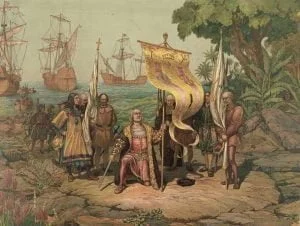
Columbus Landing on Hispaniola

In 1470, Christopher Columbus married Dona Felipa, daughter of a renowned navigator, and settled in Porto Santo, where they shared dreams of discovering lands to the West. Their ambitions fueled Columbus’s determination, leading to his 1492 voyage that resulted in the European discovery of the Americas. However, this event marked the beginning of devastation for native peoples, introducing warfare, disease, and colonization that would decimate their populations and cultures, ultimately transforming their rich, diverse societies into shadows of their former selves.

The French In Alabama And Mississippi

History of Alabama and incidentally of Georgia and Mississippi, from the earliest period

Following nearly a century and a half of European absence after De Soto’s invasion, French explorers, including Father Marquette and La Salle, began to navigate and document the Mississippi River. Their efforts established ties to France’s colonial ambitions, leading to the founding of Louisiana in honor of Louis XIV. As Iberville and his brothers pursued further colonization in the early 18th century, they faced challenges such as famine, conflicts with Indigenous tribes, and political strife among settlers. Ultimately, these factors severely impacted the colony’s stability and growth in Alabama and Mississippi.