
The War with the Indians of the West during Washington’s Administration
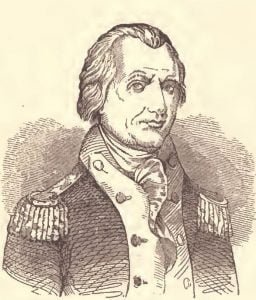
general st clair

After the Revolutionary War, settlers in the West faced continued aggression from Indian tribes, particularly near the Ohio River, where plundering and destruction of farms occurred. British influence exacerbated tensions, leading to military expeditions under Generals Harmar and St. Clair, both of which resulted in significant American losses. Despite initial setbacks, General Wayne eventually achieved a decisive victory, asserting American strength and shifting the balance of power against the Indians. The conflict underscored the ongoing struggles in the region and the complexities of U.S.-Indian relations.
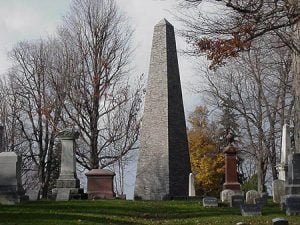
Cresap’s War – Indian Wars

Logan Monument

Logan, a Mingo chief with Cayuga lineage, became a prominent figure in the 1774 conflict known as Cresap’s War following the murder of his family by settlers. In retaliation, he led a series of attacks against white settlers, which prompted the Virginia government to send militia to combat the Native American forces, commanded by Cornstalk. After a contentious battle at Point Pleasant, a peace treaty was negotiated, but Logan remained isolated in his grief. He ultimately delivered a powerful speech expressing his loyalty to white men before being murdered shortly after the treaty’s conclusion.

Biography of W. D. McDonald

W. D. McDonald, born on August 6, 1826, in Ross County, Ohio, was raised by Ex-Governor McArthur after the death of his father. Educated in Chillicothe, he initially worked in cattle trading and later in farming after settling in Peoria County, Illinois. During the Civil War, he served in the Thirty-third Enrolled State Militia, eventually becoming acting adjutant general. He married twice, fathering nine children. McDonald resided in a house built by Mormon leader Lyman Wight, near the historic site of Di-Amon.

Biographical Sketch of Joseph S. Chenoweth

Joseph S. Chenoweth, born on February 18, 1833, in Ross County, Ohio, was the sixth of eight children. His family moved to Tippecanoe County, Indiana, and later to Grundy County, Missouri, where he was raised. Beginning his career as a carpenter at twenty, he later settled in Jamesport in 1865. On August 25, 1859, he married Sarah A. Forshay, with whom he had three children. A Republican and member of the local Masonic lodge, Chenoweth is respected for his dedication to his trade and community.

Illinois Burial Customs

The term “Illinois Indians” encompassed various Algonquian tribes, including the Illinois Confederacy. Early accounts describe their burial customs, highlighting a respect for the dead through careful burial practices. Joutel detailed how they utilized lofty coffins, sometimes hanging bodies in trees. Celebratory dances accompanied burials, marking a contrast with other tribes’ mourning rituals. Presents were offered, and food for the deceased’s journey was included in graves. These customs reveal the diverse ways Illinois Indians honored and remembered their dead across generations.

Biography of Judge John Brown

Judge John Brown, born on May 7, 1822, in Ross County, Ohio, has dedicated over sixty years to the welfare of Douglas County, where he emigrated with his family in 1838. After the early death of his father, his mother raised their seven children in Sargent Township. He married Sally Ann Barnett in 1844 and later Mary Barnett, with whom he had six children. A prominent Republican, Judge Brown served as County judge during the Civil War and owns substantial land, making him the oldest living settler in the area.

Biography of David Wolff

David Wolff, born on January 2, 1852, in Ross County, Ohio, is a prominent grocery businessman who established his enterprise in 1883. After ten years in mining, he partnered with W. H. H. Miller before operating independently until 1892. Wolff later partnered with Z. A. Johnson, achieving success in Ozark. A member of local organizations and a Republican supporter, he is known for his civic involvement. Married to Callie A. Johnson, they have two children, and the family is actively engaged in the Methodist Episcopal Church.

Biography of Warren S. Plummer

Warren S. Plummer, born on January 7, 1875, in Pottawatomie County, rose from humble beginnings to become a significant figure in his community. After working as a clerk and serving three terms as county clerk, he managed the Westmoreland Mercantile Company, the area’s largest general merchandise store. Plummer’s family legacy includes a rich history as early settlers, with his father, Hezekiah, a Civil War veteran and respected farmer. Married to Mary Olive Middleton, he has two children and remains active in local governance and community organizations.

Biography of Presley M. Bruner

Presley M. Bruner, born September 15, 1850, in Chillicothe, Ohio, was a distinguished attorney and former district attorney in Idaho. Descended from German and Scottish ancestry, he was educated at the University of the Pacific and began his law practice in California before relocating to Hailey in 1882. Bruner contributed significantly to the city’s development and held a prominent legal reputation. A former Republican, he became a staunch supporter of the Populist Party. Bruner was also active in various civic organizations, including the Masons and Odd Fellows.

Biography of Frederick William Herman

Frederick William Herman, born on September 21, 1851, in Ohio, made significant contributions to Lincoln, Kansas, after moving there in 1873. A successful grain merchant and owner of a greenhouse, he actively promoted local agriculture. His early life involved farming until he pursued business ventures, including owning a telephone system. Married in 1871, he had eight children, contributing to his legacy. A Republican and active community member, he held positions in local organizations and remained a respected figure in Lincoln’s business landscape.

Biographical Sketch of Ludwig S. Conelly

Ludwig S. Conelly was born in Ross County, Ohio, in 1883 to George B. and Elizabeth Shaner Conelly. He received his education in local country schools and completed his studies in Cleveland. He married Sadie M. Cummings in 1904, with whom he had two children. Conelly served as a first lieutenant in the Cleveland Grays and was president of The Conelly Company, as well as an active member of the Cleveland Real Estate Board and Athletic Club. His hobbies included horseback riding and rifle shooting.

Biographical Sketch of Thomas Samuel McWilliams

Thomas Samuel McWilliams, born on November 22, 1865, in Kentucky, was an influential minister and educator. He earned degrees from Central College and Princeton Theological Seminary. Married to Susan Probasco Nipgen in 1887, he served as pastor in several churches, including First Presbyterian Church in Chillicothe and Calvary Presbyterian Church in Cleveland. Notable for his leadership, he chaired the committee that established the Association of Federated Churches of Cleveland and presided over the Cleveland Peace Society. He enjoyed golf as a leisure activity.

Biographical Sketch of William R. Cox

William R. Cox, born on February 25, 1832, in Bedford County, Virginia, moved with his family to Ross County, Ohio, at age 16 before settling in Coles County in 1856. He married Hannah C. Thompson in 1853, and they had six children. After managing a flouring mill for twelve years, he acquired a 129-acre farm in Hutton Township in 1870. Cox served as Commissioner of Highways and Supervisor, contributing to local governance. His parents passed away in the 1870s, and Hannah was born in 1834.

Biographical Sketch of V. R. Bridges, M. D.

Dr. V. R. Bridges was born in Virginia in 1832 and moved to Ohio before settling in Illinois. He pursued education and began teaching at 17. His medical career began under Dr. H. H. Hayes, leading to his practice in Coles County and later Mattoon. During the Civil War, he served as a Surgeon in the U.S. Army. He graduated from Rush Medical College in 1877 and held various civic roles, including City Council member and Board President. He married Mary E. Boyd and had four children.

Biographical Sketch of Alexander Hitch

Alexander Hitch, born in Louisville, Kentucky, in 1827, moved to Ohio as an infant before settling in Coles County, Illinois, in 1850. He married Permelia Ellis in 1855 and they had four children, with three surviving. Hitch cultivated a 200-acre farm, acquired largely through his efforts, and served as School Director for three years. A devoted member of the Missionary Baptist Association since 1860, he was ordained as a Deacon in 1863, showcasing his commitment to both community and faith.

Biographical Sketch of Charles E. Leitch

Charles E. Leitch, born on April 16, 1836, in Chillicothe, Ohio, is a dedicated farmer who manages 117 acres in Charleston. He married Mahalia Baker on March 18, 1858, and together they raised seven children. Active in his community, Leitch has served as School Director for a decade and currently holds the positions of School Trustee and Road Commissioner. His father, a Captain in the state militia, further highlights the family’s longstanding commitment to public service.

Biography of George W. Prescott

George W. Prescott, born in New Hampshire, became a distinguished Master Mechanic for the Southern California Railroad. Orphaned at seven, he ventured westward at thirteen and honed his skills as a machinist in Chillicothe, Ohio. Prescott played a crucial role in the Mobile Ohio Railroad’s inception before joining the Union cause during the Civil War. His career spanned various prestigious positions across multiple railroads, culminating in significant advancements within the Southern California Railway. He married Miss McFarland and had one son.

Biography of Alexander McCrary

Alexander McCrary, born in 1825 in Ohio, was the son of Alexander and Mary McCrary. An early pioneer, he worked as a carpenter and bridge builder after moving to Iowa in 1856. His journey continued westward, settling in Kansas and later California, where he engaged in horticulture and railroad construction. By 1875, he focused on citrus and raisin grape farming in Riverside, California. A devoted Methodist and Republican, McCrary had five children with his wife, Martha, and became a respected figure in his community.