Expeditions of Fowler and James to Santa Fe, 1821

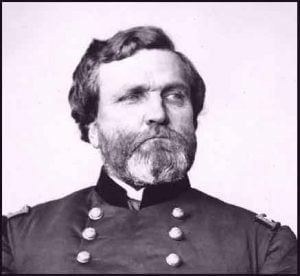
General Thomas James

Following Pike’s return from Santa Fe, interest surged for further exploration. In 1821, expeditions led by Major Jacob Fowler and General Thomas James departed towards Santa Fe after witnessing the impact of previous travelers’ accounts. Fowler’s party advanced from Fort Smith, while James’s group left St. Louis with a keel boat, trading goods with local tribes. Both parties faced significant challenges but eventually reached Santa Fe, paving the way for continued American trade in the region, culminating in further expeditions and encounters with the Comanche.

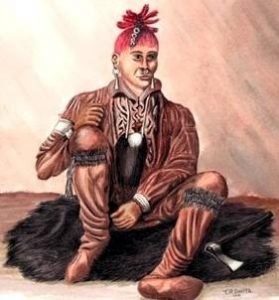
Chief Pontiac of the Ottawa’s

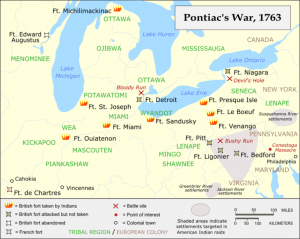
Map of Pontiacs War

Following the 1763 peace, English troops occupied former French forts, prompting widespread Indian apprehension of encroachment. Pontiac, the Ottawa chief, emerged as a pivotal leader advocating for resistance. He organized a council of tribes to unite against the English, inspired by a prophetic vision asserting divine support for their fight. Pontiac orchestrated a coordinated attack on English forts, aiming for liberation. Despite initial efforts, including a siege of Detroit, betrayal foiled his plans. Eventually, Pontiac was assassinated, symbolizing the decline of Indian resistance.

Early Exploration and Native Americans

Ferdinand de Soto’s interactions with Native American tribes, specifically the Choctaws and Chickasaws, exemplify early European attempts to impose their ideologies of civilization and Christianity upon Indigenous populations. This approach set a precedent for further exploitation and oppression of Native Americans, as European settlers sought to acquire land and resources. Throughout history, tribes like the Chickasaws, known for their valor, remained steadfast allies rather than adversaries. This enduring alliance contrasts sharply with the overarching narrative of dispossession and extermination faced by Indigenous nations in North America.

An Account of the Sufferings of Mercy Harbison – Indian Captivities

On the 4th of November, 1791, a force of Americans under General Arthur St. Clair was attacked, near the present Ohio-Indiana boundary line, by about the same number of Indians led by Blue Jacket, Little Turtle, and the white renegade Simon Girty. Their defeat was the most disastrous that ever has been suffered by our arms when engaged against a savage foe on anything like even terms. Out of 86 officers and about 1400 regular and militia soldiers, St. Clair lost 70 officers killed or wounded, and 845 men killed, wounded, or missing. The survivors fled in panic, throwing away their weapons and accoutrements. Such was “St. Clair’s defeat.”

The utter incompetency of the officers commanding this expedition may be judged from the single fact that a great number of women were allowed to accompany the troops into a wilderness known to be infested with the worst kind of savages. There were about 250 of these women with the “army” on the day of the battle. Of these, 56 were killed on the spot, many being pinned to the earth by stakes driven through their bodies. Few of the others escaped captivity.

After this unprecedented victory, the Indians became more troublesome than ever along the frontier. No settler’s home was safe, and many were destroyed in the year of terror that followed. The awful fate of one of those households is told in the following touching narrative of Mercy Harbison, wife of one of the survivors of St. Clair’s defeat. How two of her little children were slaughtered before her eyes, how she was dragged through the wilderness with a babe at her breast, how cruelly maltreated, and how she finally escaped, barefooted and carrying her infant through days and nights of almost superhuman exertion, she has left record in a deposition before the magistrates at Pittsburgh and in the statement here reprinted.

Life and travels of Colonel James Smith – Indian Captivities

An Artists rendition of James Smith

James Smith, pioneer, was born in Franklin county, Pennsylvania, in 1737. When he was eighteen years of age he was captured by the Indians, was adopted into one of their tribes, and lived with them as one of themselves until his escape in 1759. He became a lieutenant under General Bouquet during the expedition against the Ohio Indians in 1764, and was captain of a company of rangers in Lord Dunmore’s War. In 1775 he was promoted to major of militia. He served in the Pennsylvania convention in 1776, and in the assembly in 1776-77. In the latter year he was commissioned colonel in command on the frontiers, and performed distinguished services. Smith moved to Kentucky in 1788. He was a member of the Danville convention, and represented Bourbon county for many years in the legislature. He died in Washington county, Kentucky, in 1812. The following narrative of his experience as member of an Indian tribe is from his own book entitled “Remarkable Adventures in the Life and Travels of Colonel James Smith,” printed at Lexington, Kentucky, in 1799. It affords a striking contrast to the terrible experiences of the other captives whose stories are republished in this book; for he was well treated, and stayed so long with his red captors that he acquired expert knowledge of their arts and customs, and deep insight into their character.

Philadelphia To Steubenville

On October 4, 1819, Dr. Hall and the author departed Philadelphia, traveling through fine weather and well-cultivated lands. They stopped in West Chester, where they noted the plight of a man imprisoned for debt. The journey continued to Strasburg and Lancaster, with observations on the industrious German residents and the notable Susquehanna bridge. As they passed through various towns, they encountered trials such as rough terrain, bad hospitality, and even a violent election incident. The travelers reached Pittsburgh, a smoky industrial town, on October 12, and left for Steubenville, where they took a restful day amidst the bustling village.

Biography of A. W. Patterson, M.D.

A.W. Patterson, M.D., born on October 14, 1814, in Pennsylvania, pursued medical education at the Pennsylvania College of Medicine. After practicing in Indiana, he migrated to Oregon in 1852, settling near Eugene. His versatile career included surveying, military service during the Indian War, and roles in local government. He contributed significantly to education, authoring school readers and serving as county superintendent. He returned to medicine later in life and was noted for his agricultural innovations, especially in hop cultivation. Patterson married A.C. Ollingee in 1859, raising a distinguished family.

Biography of Thomas R. Durning

Thomas R. Durning, born on September 17, 1882, in Pittsburgh, Pennsylvania, is a prominent St. Louis businessman and president of the Monroe and Burton Clothes Shops. He began his career at age 15 and quickly advanced through various roles in the clothing industry. Known for his innovative business practices, Durning successfully established one of St. Louis’s first upstairs clothing stores. He actively participated in community efforts during World War I and is affiliated with several Masonic and civic organizations, embodying integrity and enterprise throughout his career.

Biography of Edwin R. Christman

Edwin R. Christman, born on September 6, 1887, in Wheeling, West Virginia, rose to prominence as secretary of the Silurian Oil Company in St. Louis. Educated in Washington, Pennsylvania, he began his career with the McClure Company before joining the Silurian Oil Company in 1908. A dedicated family man, he married Genevieve Templeman and has three children. During World War I, he actively supported American defense efforts. Christman is a Knight of Columbus and a committed Republican, recognized for his contributions to both business and community.

Biography of Floyd O. Hale

Floyd O. Hale, born on April 13, 1882, in West Windsor, Vermont, served as the general manager of the Southwestern Bell Telephone Company in St. Louis. After graduating from Dartmouth College in 1903, he began his career at the Central District Printing Telegraph Company, eventually becoming general superintendent of traffic. He joined the Southwestern Bell Telephone System in 1912, serving as chief engineer before his promotion to general manager in 1917. A prominent figure in his community, Hale was active in organizations like the Chamber of Commerce and the Algonquin Club.

Slave Narrative of Samuel Simeon Andrews

Samuel Simeon Andrews, born in 1850 in Macon, Georgia, reflects on his life as a former slave, moving through various plantations before emancipation. He describes his experiences, particularly on the A.J. Lane plantation, where he recalls kind treatment and familial ties among slaves. Andrews shares memories of plantation life, Civil War incidents, and post-emancipation education challenges. Despite a difficult past, he emphasizes community resilience, his active involvement in the African Methodist Episcopal Church, and a longevity attributed to a positive outlook on life and health practices.

Biography of James W. Ballantine

James W. Ballantine, born on February 15, 1839, in Pennsylvania, exemplifies the mercantile spirit of the Wood River Valley. The son of Scottish immigrants, he served valiantly in the Civil War, rising to the rank of major due to his commendable service. After the war, he transitioned to the oil refining industry before moving to Idaho to manage mining operations. A prominent businessman and member of the local legislature, Ballantine was influential in the Populist Party and engaged in various successful ventures, maintaining a strong community presence.

Biography of James King

James King, born August 15, 1832, in Pittsburgh, Pennsylvania, is a prominent architect and land office register in Boise. He hails from a lineage of German and English descent, with ancestors who participated in the Revolutionary War. After being educated in Pittsburgh, he enlisted in the Union Army during the Civil War, serving as a second lieutenant. Post-war, he established a successful architectural career, contributing significantly to Boise’s skyline. He is a dedicated Republican and an active member of the Odd Fellows society and the Veterans League.

Biographical Sketch of George N. Ifft

George N. Ifft, born on January 27, 1865, in Butler County, Pennsylvania, began his journalism career in Pittsburgh before working in cities like Washington, D.C., and San Francisco. In 1893, he settled in Pocatello, Idaho, where he became associated with the Pocatello Tribune. A Republican, Ifft has been an advocate for silver, reflecting the western sentiment. He partners with William Wallin, another seasoned newspaper professional, who also arrived in Idaho in 1893 after gaining experience in Ogden and Salt Lake City.

Biography of Thomas J. Reynolds

Thomas J. Reynolds, known as “The Poot of the Wakarusa,” was a pioneer who settled in Kansas in 1854. Born in Pittsburgh, Pennsylvania, in 1812, he was well-educated and skilled in various trades, including glass-blowing. His journey west to seek gold in California ended in disappointment, leading him back to Ohio, where he married Ann Maria McCall. Seeking a healthier environment for his wife, he moved to Kansas, where he faced numerous challenges as a pioneer. A dedicated community member, he helped establish the Union Sunday School and continued farming until his death in 1876.

Biography of William J. Bovaird

William J. Bovaird, born on March 25, 1863, in Allegheny County, Pennsylvania, is the president of the Bovaird Supply Company in Independence, Kansas. He started in the oil supply industry at a young age, learning under his father’s guidance in Pennsylvania. In 1903, he established the Bovaird Supply Company, which rapidly grew and became separately incorporated by 1907. The company specializes in manufacturing oil drilling tools and operates branches in Oklahoma. Bovaird was also an active community member, serving in military and local government roles throughout his life.

Biography of Otho Eckersley

Otho Eckersley, born on September 23, 1839, in Lancashire, England, immigrated to the United States with his family in 1848. After their initial settlement in Pennsylvania and a brief period in Iowa, he pursued mining in Colorado before shifting to agriculture in eastern Oregon. In 1869, he began farming near the Cove, focusing on livestock and small fruits. A family man, he married Mary L. Owensberg in 1870 and raised seven children. Eckersley is recognized for his entrepreneurial spirit and commitment to community values.

Biography of George Gumbert

George Gumbert, born in Pittsburgh, Pennsylvania, on June 11, 1835, is the pioneering butcher of Boise, Idaho, starting his business in 1864. After moving west to California and Nevada, he settled in Boise when it was a small settlement and established a meat market that he continually operated, earning community trust through his integrity. A Democrat and a county commissioner, he married Mary C. Turner in 1865, with whom he had one daughter. He is also an active member and treasurer of the Knights of Pythias.