
Middlesex County MA

Gallery of Lowell Massachusetts
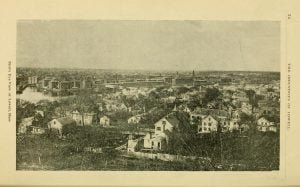
49 historical photographs, drawings, and etchings of various homes, street scenes, and people of Lowell Massachusetts.
Contributions of the Old Residents’ Historical Association, Lowell MA
The Lowell Historical Society published six volumes documenting the history of Lowell, Massachusetts, primarily during the late 19th and early 20th centuries. Contributions include memoirs, biographies, and accounts from notable residents and events, highlighting the city’s development, industries, and community life. Key topics cover early manufacturing, educational institutions, local governance, and personal recollections from various citizens. These volumes serve as a vital resource for understanding Lowell’s historical landscape and the contributions of its residents.
Lowell High School Yearbooks, Lowell MA 1926-2008
The University of Massachusetts at Lowell digitized 35 of the Lowell High School yearbooks during the years of 1946-2008. The yearbook during this period was known as “The Spindle”. Yearbooks provide a window into student life. From sports teams to clubs, fashions to hairstyles, these volumes document the changing attitudes and culture of high school students year by year.
History of the Courier Newspaper – Lowell Massachusetts
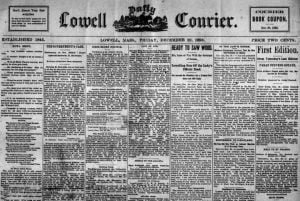
The Lowell Courier was established on January 6, 1835, by Leonard Huntress during a period of political vibrancy in Lowell. Initially a Whig newspaper, it has continued publication as The Lowell Courier-Citizen. Huntress, the first editor, faced health issues by 1842, leading to a series of editors, including Robins Dinsmore and William O. Bartlett. In 1867, George A. Marden and Edward T. Rowell acquired the paper, elevating its political influence in New England. Marden became a prominent political figure, shaping the paper’s direction until his death in 1906.
University of Massachusetts Yearbooks, 1976-2011
The University of Massachusetts at Lowell digitized 35 of the University of Massachusetts yearbooks for the years of 1976-2011 (missing 2000). The yearbook during this period was known as the “Sojourn”. Yearbooks provide a window into student life. From sports teams to clubs, fashions to hairstyles, these volumes document the changing attitudes and culture of college students year by year.
Lowell Textile School Yearbooks 1906-1975
The University of Massachusetts at Lowell digitized 63 of the Lowell Textile School yearbooks during the years of 1906-1975. The yearbook during this period was known as the “Pickout”. Yearbooks provide a window into student life. From sports teams to clubs, fashions to hairstyles, these volumes document the changing attitudes and culture of college students year by year.
State Teachers College Yearbooks at Lowell, MA 1935-1974
The University of Massachusetts at Lowell digitized all 41 of the State Teachers College yearbooks provided by the senior class during the years of 1935-1975 and known as “The Knoll”. Yearbooks provide a window into student life. From sports teams to clubs, fashions to hairstyles, these volumes document the changing attitudes and culture of college students year by year.
Lowell Massachusetts Annual Reports 1862-1928
Most towns in New England started publishing annual reports of the town’s public business in the 1800’s and many smaller towns still carry on that trait today. The following list of 52 free annual reports for Lowell Massachusetts covers the years of 1862-1928 (incomplete). Each town provided different reports in it’s annual publications, but they generally contain information on vital records (births, marriages and deaths) for the year of publication (not always included in early years), lists of public officials, lists of police officers, firemen, and other government workers, including school teachers. Don’t overlook the town’s expenditures list, as it often included payments made to town citizens for work they performed in the town’s behest. Also, many towns include payments made for the support of the indigent within the town.
Candage Genealogy of Blue Hill, Maine
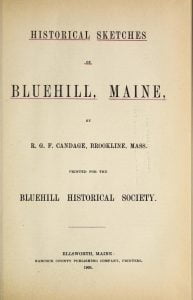
The Candage family, descendants of James Candage who settled in Blue Hill, Maine in 1766, have a rich history. James, born in 1753, and his wife Hannah had several children, including Azor and Samuel Roundy Candage. Their lives were intertwined with maritime occupations, agriculture, and community service. James built a house around 1800, which later served various family members. The family endured hardships, with many sons lost at sea. Over time, the estate changed hands, reflecting the family’s evolving legacy in the region.
Lovering Family Genealogy of Taunton Massachusetts
The Lovering family has played a significant role in Taunton, Massachusetts, since the nineteenth century, with notable figures like Willard Lovering, who rose from humble beginnings to become a prominent manufacturer, bank president, and state assemblyman. His sons, including William C. and Henry Morton Lovering, followed in his footsteps, contributing to local business and politics. This line descends from English immigrants, with roots tracing back to Aldham, Suffolk. The Loverings were integral to Taunton’s manufacturing success, particularly through the Whittenton Mills.
Olcott Family of Norwich Vermont
Hon. Peter Olcott, born on April 25, 1733, in Bolton, Connecticut, moved to Norwich, Vermont, in the 1770s. He was a prominent community leader, serving in various public offices including first justice of the peace and Lieutenant Governor. His influence helped establish the town’s first meeting house and burying ground. Olcott was also active in military affairs during the American Revolution. He died on September 12, 1808, leaving a legacy through his numerous children and significant contributions to Norwich’s early governance and development.
Johnson Family of Norwich Vermont
The Johnson Family played a pivotal role in the early history of Norwich, Vermont. Captain Hezekiah Johnson, born in 1724 in Woburn, Massachusetts, was an original proprietor and early settler, established near the Pompanoosuc River. He held numerous offices, including selectman, and contributed to the town’s development and safety during the Revolutionary War. Johnson was also generous to Dartmouth College. He passed away in 1806, leaving a legacy through his children, including Samuel Slafter Johnson and Dorothy, who married Jeremiah Hedges, further intertwining family connections in the community.
Biographical Sketch of Moses Davis
Moses Davis married Sarah Sawyer in Dracut, Massachusetts, on April 6, 1785. He moved to Hanover, New Hampshire, around 1806 and later to Norwich by 1814. Davis fought in the Revolutionary War, participating in the Battle of Lexington, and possibly the Battle of Bunker Hill. He served at Fishkill in 1777 and at Valley Forge in 1778, and was among the guards for Major Andre prior to his execution. His total military service exceeded two years.
The Winchester Star 1901-1972
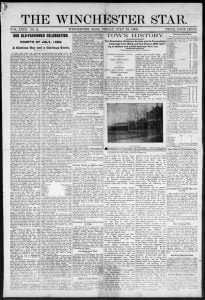
The Winchester Star, a weekly newspaper published in Winchester, Massachusetts from 1901 to 1972, served as a vital resource for genealogical research. It filled gaps in civil records, offering obituaries and local event coverage that illuminated the lives of residents. The paper also featured historical content, including biographies and photographs, which may help descendants connect with their ancestry. Scholars and genealogists are encouraged to browse the extensive archives for meaningful insights into the community’s past.
News from New England – King Phillip’s War
In a detailed account of King Philip’s War, reports describe intense battles between English settlers and Native Americans, beginning in June 1675. The document recounts numerous assaults and atrocities, highlighting losses on both sides, including 444 Christians killed and hundreds of Native Americans. Despite the English army’s smaller numbers, they achieved victories but at great cost. The text serves as a rare historical record of the conflict, illustrating the brutality and strategic maneuvers during a dark period in New England’s history.
The Proprietors of Norwich Vermont
The early proprietors of Norwich, Vermont, largely hailed from Connecticut towns such as Mansfield and Tolland, with some from New Hampshire and Massachusetts. While many grantees did not settle personally, they transferred their rights to their sons or younger acquaintances. Key early settlers included Captain Hezekiah Johnson and Jacob Fenton. The proprietors diligently organized land surveys, established roadways, and incentivized settlement through financial support, ultimately fostering rapid growth in the new township. Meetings continued until 1770, addressing land divisions and mill constructions.
Captivity of Mary Fowler, of Hopkinton – Indian Captivities
A brief description of the years of captivity of one Mary Fowler, nee Corbett, nee Woodwell, who along with her family and the Burbank family were taken prisoners in Hopkinton, NH.
Narrative of the Captivity of Nehemiah How
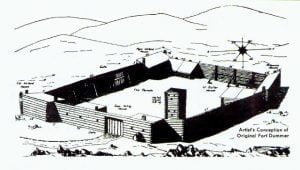
A Narrative of the captivity of Nehemiah How, who was taken by the Indians at the Great Meadow Fort above Fort Dummer, where he was an inhabitant, October 11th, 1745. Giving an account of what he met with in his traveling to Canada, and while he was in prison there. Together with an account of Mr. How’s death at Canada. Exceedingly valuable for the many items of exact intelligence therein recorded, relative to so many of the present inhabitants of New England, through those friends who endured the hardships of captivity in the mountain deserts and the damps of loathsome prisons. Had the author lived to have returned, and published his narrative himself, he doubtless would have made it far more valuable, but he was cut off while a prisoner, by the prison fever, in the fifty-fifth year of his age, after a captivity of one year, seven months, and fifteen days. He died May 25th, 1747, in the hospital at Quebec, after a sickness of about ten days. He was a husband and father, and greatly beloved by all who knew him.