
Lord Dunmore’s War

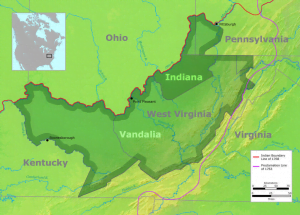
Vandalia Colony

The text details the events leading to and during Lord Dunmore’s War, sparked by illegal encroachments into the Vandalia Colony and violent acts against Native Americans by Virginians. It highlights the treaties made with various tribes and the resultant loss of their lands. The war began in response to brutal murders committed by settlers, leading to conflict with the Shawnees. Despite military advances by Virginia’s forces, Dunmore ultimately sought peace, yet tensions persisted as violence against Native Americans continued unabated.
Biographical Sketch of Frank M. Harris

Frank M. Harris, born on January 7, 1843, in Marshall County, West Virginia, was the son of John and Drusilla Harris. He received a basic education and learned carpentry from his father but primarily pursued farming after moving to his current county in 1877. He married Eliza A. Wilson on November 30, 1865, and together they had four children, two of whom, John A. and Lydia A., are deceased.

Captain James Harrod’s Company Of Kentucky Pioneers

In spring 1774, Captain James Harrod gathered thirty-one young men at Grave Creek, West Virginia, to establish a settlement in Kentucky. They navigated the Ohio River and founded Harrodsburg, the oldest town in Kentucky. However, upon learning of an impending Indian War from Daniel Boone and Michael Stoner, they abandoned their settlement. Harrod and twenty-seven of his men then joined the Fincastle Battalion, participating in the events surrounding the Battle of Point Pleasant. The company comprised various privates and officers, totaling thirty-two.

Grave Creek Mound Tablet

Archives Of Aboriginal Knowledge Plate 75

The Grave Creek Mound Tablet, discovered in 1838, is inscribed with unusual characters that some believe may have originated from Celtic or Iberic sources, suggesting possible foreign influence in the area. Excavations revealed human remains and various artifacts, but the inscription initially garnered little attention. Archaeologists debated its origins and significance, with comparisons made to similar inscriptions, notably Dighton Rock. The lack of a known alphabet among local Native American cultures further supports the theory of the inscription being foreign rather than indigenous.

Grave Creek Mound

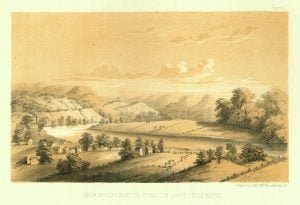
Grave Creek Mound, located near Moundsville, West Virginia, is a significant prehistoric conical mound, measuring 320 feet in diameter and 70 feet in height. First documented in 1797, it features a dish-shaped depression at its summit. Excavations in 1838 revealed two burial vaults with human skeletons and numerous artifacts, including shell beads and mica ornaments. An inscribed stone found during the excavation has sparked debate regarding its authenticity and significance. Scholars have questioned its connection to ancient languages, suggesting the inscription may be a recent creation.