
Madison, Indiana: History and Highlights
Madison Indiana History and Highlights

“Madison, Indiana: History and Highlights” provides a detailed overview of Madison’s development since its establishment in 1808. As a strategic city beside the Ohio River, Madison flourished following its incorporation as a city in 1838. By the mid-19th century, it had become a significant commercial center, particularly noted for its pork-packing industry, only second to Chicago. Pioneering in rail connectivity and industrial diversification, Madison was home to varied enterprises like shipyards, starch factories, and iron foundries. Its cultural footprint included landmarks like Lanier Mansion and memorable events such as Jenny Lind’s concert in 1851. Madison now attracts over 150,000 visitors annually, cherished for its historical architecture, scenic views, and vibrant community.
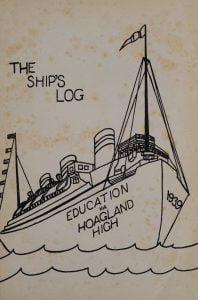
Hoagland High School Yearbooks 1937-1968

1939 Ships log yearbook

The Hoagland High School yearbooks were published as the Ship’s log, starting with 1937 and continuing until the school was consolidated with the Monroeville High School and the new Heritage High School was created to principally serve the children of Hoagland, Monroeville, and Poe. This was during the year 1968. If the title and year is linked, then the yearbook is currently online for free reading and download.

Slave Narrative of Mrs. Preston

Mrs. Preston, an 83-year-old resident of Madison, Indiana, reflects on her experiences during slavery. She recalls her early years sleeping at her mistress’s feet and performing various chores, such as tending to cows and hauling corn. Despite the challenges faced, she did not feel mistreated by her owners. After the Civil War, her family received land and support but later encountered threats from the Ku Klux Klan, prompting a move north. Now living alone, she is known for her cleanliness and hospitality.

Slave Narrative of Jack Simms

Jack Simms, interviewed by G. Monroe in Madison, Indiana, recalls his childhood in Mill Creek, Kentucky, during slavery. Although he was too young to remember much about the treatment of slaves, he expresses regret for missing out on education. Simms has vivid memories of soldiers during the Civil War, mistakenly referring to it as the “Revolution War.” He exhibits a strong personality, preferring to speak outside but ultimately welcomes the interviewer into his home, indicating a willingness to share his story.

Slave Narrative of Lizzie Johnson

Lizzie Johnson, 65, recounts the struggles of her father, Arthur Locklear, who was born in North Carolina in 1822 and faced significant hardships in the South. Driven by the desire for a better future for their children, Locklear and a group of families journeyed north in 1852, taking six weeks to reach their destination. Johnson highlights the importance her father placed on education, even as many faced brutal consequences for attempting to learn. She reflects on her parents’ values and critiques the moral decline she sees in her generation.

Biography of Henry A. Smith, M.D.

Dr. Henry A. Smith, born on September 16, 1857, in Indiana, is a St. Louis physician and surgeon, also serving as president and medical director of the Peoples Life Accident Insurance Company. After an early career in the drug business and the Wabash Railroad, he entered the ministry before pursuing medicine, graduating in 1905. Active in the local Methodist church, he is recognized for his contributions to the medical field and community, balancing his professional life with family and civic duties.

Biography of William A. Quigley

William A. Quigley, born on July 19, 1842, in Jefferson County, Indiana, had a diverse career marked by significant contributions, especially as a soldier in the Civil War. He served in the Sixty-seventh Indiana Volunteer Infantry, enduring capture and wounds before his honorable discharge in 1865. Following the war, he held various positions, including in the jewelry and railroad industries, before becoming the cashier of the Kansas National Gas Company in Independence. Quigley, a devoted Republican and community member, married Helen Virginia Hurlbut and raised three children.

Biography of Lewis Hanback

Lewis Hanback, born in Illinois in 1839, became a prominent Union officer during the Civil War before establishing a successful law practice in Topeka, Kansas, in 1865. Renowned for his contributions to Kansas history, he served in various legal and political roles, including congressman-at-large and assistant United States district attorney. Active in veterans’ organizations, Hanback remained a passionate public speaker. He passed away in 1896, leaving behind a legacy through his legal achievements and a family that continued to influence Kansas society.

Biographical Sketch of Ira B. Jackson

Ira B. Jackson, born on October 31, 1851, in Indiana, moved with his family to Illinois in 1855. Raised as a farmer’s boy, he pursued various careers, including photography and grocery trading, before transitioning to fire insurance in 1876. Now a prominent insurance agent in Mattoon, representing numerous companies with assets exceeding $30 million, he has also served as City and Township Clerk. Married to Laura I. Carter since 1874, they have one daughter, Georgia.