Ancestry of Elmer C. Packard of Brockton Massachusetts
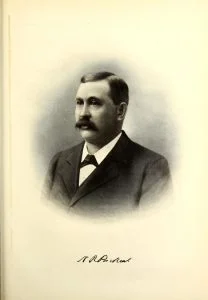
Elmer C. Packard

The Packard family has held a significant presence in New England for nearly 275 years, tracing its origins to Samuel Packard, an early settler in Bridgewater, Massachusetts. The lineage includes prominent figures, such as Elmer C. Packard, who succeeded his father, Ellis Packard, in a successful grain and coal business in Brockton. The family has deep roots in various trades and public service, with Elmer continuing the legacy through active community involvement and progressive business practices.

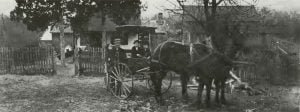
Governor Houston at His Trading Post on the Verdigris

Surrender of Santa Anna

In February 1828, Colonel Brearley led the Creek immigrants to the Verdigris, following governmental commitments from the 1826 treaty. During this time, Samuel Houston, a former U.S. Army officer and politician, was redefining his life among the Cherokee. After abandoning his political career and personal troubles, he became deeply involved with the Cherokee, adopting their customs and language. Houston’s influence grew as he criticized corrupt Indian agents and sought to improve conditions for Native Americans, eventually being adopted into the Cherokee tribe in 1829.

The Osage Massacre

Kiowa Calender

In the summer of 1833, following a treaty council breakdown, Osage warriors attacked a Kiowa village, resulting in a brutal massacre where many women, children, and elderly were killed, and the heads of the victims displayed in brass buckets. Among the captives were two children, Gunpä´ñdamä and Tunkahtohye, later purchased by Colonel Hugh Love for potential diplomatic gains. The ensuing U.S. military expeditions aimed to restore order and negotiate peace, but many faced logistical challenges and poor preparation, resulting in numerous setbacks and casualties.

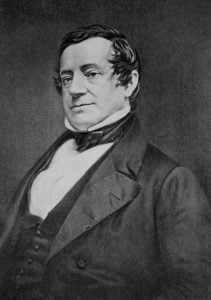
Washington Irving at Fort Gibson, 1832

Irving Washington

The McIntosh Creeks established productive farms along the Arkansas River, but their land was mistakenly included in the 1828 treaty with the Cherokee, leading to tensions and grievances. The Creeks petitioned the government for aid against attacks from other Indian bands. In response, Congress set up a commission to address these issues, appointing three commissioners, including Montford Stokes. Eventually, Washington Irving joined the commission’s journey from St. Louis to Fort Gibson, experiencing the rich tapestry of frontier life and the challenges faced by the tribes.

The Brickey House of Prairie du Rocher Illinois

John Brickey

The Brickey House in Prairie du Rocher, Illinois, was an impressive three-story residence with a rich history originating from an 1860s lottery win associated with an opera house in Chicago. Abraham Hagerman Lee, the winner, sold his claim for $200,000 and used the money to construct the house. Later owned by F. W. Brickey, the mansion became a local cultural center. Tragically, it was abandoned and ultimately burned down in April 1970, marking the end of a storied legacy that began with a simple lottery ticket.

Moravian Massacre at Gnadenbrutten

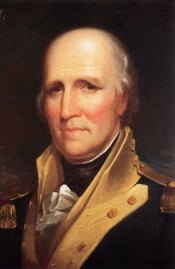
George Rogers Clark

In 1763, Moravian missionaries established missions among the Tuscarawa Indians. Despite maintaining neutrality during the Revolutionary War, they were perceived as threats by both American settlers and British allied Indians. In March 1772, a group of American frontiersmen, led by David Williamson, deceived and massacred 96 Moravian Indians—men, women, and children—at Gnadenbrutten. This brutal act was marked by a lack of empathy among the assailants, highlighting the brutal interactions between white settlers and Native Americans during this period of conflict.

The Cherokee Revolt – Indian Wars

The Cherokee Revolt in 1872 began after a violent confrontation between U.S. Deputy Marshals and a group of armed individuals in the Cherokee Nation, sparked by tensions surrounding a suspected murderer, Proctor. On April 13, a surprise attack by armed individuals resulted in the deaths of seven marshals and three assailants, with many others wounded. The swift government response helped contain the situation and prevent a broader uprising among the Cherokees against U.S. authority, highlighting tensions exacerbated by lawlessness and outside influences.

Northwest Territorial War of 1812 – Indian Wars

Map of Northern Theatre of War of 1812

After the battle of Tippecanoe, tensions between Native Americans and white settlers escalated, fueled by British influence. Following the declaration of war against Great Britain in June 1812, the Northwest Territorial War erupted, marked by severe attacks on the western frontier. Notably, Tecumseh rallied many Native allies to the British cause. American forces, led by General Harrison, faced significant challenges, including the disastrous Frenchtown Massacre. However, victories at Fort Stephenson and the Thames ultimately shifted momentum, leading to a decline in Native American resistance.

Biographical Sketch of Jacob Mettel

Jacob Mettel was born on August 12, 1845, in Hesse, Hamburg, Germany. His family immigrated to Franklin County, Indiana, when he was an infant. After learning the shoemaking trade in Ohio, Mettel settled in Gallatin in 1872, eventually opening his own shop in 1875. He married Catharine C. Bird in 1869, and they had four children: Frederick, Minnie, Oliver, and Harry. Mrs. Mettel is a member of the Methodist Episcopal Church.

Biography of Major Joseph H. McGee

Joseph H. McGee, born on July 6, 1821, in Clermont County, Ohio, came from a lineage of Irish immigrants. After moving to Missouri in 1837, he pursued a tailoring career and transitioned into public service, becoming county clerk for multiple terms. He served as a captain and later major during the Civil War. Post-war, McGee held various political offices, including state register of lands and common pleas judge. A man of strong convictions, he shifted from his early Democratic beliefs to support the Republican Party during the Civil War.

Biography of James L. Reat, M. D.

James L. Reat, M. D., born on January 26, 1824, in Ohio, became a notable physician and surgeon in Illinois. His lineage traces back to Scottish ancestors who settled in America during the Revolutionary War. After his family relocated to Illinois, Dr. Reat received a collegiate education and graduated from Medical College in Cincinnati and Rush Medical College in Chicago. He served as a surgeon during the Civil War and later practiced in Tuscola, where he was active in community and educational initiatives. He married Sallie C. Callaway and had three children.

Biography of William Henry Folmsbee

William Henry Folmsbee was born on June 22, 1831, in Cincinnati, Ohio. Orphaned at a young age, he was raised and educated by Dr. William Ensign, beginning his medical studies early. He graduated from the College of Physicians and Surgeons, Keokuk, Iowa, in 1855 and established a medical practice in Richland, Iowa, before moving to Gallatin. Folmsbee served as a captain in the Missouri State Militia during the Civil War and was elected to the State Legislature, participating in the Constitutional Convention of 1864-65.

Biographical Sketch of Joshua W. Alexander

Joshua W. Alexander was born on January 22, 1852, in Cincinnati, Ohio. After moving to Minnesota and later Missouri, he attended school in Canton and graduated from Christian University in 1872. He started teaching before studying law, ultimately being admitted to the bar in 1875. In Gallatin, he partnered with Judge S. A. Richardson, serving as city attorney and public administrator. He married Roe Ann Richardson in 1876, and they had three children. The Alexanders are members of the Christian Church.

Slave Narrative of Sarah H. Locke

The interview with Sarah H. Locke, conducted by Anna Pritchett, details Mrs. Locke’s experiences as a child of enslaved parents in Kentucky, born in 1859. She recalls her master, Jacob Keephart, as kind and emphasizes family connections among enslaved individuals. After the Civil War, she received support from her former master. Education opportunities were limited, but she and her sister attended school in Cincinnati. Mrs. Locke describes festive celebrations during Christmas and her later life as a skilled dressmaker and widow.

Biographical Sketch of John P. Hatterscheidt

John P. Hatterscheidt, originally from Germany, moved to Kansas in 1857, making significant contributions as an engineer and surveyor. He was a prominent freesoiler leader at the Leavenworth constitutional convention in 1858. Though he returned to Cincinnati in 1859 and is reported to have passed away there, some accounts suggest he later impressed Abraham Lincoln, who appointed him as a consul in Europe before his eventual death abroad.

Boyd County, Kentucky

Boyd County, Kentucky, established in 1860, reflects a complex history regarding slavery and Civil War allegiances. Although Kentucky remained in the Union, many residents supported both sides. The area lacked extensive plantations, leading to a higher prevalence of house slaves rather than field laborers. While some masters treated their slaves well, others were cruel. Kentucky’s status as a border state facilitated the operation of the Underground Railroad. Post-Civil War, the African American community faced ongoing racial restrictions, yet many progressed socially and economically over time.

Slave Narrative of Richard Toler

Richard Toler, a former slave from Virginia, recounts his difficult life on the Tolah plantation. Despite enduring harsh conditions, including forced labor and minimal rights, he resisted punishment by running away. Toler shares his experience with racial violence and oppression, including witnessing the brutality of the Ku Klux Klan. After the Civil War, he moved to Cincinnati, where he worked as a blacksmith and embraced opportunities for education and family life. Now, he reflects on the joy of freedom and his love for music, expressing gratitude for his survival.

Slave Narrative of Reverend Williams

Reverend Williams, a 76-year-old Methodist minister from Greenbriar County, West Virginia, shares his life story during an interview in Lebanon, Ohio. Born to a free mother and enslaved father, he emphasizes the significance of education provided by Miss Frances Cree, his grandmother’s owner. Throughout his ministry, he has advocated for traditional hymns over spirituals, believing in a practical expression of faith. Williams reflects on the cultural differences within the church and his commitment to maintaining a consecrated life, underscoring resilience and community values.

Slave Narrative of Charles H. Anderson

Charles H. Anderson, born into slavery in Richmond, Virginia on December 23, 1845, reflects on his life experiences, asserting that they outweigh any education he might have gained. He recalls his time as a favored slave, trusted by his owner, and his lack of formal schooling. After the Civil War, he worked various jobs, including as a handy man, and shared insights on community life and changing values. Despite challenges, he emphasizes the importance of hard work, family, and a clear conscience.