
North America Indian Names of Places in Mississippi, Alabama, Georgia, Florida, and Louisiana

The post examines the significance and origins of North American Indian place names in Mississippi, Alabama, Georgia, Florida, and Louisiana, particularly those derived from the Choctaw and Chickasaw languages. It highlights how these names reflect the rich cultural and linguistic heritage of the Native American tribes, while noting that many translations have become corrupted over time. The text provides numerous examples of place names alongside their original meanings, illustrating the deep historical connections embedded in the geography of the region.
The Discovery Of This Continent: It’s Results To The Natives

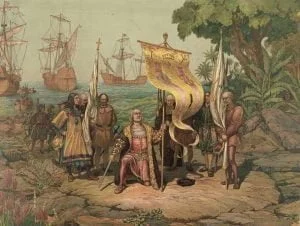
Columbus Landing on Hispaniola

In 1470, Christopher Columbus married Dona Felipa, daughter of a renowned navigator, and settled in Porto Santo, where they shared dreams of discovering lands to the West. Their ambitions fueled Columbus’s determination, leading to his 1492 voyage that resulted in the European discovery of the Americas. However, this event marked the beginning of devastation for native peoples, introducing warfare, disease, and colonization that would decimate their populations and cultures, ultimately transforming their rich, diverse societies into shadows of their former selves.

The Shawnees

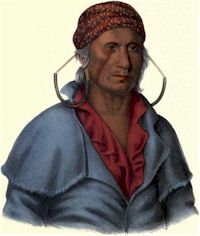
Payta Kootha

The Shawnees, a warlike tribe originally from the South, migrated northward to Pennsylvania, where they allied with the Delawares. They became a formidable force in the west, engaging in conflicts against southern tribes and other nations. Their involvement in early American wars, particularly during the French and Indian War, brought them into conflict with British forces, leading to significant battles. Pioneers like Daniel Boone had notable encounters with the Shawnees, highlighting their complex relationships with settlers and their impact on the westward expansion narrative.

Fort Pulaski

Fort Pulaski, located near Savannah, Georgia, is a once-mighty brick fortress whose remnants tell a story of grandeur and decay. Constructed between 1831 and 1847, it served briefly during the Civil War before becoming a site of surrender in 1862 following a bombardment by Federal troops. Today, visitors encounter a landscape of desolation, with overgrown structures and crumbling walls serving as poignant reminders of its historical significance. The fort is managed by a solitary caretaker and remains a place of quiet reflection amid the marshland.

Slave Narrative of Susan Castle

In an April interview, Susan Castle, born in 1860, shared memories of her life as a house servant in Athens, Georgia. Raised in a family of seven, she recounted her experiences under Marse Thomas R.R. Cobb, whose kindness made slavery bearable. She described the good food provided and their daily lives, highlighting Christmas celebrations and the roles of family and church in their community. After emancipation, she remained with her mother, worked various jobs, and expressed gratitude for her newfound freedom and faith.

Slave Narrative of Samuel Simeon Andrews

Samuel Simeon Andrews, born in 1850 in Macon, Georgia, reflects on his life as a former slave, moving through various plantations before emancipation. He describes his experiences, particularly on the A.J. Lane plantation, where he recalls kind treatment and familial ties among slaves. Andrews shares memories of plantation life, Civil War incidents, and post-emancipation education challenges. Despite a difficult past, he emphasizes community resilience, his active involvement in the African Methodist Episcopal Church, and a longevity attributed to a positive outlook on life and health practices.

Slave Narrative of Irene Coates

Irene Coates, born around 1859 in Georgia, shares her experiences as a child of formerly enslaved parents, living in the household of the Bedell family after emancipation. With vivid recollections of slavery, she describes harsh treatments by overseers and notable incidents that influenced perceptions of enslaved individuals. Irene recalls the division of labor among the enslaved and the struggles of freed Black women. After her marriage, she relocated to Jacksonville, Florida, where she has witnessed the city’s growth and remains engaged in discussions about her past experiences.

Slave Narrative of “Father” Charles Coates

Father Charles Coates, born into slavery in Richmond, Virginia, at 108 years old, reflects on his life experiences. He recalls the harsh conditions and cruelty faced on plantations under different masters, particularly the severe punishments meted out. Despite these trials, he highlights the small comfort of attending religious services. After emancipation, Coates worked and accumulated savings, experiencing love and loss with the death of his first wife. Residing in Savannah, he later married Irene and continued preaching, celebrating his long life and faith at a birthday gathering in 1936.

Slave Narrative of William Sherman

William Sherman, born on June 12, 1842, in South Carolina, was the son of a free blacksmith who sought to buy his family’s freedom. Raised on the plantation of Jack Davis, a nephew of Jefferson Davis, Sherman recounts his experiences as a slave, including witnessing the Civil War’s impact on his life. He escaped with a group of slaves to Union forces and later celebrated emancipation. Throughout his life, Sherman faced numerous challenges but remained resilient, eventually settling in Chaseville, Florida. At ninety-four, he reflects on his storied past.