Ancestry of Thomas Beatty Inness of Brockton Massachusetts

Old Families of Southeastern Massachusetts

Thomas Beatty Inness, born in Pottsville, Pennsylvania, in 1848, is a notable figure and descendant of Scotch-Irish lineage. He initiated his career in the iron and coal industries, later becoming an influential iron broker and railroad contractor. In the early 1900s, he established significant apartment complexes in Brockton, Massachusetts, showcasing innovative architectural designs. Inness was also deeply involved in Masonic organizations and local business communities and held strong Republican views. He was married twice, with children from both unions, and was known for his affable nature and leadership qualities.
Early Exploration and Native Americans

Ferdinand de Soto’s interactions with Native American tribes, specifically the Choctaws and Chickasaws, exemplify early European attempts to impose their ideologies of civilization and Christianity upon Indigenous populations. This approach set a precedent for further exploitation and oppression of Native Americans, as European settlers sought to acquire land and resources. Throughout history, tribes like the Chickasaws, known for their valor, remained steadfast allies rather than adversaries. This enduring alliance contrasts sharply with the overarching narrative of dispossession and extermination faced by Indigenous nations in North America.

Biography of Cyrus K. Holliday

Cyrus K. Holliday, born in 1826 in Pennsylvania, was a pioneering figure in Kansas, instrumental in founding Topeka and developing the Atchison, Topeka and Santa Fe Railroad. Initially educated for law, he shifted to business, constructing railroads and advocating for the free-state movement. Holliday’s persistence led to the realization of his vision for a railway along the Santa Fe trail, culminating in the first segment from Topeka to Carbondale. He held various political and business roles, including state senator and president of the State Historical Society, until his death in 1900.

Biography of Eames Dickey

Eames Dickey, born on September 3, 1788, in Carlisle, Pennsylvania, was raised in the northwestern territory. He made a name for himself as a dedicated mail rider between Marietta and Chillicothe during challenging conditions, particularly during the War of 1812. Notable for his integrity, he earned respect for his reliability in carrying mail despite numerous obstacles. In 1815, he married Betsy Brown and later established a farm in Bernard. He was known for his hospitality until his death on June 12, 1862, in McConnellsville.

Biography of Dr. William Plunkett

Dr. William Plunkett, born in Ireland to a noble family, married Esther Harris and became a notable figure in Pennsylvania. His robust stature and strong will were highlighted by various local legends. After an altercation with an English officer, he immigrated to America, settling in Carlisle during the French and Indian War and serving as a lieutenant. He became Sunbury’s first resident physician, a presiding justice, and represented Northumberland County in the provincial congress. Plunkett lived blind later in life and died in 1791, buried in an unmarked grave.

Carlisle Indian School – Industrial

Carlisle Indian School

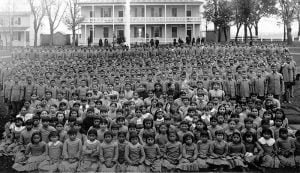
The Carlisle Indian Industrial School, established in 1879 in Carlisle, Pennsylvania, aimed to educate Native American youths for integration into mainstream society. Located near the site of a former cavalry barracks with a rich historical background, the school initially welcomed students from various tribes, including the Sioux and Kiowa. Funded by the federal government since 1883, it offered a range of academic and vocational courses, fostering both cultural education and practical skills among its diverse student body.

Student Life at Carlisle Indian School

At Carlisle Indian School, students engage in a structured environment that blends academics with vocational training. Special students can enroll in business and telegraphy, while boys focus on trades. The school promotes a military organization that emphasizes discipline and leadership among cadets. Religious observance is encouraged, alongside active participation in literary societies and athletics. Students also benefit from an Outing System, gaining real-world experience and training in family settings and workplaces. The school’s mission fosters a sense of community and prepares students for life beyond its walls.

Carlisle to Train Indian Youth for Citizenship

Carlisle aims to prepare Indian youth for citizenship through comprehensive academic and vocational training. The institution serves both young men and women, equipping them to thrive economically, whether on reservations or competing with white communities. Its extensive facilities include specialized buildings for various trades, a gymnasium, and a well-resourced library. Admission is open to those with at least one-quarter Indian blood, emphasizing character and the desire for education. Carlisle seeks dedicated individuals ready to embrace the multitude of learning opportunities available.

Course of Study at Carlisle Indian School

At the Carlisle Indian School, the educational focus is on providing practical, high-quality training rather than just higher education. With a curriculum tailored to individual needs, students engage in various subjects, including English, mathematics, and agriculture, alongside vocational training in trades like carpentry and tailoring. The school also emphasizes cultural arts, music, and domestic skills for girls. Notable partnerships with institutions allow for advanced study opportunities. Regular assessments and merit-based recognition ensure consistent academic and vocational growth for all students.

Carlisle Indian School Record of Living Graduates

Returning Graduates of Carlisle School

The Carlisle Indian School has a notable record of success among its 514 living graduates, with only five identified as failures. While it offers primarily grammar-level education, many graduates have pursued higher education, showcasing a strong desire for advancement. The women’s graduates, especially, exemplify industriousness, with 142 engaged as housekeepers, contributing positively to their communities. Approximately 300 graduates work away from reservations, demonstrating their independence and citizenship. Overall, the school’s impact on graduates’ lives has been predominantly positive, promoting vocational success and community leadership.

Carlisle Indian Industrial School Graduates 1906 – 1910

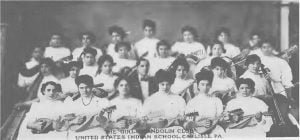
Girls Choir Carlisle Indian School

The Carlisle Indian Industrial School, located in Pennsylvania’s Cumberland Valley, served Indigenous students from 1889 to 1910. It transformed a former cavalry barrack into an educational institution where students were trained in various professions. Graduates from classes ranging from 1906 to 1910 pursued diverse careers such as housewives, teachers, and laborers. Notable alumni include law students, nurses, and mechanics, reflecting the school’s impact on Indigenous education and workforce integration during this period.

Carlisle Indian Industrial School Graduates 1889 – 1895

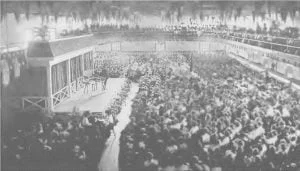
Carlisle School Gymnasium During Graduation Exercises

The Carlisle Indian School, located in Carlisle, Pennsylvania, served as an educational institution for Native American students from 1889 to 1895. Graduates from various tribes pursued diverse occupations, reflecting their adaptation to American society. Positions ranged from farmers and housewives to public service roles. Notable alumni include physicians, lawyers, and teachers, indicating a significant shift toward professional education. The school’s rich history is intertwined with its former military site, where Benjamin Franklin forged peace treaties with Native tribes in the 18th century.

Carlisle Indian Industrial School Graduates 1900 – 1905

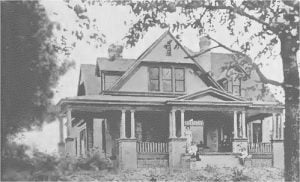
Home of the Warrens, White Earth, Minnesota Built by Mrs. Ida Warren Tobin and her sister and brothers

The Carlisle Indian Industrial School, located in Carlisle, Pennsylvania, served as an educational institution for Native American students from 1889 to 1910. Notable for its healthy climate, it transitioned from a military post to an educational facility where various tribes were represented. Graduates from 1900 to 1905 pursued diverse professions including teaching, farming, and trades, reflecting their adaptation to American societal roles. The list highlights the varied backgrounds and occupations of these students, underscoring their contributions to their communities post-graduation.

Carlisle Indian Industrial School Graduates 1896 – 1899

Carlisle School Hospital

The Carlisle Indian Industrial School, located in Pennsylvania’s Cumberland Valley, operated from 1889 to 1910, educating Native American students and producing graduates with diverse occupations. Between 1896 and 1899, notable graduates included farmers, housewives, teachers, and tradespeople from various tribes such as Chippewa, Oneida, and Cherokee. The school had a historical significance as it stood on land where treaties were made with Native tribes, highlighting its dual role in education and cultural history at a time of significant change for Indigenous peoples.

Administrative Officers

The post details a comprehensive list of personnel affiliated with an educational institution, encompassing roles in administration, instruction, and industrial training. Key figures include Superintendent M. Friedman, Principal Teacher John Whitwell, and various instructors for subjects ranging from music to trades like blacksmithing and farming. Additionally, it highlights positions in health care, athletics, and secretary roles for student organizations. The structure reflects a commitment to both academic and practical vocational training within the institution.

Address, Colonel Pratt, Superintendent Carlisle School

Colonel Pratt addressed the conference, emphasizing the importance of integrating Indian and white populations to promote civilization. He criticized reservation schools, arguing they hinder progress and perpetuate dependency on the government. He advocated for educational reforms that would place Indian children in public schools with white peers to foster competition and mutual understanding. Pratt called for the gradual dismantling of Indian schools and the idea of government support, aligning with Commissioner Jones’ views on the necessity of self-sufficiency among Indian communities.

Indian Education at Hampton and Carlisle

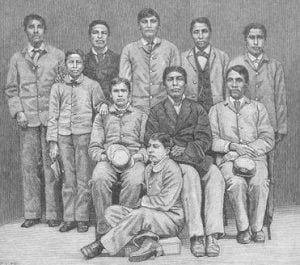
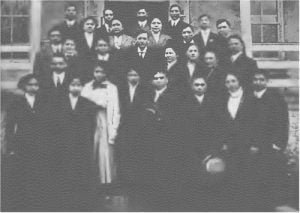
Group of Indian Young men after Education

An article appearing in Harper’s Magazine in April 1881 concerning the “education” taking place at the Indian schools of Carlisle, Pennsylvania and Hampton, Virginia.

Biography of Colonel George Davenport

Colonel George Davenport, born in 1783 in England, was the first permanent settler in present-day Rock Island County, arriving in 1816. A veteran with a notable military career, he served against Native American tribes and fought in the War of 1812. After the war, he transitioned to Indian trading and became a respected figure among local tribes, known as Sag-a-nosh. Davenport’s contributions included acting as postmaster and helping establish the town of Davenport, Iowa. His life ended tragically in 1845 due to a robbery, but his legacy as a humanitarian remains significant.