Free Missouri Historical Newspapers Online

This page represents 37 free historical newspapers spread out over the state of Missouri since its founding into the 1900’s. All of them have at least a partial online representation.

This page represents 37 free historical newspapers spread out over the state of Missouri since its founding into the 1900’s. All of them have at least a partial online representation.
Dr. Newton W. Amos, born January 26, 1867, in Cape Girardeau, Missouri, pursued a career in medicine after initially teaching for seven years. He graduated from St. Louis Medical College in 1897 and has since engaged in general practice and hospital work, earning community respect and professional recognition. Married to Ids May Holtzman in 1908, they have two sons. A member of multiple medical associations, Dr. Amos balances his professional life with a passion for home and family, along with an interest in baseball.
Edward C. Stuart, born on March 2, 1879, in Powhattan, Arkansas, began his banking career as a clerk at the First National Bank of Cape Girardeau. After significant advancement, he became vice president of the First National Bank of St. Louis, illustrating his expertise in banking and financial management. Educated at Cape Girardeau State Normal School and Eastmans Business College, Stuart’s career reflects a commitment to mastering his profession. Married to Lucy Gentry, he has three children and is actively involved in community affairs without holding a political office.
Dr. George W. Haverstick, born January 8, 1866, in De Soto, Missouri, pursued a career in medicine after initially teaching. He graduated from Beaumont Hospital Medical College in 1896 and specialized in pediatric care, earning a reputation for effectively gaining children’s trust. He married Julia Burgess and has one daughter, Waynetta. Active in politics and Masonry, Dr. Haverstick also supported government efforts during World War I, reflecting his civic commitment. His family lineage includes early Missouri settlers and ties to the Mayflower.
Rev. P. H. Bradley, born on January 2, 1863, in St. Louis, is the esteemed pastor of the Blessed Sacrament Catholic Church. After studying at St. Louis University and St. Vincent’s Seminary, he was ordained in 1895. Initially serving at Immaculate Conception and Sacred Heart churches, he became the pastor of St. Joseph’s Church before leading Blessed Sacrament in 1906. Under his guidance, the parish grew from fifty to eight hundred families, and he oversaw the construction of a substantial church building, enhancing the community’s prosperity and support.
John Morgan Atkinson, born on September 14, 1870, in Hickman County, Tennessee, is a Democratic candidate for clerk of the Ripley County Court. He moved to Ripley County with his family in 1873 and pursued education at local schools, excelling academically. A dedicated educator, he has taught in his district and harbors aspirations to enter the legal profession. Atkinson, known for his industrious nature and abstinence from intoxicants, is involved in community and church activities. He is the son of a Confederate veteran and is set to assume office on January 1, 1895.
Theodore H. Polace, born on March 12, 1860, in Illinois, has been a prominent lawyer in Marysville for over thirty-five years. Initially a teacher, he transitioned to law after studying at the University of Michigan. His father, Rev. Gustav W. Polack, was a dedicated Lutheran minister who immigrated from Germany. Married in 1887 to Florence McKee, Theodore and Florence had five children, contributing to both education and agriculture in their community. He remains active in legal practice, with a strong connection to his Lutheran roots.
H. C. Watson, born on July 27, 1827, in New Madrid, Missouri, was the son of a pioneer Scotchman. Educated at various institutions, including Bethany College, he engaged in merchandising until the Civil War disrupted his business. In 1865, he began working as a clerk and timekeeper for the St. L. A. T. H. R. R. Following a move to Mattoon in 1870 with the railway shops, he also served as a School Director on the East Side. He married Sarah C. Post and had five children.
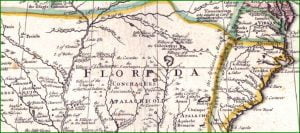
The Shawnee tribe, originally located in South Carolina, Tennessee, Pennsylvania, and Ohio, were known for their migratory nature and connections to other tribes. Their name reflects their southern origins, and they played a significant role in regional conflicts, particularly against the Catawba. Over time, they migrated northward, facing pressures from colonial settlers and rival tribes, eventually settling in Ohio. Their history is marked by alliances and conflicts, particularly in the context of the French and Indian War and the Revolutionary War, leading to eventual displacement and incorporation into various territories.

Big Jim, a prominent Shawnee leader known as Wapameepto, was born in 1834 and became chief of the Kispicotha band in 1872. He was a descendant of Tecumseh and staunchly conservative, opposing land allotments imposed by settlers. His commitment to preserving traditional ways led him to seek refuge for his people in Mexico, where he died in 1900. Other notable Shawnee figures include chiefs like Black Bob, Bluejacket, Catahecassa, and Tenskwatawa, each contributing to the tribe’s history through leadership and resistance against encroachment by white settlers.
Thomas Adiel Sherwood was born on June 2, 1834, in Eatonton, Georgia. He was educated at Mercer University and Shurtleff College, later graduating from Cincinnati Law School in 1857. Sherwood practiced law in various Missouri towns before becoming a prominent jurist, serving as Chief Justice of the Missouri Supreme Court from 1876 to 1888. Renowned for his legal expertise and dedication, he was recognized for his progressive views and impactful published opinions, solidifying his reputation as a leading figure in American jurisprudence.