The Maryland Gazette 1745-1839
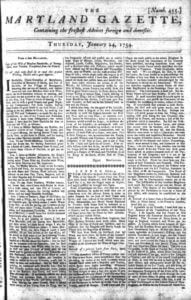
Free digital images of the Maryland Gazette from 1745 through 1885. Each issue in this collection is searchable and can be downloaded to your computer in full.

Annapolis Maryland; city and the capital of the State of Maryland, situated in Anne Arundel County on the Annapolis, Washington and Baltimore and the Baltimore and Annapolis Short Line railroads. Population, 8,525 in 1900.
Free digital images of the Maryland Gazette from 1745 through 1885. Each issue in this collection is searchable and can be downloaded to your computer in full.
The Archer family of Fall River, MA, gained prominence in the 19th century through Dr. Jason H. Archer and his son John Jason Archer, an esteemed lawyer. Their lineage traces back to Samuel Archer, an early settler in Massachusetts. Dr. Archer practiced medicine and became president of the Massasoit Bank. His son, John, after graduating from Brown University, became a respected attorney, known for his integrity and contributions to education. The Archer legacy reflects a commitment to public service and community values in Fall River.
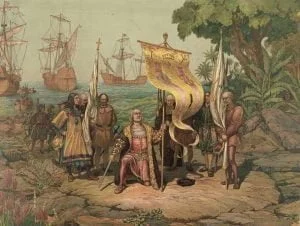
In 1470, Christopher Columbus married Dona Felipa, daughter of a renowned navigator, and settled in Porto Santo, where they shared dreams of discovering lands to the West. Their ambitions fueled Columbus’s determination, leading to his 1492 voyage that resulted in the European discovery of the Americas. However, this event marked the beginning of devastation for native peoples, introducing warfare, disease, and colonization that would decimate their populations and cultures, ultimately transforming their rich, diverse societies into shadows of their former selves.
Page Harris, born in 1858 in Charles County, Maryland, recounted his early life as a slave on the farm of Burton Stafford, known for training bloodhounds to capture runaways. His parents were freed in 1859 after his father rescued the Stafford family from drowning. Following emancipation, Harris’s family moved to Annapolis, where his father worked at the Naval Academy. After schooling, Harris also worked there and eventually purchased a farm in Camp Parole, where he raised vegetables and remained active in his community.
Caroline Hammond, born in 1844 in Anne Arundel County, Maryland, was the child of a free man and a slave woman. Her mother worked as the head cook on the farm owned by Thomas Davidson. Following Davidson’s accidental death, his wife denied the family’s freedom, leading them to escape via the Underground Railroad to Pennsylvania. There, the family found work and Hammond received an education. She eventually became a cook and, at 95, reflects on her life surrounded by family, enjoying a modest yet independent existence.
James Wiggins, born in Anne Arundel County around 1850, recounts his early life as a slave of the Revell family. He was raised without knowing his parents, and given the nickname “Gingerbread.” Wiggins describes his duties and experiences, including performing for pennies and being sold multiple times before escaping with the help of a German shoemaker. He eventually adopted his father’s surname, Wiggins, and highlights the conflicts between free and enslaved individuals in his community, as well as his childhood activities and health.
Dr. John R. Caulk, born on October 30, 1882, in Maryland, was a prominent urological surgeon in St. Louis. Educated at St. Johns College and Johns Hopkins University, he built a distinguished career, serving in various medical institutions and contributing to medical journals. He held leadership roles in numerous professional organizations and taught urology during World War I. Married to Bessie Jenifer Harrison, he had two children and engaged in outdoor activities for leisure. Dr. Caulk was active in his community and devoted to his profession throughout his life.
Edmund P. Melson, born on October 29, 1866, in Rail County, Missouri, was a prominent figure in the insurance industry, notably as the founder and president of the Missouri State Life Insurance Company. His leadership transformed it into a major insurance provider. Melson’s education included graduation from the U.S. Naval Academy, and he began his career in life insurance in 1889. After retiring in 1918, he shifted focus to land dealings. A philanthropist and active community member, he was also a family man with two marriages and three children.
Franklin Buchanan Owen was born on September 27, 1882, in Talbot County, Maryland. He pursued education at local public schools, St. Johns College, and the University of Maryland School of Law. Owen began his career in insurance in 1897, holding various positions at several companies, including the American Bonding Co. and the Fidelity Deposit Company of Maryland. He was actively involved in civic organizations and served on various committees related to insurance and surety underwriting, reflecting his commitment to the industry.
Peter Rainsford Brady, born on August 4, 1825, in Georgetown, D.C., emerged as a key figure in Arizona’s early development. With a background in the Navy and notable service in the Mexican War, he was involved in significant surveying expeditions in the Southwest. Settling in Tucson in 1854, Brady held various public offices, including sheriff, and engaged in farming, mining, and stock raising. He was active in the Territorial Legislature and investigated land fraud cases. He passed away on May 2, 1902, in Tucson, leaving a legacy of integrity and public service.