
America
Covers all of the United States.

Genealogical Research Centers
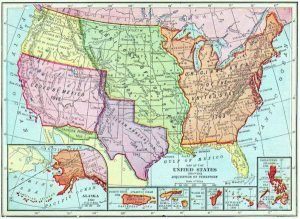
This post presents a comprehensive list of genealogical and historical research centers throughout the United States, including archives, libraries, and societies. It emphasizes the importance of these organizations in accessing genealogical and historical records that may not be available online, encouraging users to explore resources specific to their states, such as Alabama, Kentucky, and Oregon.
History of Washington, Idaho and Montana
Bancroft’s extensive chronicle of the Northwest Coast provides a detailed examination of the historical evolution of Washington, Idaho, and Montana up to 1846, marking the end of the fur trade era and the settlement of territorial boundaries. His narrative weaves together the interconnected histories of these regions, originating from Oregon, and emphasizes their significance in North American history. Using a diverse array of sources, Bancroft illuminates the challenges faced by early settlers, the rich natural resources they encountered, and the complex relations with Indigenous peoples.
Archeology
The post discusses structuring the study of American antiquities into three eras of aboriginal occupancy. These eras are categorized based on material evidence, including monuments and artifacts, and aim to facilitate better understanding of indigenous migrations, cultural characteristics, and changes post-European arrival. The first era focuses on scientific inquiries, while the subsequent periods are observable through artifacts and historical continuity in burial practices. The text underscores the importance of recognizing these eras to reduce historical ambiguity and guide future archaeological research, particularly in western New York.
Historical Maps of the United States
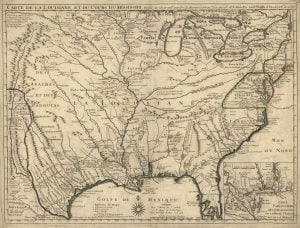
Maps serve as essential tools for researchers, offering insights into historical contexts, particularly regarding the locations and names of Native American villages. Though early maps may not always accurately depict village placements, they reveal valuable information about tribal affiliations and their recognition by European powers. Historical maps of the United States, such as those from 1640 to 1857, illustrate the evolving geography and socio-political landscape of the time, enhancing our understanding of America’s past.
United States Obituaries
A collection of 933 obituaries, submitted by volunteers, offers a wide-ranging glimpse into lives across the United States. Many obituaries focus on the ancestry of the submitters, hinting at potential connections and genealogical leads. This extensive list includes individuals from various backgrounds and regions, emphasizing the diverse history of the American populace. Each entry stands as a tribute to the memories and legacies of those who have passed. The document serves as a vital resource for researchers and historians alike.
World War 2 Casualties

This collection lists War Department casualties (Army and Army Air Force personnel) from World War II. Information provided includes serial number, rank and type of casualty. The birthplace or residence of the deceased is not indicated. An introduction explaining how the list was compiled, a statistical tabulation, and the descriptions of the types of casualties incurred are also included.
The Indian Races of North and South America
The Indian Races of North and South America provides ethnographic information (manners, peculiarities and history) on the tribes of North and South America. We’ve added pictures to the mix, to provide some sort of visual reference for the reader. This is an important addition to AccessGenealogy’s collection for it’s inclusion of tribes in South America and Central America, as well as the Caribbean Islands.
Philadelphia To Steubenville
On October 4, 1819, Dr. Hall and the author departed Philadelphia, traveling through fine weather and well-cultivated lands. They stopped in West Chester, where they noted the plight of a man imprisoned for debt. The journey continued to Strasburg and Lancaster, with observations on the industrious German residents and the notable Susquehanna bridge. As they passed through various towns, they encountered trials such as rough terrain, bad hospitality, and even a violent election incident. The travelers reached Pittsburgh, a smoky industrial town, on October 12, and left for Steubenville, where they took a restful day amidst the bustling village.
Through Ohio And Kentucky
From October 18 to November 3, the traveler and a companion journeyed through Ohio and Kentucky, encountering muddy roads, hilly terrain, and varying degrees of settlement. They observed a decline in land quality and hospitality as they moved westward, noting indifferent buildings and unwelcoming locals. Key stops included Siers, Freeport, Zanesville, Chillicothe, and Louisville, where they experienced both hospitality and disappointment. The journey concluded with reflections on the changing landscapes and the people met along the way, contrasting Ohio’s and Kentucky’s societal characteristics.
A Brotherhood Of Cutthroats
In early November 1819, a traveler recounts a grueling journey through Indiana and Illinois, highlighting the stark contrasts of the landscape and the inhabitants. He describes miserable living conditions, barren terrains, and encounters with welcoming yet impoverished families. Notably, he discovers a list of notorious criminals operating in the region, whom locals refer to as cutthroats. Despite the promise of fertile land, the traveler observes a dangerous atmosphere overshadowed by threats of robbery and murder, underscoring the treacherous character of the region.
Escape From The Robber Band
On November 8, 1819, the author and companions faced a night of dread while staying with strangers who displayed suspicious behavior. Armed and apprehensive, they prepared for a possible attack, realizing the danger posed by their hosts. After surviving the night, they departed the premises, eventually joining other travelers on the road to safety. Their journey continued through Illinois, revealing a landscape of both fertile land and dangerous inhabitants, leading the author to reflect on the challenges and characters of this new frontier.
In Possession Of The “Promised Land”
On November 22, 1819, the author bids farewell to new friends in Kaskaskia and embarks on a journey to the bounty lands, noting the fertile prairies and wildlife encountered. His travels take him through various settlements, including Edwardsville, which shows promise despite high labor costs. Disappointments arise as he parts from Dr. Hill, yet he finds camaraderie in traveling companions. Encounters with hospitable locals highlight both the beauty and challenges of settling in the region, echoing the allure of this land as a “Promised Land.
American Baker Genealogies
The post features genealogies of various American Baker families, detailing their origins, notable individuals, and family connections across states like Massachusetts, Ohio, and Pennsylvania. Among them are Daniel Baker of Ohio, Edward Baker of Massachusetts, and Henry Baker of Pennsylvania, highlighting their migrations, marriages, and descendants. The genealogies also reflect the family’s historical significance, with some members actively participating in significant events, such as the Revolutionary War. This compilation serves as a valuable resource for understanding the lineage and contribution of the Baker families in America.
Cemetery Collection

AccessGenealogy has over 600 cemetery transcriptions from across the United States. The first listings are cemetery transcriptions that we have inserted into databases. They are completely searchable by names. The second listing are individual transcriptions that AccessGenealogy has. Many of our transcriptions were down in the mid 1900’s and contain transcriptions of headstones no longer readable.
Civil War Battlefield Maps
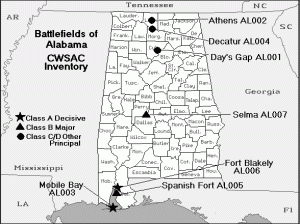
The following Civil War battlefield maps geographically depict the major battles of the War between the States. While most states, having limited major battles have only one map to show, some like Virginia have as many as five.
Social Security Death Index
The Social Security Death Index provides birth date, death date, last known residence, and where the last payment was sent for persons who received benefits from the Social Security Administration. Approximately 98% of the people in this index died after 1962; the earliest date died in 1937. Those who held social security numbers but did not receive benefits or whose death was not reported to the administration, will not be listed. This index will help you pinpoint the date an ancestor died or at least narrow it to a month and year, making it easier to obtain the right death certificate from a county or state record office.