Notable Points for Further Researches – Sign Language

The post outlines significant areas for future research on sign language, emphasizing the importance of understanding the invention of new signs by individuals, particularly among Native Americans, in response to modern influences. It highlights distinctions between signs and symbols, cautioning against misinterpretation and symbolic readings. The effectiveness of sign language among different demographics, particularly women and children, is noted, alongside the necessity of collecting authentic signs through direct observation rather than translations. Collectors should prioritize genuine expressions of signs to advance ethnologic understanding.
Proper Names – Sign Language

fig300

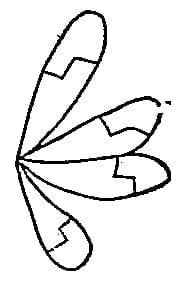
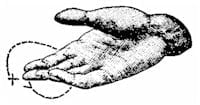
The post details various signs used in sign language to represent proper names and concepts associated with Native American chiefs and natural elements. It describes gestures for Washington, the Missouri River, and specific chiefs like Eagle Bull and Rushing Bear, emphasizing the physical movements and configurations of hands that convey meaning. Additionally, it illustrates how these signs combine to express themes related to home, council, and wildlife, reflecting cultural significance and communication methods within Native communities.

Relations to Philology – Sign Language

The exploration of sign language offers valuable insights into the study of language, as noted by Leibnitz. This research highlights the role of signs in elucidating spoken words and emphasizes the need to analyze gestures alongside oral language. Indian languages, with their synthetic structure and self-defining nature, closely resemble sign language, reinforcing the connection between ideas and expressions. As such, a comparative study of these languages aids in understanding their etymological roots and the fundamental principles underlying human communication.

Narrative – Patricio’s – Sign Language

In July 1880, Dr. Francis H. Atkins recorded a narrative from Patricio, a Mescalero Apache, detailing the April Round-up, where U.S. cavalry captured his subtribe. Patricio described the military’s actions, including disarming and imprisoning the Mescaleros, their peaceful intentions, and the overwhelming presence of San Carlos scouts and soldiers. He recounted the fear of his people, the ensuing violence, and the ultimate fate of his village. This account reflects the complexities of Apache resistance and the role of external forces during this period.

Permanence of Signs – Sign Language

The permanence of gesture signs, particularly in sign language, reveals their enduring significance across generations. Historical examples demonstrate that many gestures from classic times persist in modern use, such as those still employed by contemporary Italians or within various deaf-mute communities in the U.S. The signs used by tribes, as recorded by the Prince of Wied in 1832, exhibit remarkable stability, suggesting their origins reach far back in time. Despite some evolution, essential meanings of signs often remain unchanged, highlighting their deep-rooted nature in human expression.

Phrases – Sign Language

fig301

The post details various signs in American Indian Sign Language (AISL) used to convey specific phrases and questions. It includes signs for concepts like “Mother,” “brave,” and “hunger,” along with directives for motion and hand positioning. Specific gestures denote familial and social relationships, communicate inquiries, and express emotions or needs. These signs illustrate the complex syntax and cultural significance within indigenous communication, demonstrating how gestures convey meaning similarly to spoken language. The described signs derive from various tribes, underscoring the linguistic diversity of the AISL.

Omaha Colloquy & Brulé Dakota Colloquy – Sign Language

The Omaha and Brulé Dakota colloquies present distinct sign language gestures used to communicate questions and answers. Rev. J. Owen Dorsey describes the Omaha method, which utilizes hand movements to indicate the direction of the wind. Dr. W.J. Hoffman details the complex series of gestures shared by a Brulé Dakota chief, illustrating an interaction with a government secretary. These gestures convey inquiry and response, emphasizing the cultural significance of sign language in Native American communication.

Once Probably Universal in North America – Sign Language

Research indicates that sign language was widely practiced among Native American tribes in North America prior to European contact. Historical accounts reveal various tribes, such as the Timucua, Algonkins, and Arapahos, used gestures for communication amidst language barriers. While some tribes, particularly those in more settled communities, relied less on sign language, others, especially nomadic groups on the Great Plains, maintained and refined this method of communication. Despite its past prevalence, sign language’s use has diminished among some tribes due to changing circumstances and increased contact with speakers of other languages.

The Origin of Sign Language

To understand the origins of sign language, it is essential to analyze its relationship with oral speech, challenging the notion that oral languages are inherently natural to humans. Historical discourse suggests that all oral languages evolved from simpler forms, leading to conflicting theories about their primal origins. Some scholars argue that gestures may have preceded speech as a primary means of communication. This perspective is supported by evidence from various studies indicating that mental concepts can exist independently of sound, potentially positioning gesture language as the earliest form of human expression.

Its Origin from One Tribe or Region – Sign Language

Col. Richard I. Dodge suggests that the systematic use of sign language is primarily found among the Plains Indians, particularly among the Kiowas, who are believed to have originated it. This sign language spread among neighboring tribes, though its proficiency diminished with distance from the Kiowas. Other tribes, such as the Comanches, learned it from southern origins, possibly brought by the Spaniards. Despite varying claims to the best expertise in sign language, evidence indicates its widespread historical use among numerous tribes across North America, hinting at a complex evolution rather than a single source.

Not Correlated with Meagerness of Language – Sign Language

The notion that particular languages, especially those of North American tribes, fail to be understood in darkness is baseless and often rooted in traveler misconceptions. Captains and explorers have mistakenly identified these languages as limited due to their use of gesture. However, evidence shows that tribes such as the Arapaho and Cheyennes possess rich vocabularies and communicate effectively without reliance on visual aids. The persistence of such myths hampers appreciation for the complexities of these languages, challenging the idea that sign language was humanity’s primary means of communication.

Signals – Notes on Cheyenne and Arapaho Signals – Sign Language

The information gathered from Cheyenne and Arapaho leaders in 1880 outlines their strategies for organizing war and hunting parties. Before embarking, the groups announce their intentions, appoint pipe-bearers, and follow strict protocols to avoid jeopardizing their missions. Scouts assess the terrain for enemies and communicate danger through specific blanket signals. When encamped, they mark their direction and time spent traveling. Similar signaling techniques are employed in hunting, with methods varying depending on the presence of game. The use of mirrors for signaling is mentioned but no longer practiced.

Ojibwa Dialogue – Sign Language

The dialogue presented by the Very Rev. Edward Jacker highlights a traditional Ojibwa sign language between two individuals of differing languages during their travels. The exchange involves a series of hand gestures and movements that convey questions about encounters and describe travel by foot or horseback. The first Indian uses gestures to inquire about meetings, while the second Indian responds with signs indicating direction, height of the sun, and whether the journey was on foot or horseback, illustrating the rich communicative tradition among the Ojibwa.

Neapolitan Signs – Sign Language

fig76

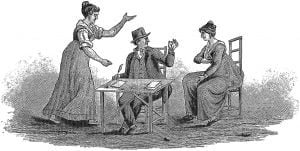
This post explores the intricacies of modern Neapolitan sign language, illustrating gestures that convey various themes, such as love, inquiry, and mockery, through vivid examples. The author describes scenes depicting interactions between a public letter-writer and clients, demonstrating how gestures effectively communicate emotions and social dynamics. It highlights the cultural significance of these signs, linking them to historical practices and illustrating how they complement spoken language, particularly in situations of misunderstanding or negotiation.

Narratives – Na-Wa-Gi-Jig’s Story – Sign Language

John Na-wa-gi-jig, an aged Ojibwa, recounts a perilous fishing incident from his youth. While on ice with companions, they observed the ice breaking due to a rising wind, prompting a hasty retreat toward the shore. Despite challenges, including wet clothing and the cold, they worked together to fashion a raft from ice and snowshoes. After drifting further out, they ultimately paddled back to safety just as the sun set, reflecting on their resilience and the hardships they faced during the ordeal.

Narratives – Nátci’s – Sign Language

Dr. W.J. Hoffman recorded a detailed narrative by Nátci, a Pai-Ute chief, outlining an expedition to prevent the Pai-Utes from aligning with the hostile Banaks in 1880. Nátci describes the journey, interactions with Banaks, and the subsequent return to his chief. Utilizing gestures and sign language, he conveyed important aspects of the trip, including meetings, counsel, and eventual escape. The narrative showcases both the Pai-Ute culture and their nuanced communication through sign language as a means of conveying complex information.

List of Authorities and Collaborators – Sign Language

The post outlines various lists of sign languages collected from different Native American tribes between 1800 and 1881, detailing contributions from numerous explorers and ethnographers. Key contributors include William Dunbar, Prince Maximilian von Wied, and Capt. R.F. Burton, each presenting insights into the sign languages of tribes such as the Dakota, Cheyenne, and Ojibwa. The significance of these collections lies in their potential to document the evolution and continuity of Native American sign language, as well as their comparative importance across diverse linguistic families.

Mistaken Denial That Sign Language Exists

The search for sign language among various Indigenous tribes has often been met with skepticism and denial, even in well-studied communities. Despite initial reports stating that such languages were forgotten, evidence collected by figures like Rev. J. Owen Dorsey and others shows that many tribes retained knowledge of gesture communication. Instances of successful sign interactions among tribes, even when denied by some, underline the complexity of Indigenous communication and the potential misunderstandings stemming from cultural reticence or limited exposure to different sign languages.

Modern Use of Gesture Speech – Sign Language

Dr. Tylor argues that there is no definitive correlation between the use of gestures and the advancement of civilization. While some may perceive extensive gesticulation as indicative of a lower culture, this view is misleading. Observations suggest that gestures play a crucial role in enhancing communication, regardless of language complexity. Furthermore, the prevalence of gestures is thought to be influenced more by sociological factors than the sophistication of spoken language, challenging assumptions about gestures and their relationship to cultural development.

Discourses – Lean Wolf’s Complaint – Sign Language

fig334

In 1880, Lean Wolf, chief of the Hidatsa Indians, expressed his disappointment with the American government, stating, “Four years ago the American people agreed to be friends with us, but they lied.” The message includes gestures to accompany words, illustrating his sentiments. These include signs for “white man,” “with us,” “friends,” “four years,” “lie,” and “done,” emphasizing the broken promises and disappointment experienced by his people in the context of their relationship with the United States.