Yuchi Tribe Clothing

Fig. 29. Finger Rings

The Yuchi tribe’s clothing reflects a blend of indigenous and trade influences, primarily featuring brightly colored calico garments. Men commonly wore a calico shirt beneath a sleeved jacket, often accessorized with decorative sashes and leggings. Women donned calico dresses adorned with metal brooches and necklaces, while both genders utilized beadwork for personal ornamentation. Traditional items included moccasins, turbans, and decorative pouches. Notable artistic expression is found in their distinctive sashes and neckbands, which often feature motifs linked to their cultural mythology and beliefs.
Medaëka, or Amulets

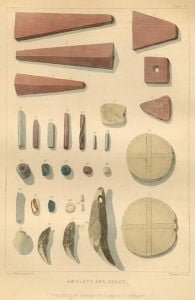
Amulets and Beads - Plate 25

The indigenous peoples of North America utilized charms, often crafted from organic and mineral materials, to ward off disease and malevolent forces. These amulets, which could be openly worn or secretly concealed, were integral to their medicinal philosophy. Shells and claws were highly prized for their protective qualities, reflecting beliefs in the mystical powers of nature. Artifacts associated with healing and protection were even included in burial practices. Over time, European influences introduced new materials, shifting the appearance and significance of these objects.

Objects of Indian Art and Tools

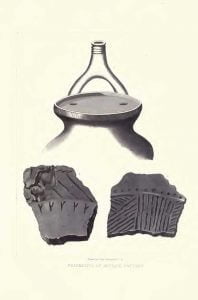
Fragments of Pottery - Plate 34

In the Ohio Valley, excavations of minor mounds unearthed carved steatite tubes, possibly used for suction. The area also revealed ornamental mica, thick pottery possibly for metallurgical uses, bird bones for baldric-making, and mineralized wooden domestic utensils. Florida mounds contained fragments of a ceremonial pouring utensil. Additionally, the Algonquin Indians revered naturally shaped boulders as idols, while various artifacts, including an ancient chisel and copper tools, were discovered, illustrating the sophisticated craftsmanship of early Native American cultures.

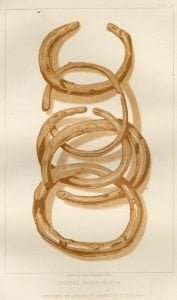
Copper Armbands and Wristbands

Copper Wrist Bands - Plate 31

Copper wristbands, unearthed from graves and tumuli, exemplify the craftsmanship of ancient American tribes, demonstrating a style still present among contemporary indigenous peoples. These simple, unjoined metal bands, mostly oxidized, have been discovered primarily in sites like the Great Tumulus of Grave Creek Flats in West Virginia, where protective copper salts formed. Prior to European contact, copper was widely used, but post-contact, the preference shifted towards silver, viewed by tribes as more prestigious than gold, which they referred to in terms of its color rather than its value.