
Court
Pulaski County, Georgia Clerks Of Inferior Court
The Clerks of the Inferior Court for Pulaski County, Georgia, from 1809 to 1866 include a succession of individuals tasked with this judicial role. Notable clerks include John Rainey, David Gertman, and Joseph Carruthers, who served multiple terms. John V. Mitchell had a prominent tenure spanning several years, while Batts N. Mitchell and A. M. Fraser also held the position before Edward A. Burch took over in 1866. This list reflects the evolution of local governance during a critical period in Georgia’s history.
Alabama Court Records

This page offers a comprehensive collection of Alabama court records, transcribed and accessible online. It includes probate records from 1809 to 1985, comprising wills, estate inventories, and guardianship documents from various counties. Detailed listings are provided for counties such as Autauga, Baldwin, Bibb, and many others, showcasing estate records and other legal documents. This resource serves as a vital tool for researchers and genealogists interested in the historical legal proceedings and familial documentation within Alabama.
Trial Record and Legal Papers – Jasper Newton Bee
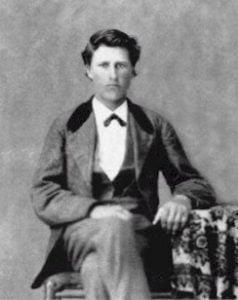
In October 1882, Jasper Newton Bee was arrested in Arkansas for allegedly assaulting Goodson McD. Moore with an ax, an act purportedly charged as attempted murder. After various hearings and witness testimonies, Bee was found guilty on November 10, 1882, and sentenced to two years of hard labor at a correctional facility in Detroit. His conviction stemmed from a violent confrontation that left Moore severely injured. Bee was escorted to the prison by U.S. Marshal Thomas Boles, arriving in December 1882.
Status of the Courts Prior to Territorial Government
In 1843, Oregon adopted Iowa’s general laws, leading to the establishment of a legal framework under a provisional government. Despite the absence of a printing press, these laws guided the settlements until the official organization of Oregon Territory in 1849. Early courts were sparse, with the first justice of the peace elected in 1846 for Portland. The arrival of appointed judges in 1849 transitioned the provisional courts to territorial courts, shaping the early legal landscape amid a burgeoning community striving for self-governance and order.
The Holladay Cases
The Holladay cases, led by Ben and Joseph Holladay, exemplified a protracted and complex litigation over property disputes and debts. Ben, a flamboyant spender, transferred properties to Joseph, who sought to secure loans but later claimed ownership. After extensive legal battles, the court affirmed Joseph’s liens and property claims valued at $340,000. Following Ben’s death, further disputes over estate administration emerged. The cases significantly strained court resources and lawyers’ fees, marking them as a noteworthy chapter in Portland’s legal history.
Todd County, Kentucky Courts and Bar
Under the 1799 Constitution, Todd County’s judicial structure included a Circuit Court, County Court, and Magistrate, with localized control led by appointed justices. The legal practice was dominated by land disputes and slave-related cases, necessitating lawyers with extensive expertise. Prominent attorneys arose during this era, such as Ben Shackelford, Henry Broadnax, and F. M. Bristow, who made significant contributions to both law and politics. The county also grappled with issues of mob justice and the evolving nature of crime, illustrating a complex legal history shaped by social sentiments and tensions.