
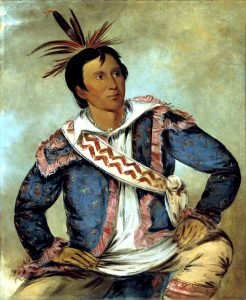
Charles Montezuma

The story of Charles Montezuma illustrates the intellectual potential and moral integrity present among North American Indians. Rescued from an Apache camp and adopted by a Chicago photographer, Montezuma thrived as a scholar and gentleman, graduating high school with distinction. He is pursuing a medical career, showcasing a rejection of savage stereotypes imposed by white society. The post emphasizes that Native Americans have produced notable figures in history, challenging the perception of their inferiority with examples of their capability and resilience.
Chief Pontiac of the Ottawa’s

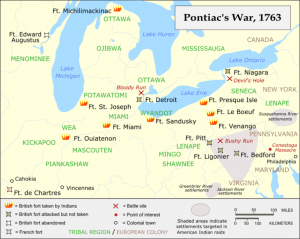
Map of Pontiacs War

Following the 1763 peace, English troops occupied former French forts, prompting widespread Indian apprehension of encroachment. Pontiac, the Ottawa chief, emerged as a pivotal leader advocating for resistance. He organized a council of tribes to unite against the English, inspired by a prophetic vision asserting divine support for their fight. Pontiac orchestrated a coordinated attack on English forts, aiming for liberation. Despite initial efforts, including a siege of Detroit, betrayal foiled his plans. Eventually, Pontiac was assassinated, symbolizing the decline of Indian resistance.

The Meeting in 1811 of Tecumseh and Apushamatahah

Peter Perkins Pitchlynn was the Choctaw Principal Chief from 1864-1866

In 1811, Tecumseh, the Shawnee leader, met with Apushamatahah, a prominent Choctaw chief, to rally southern tribes against American encroachment amidst looming war between the U.S. and England. Tecumseh passionately urged unity against their common foe, warning of the dire consequences of inaction. Apushamatahah countered with a call for prudence, advocating for peaceful measures. Ultimately, the council resulted in favoring American alliance, thwarting Tecumseh’s ambitions. This pivotal meeting highlighted the contrasting strategies of the two influential leaders, shaping tribal responses during a critical historical period.

The Illinois Indians – Indian Wars

The Illinois Indians, once a dominant tribe across a vast region, struggled against the Iroquois Confederation and later faced extermination by the Pottowattomies and Ottawas. By 1835, the Pottowattomies concluded their last treaty in Chicago, marking the end of their presence in Illinois. Their final war dance, witnessed by settlers, was a haunting display of their cultural legacy as they prepared to depart for the Missouri River. This event symbolized the tragic decline of the indigenous peoples as white settlers established dominance in the region.

War Between the Colonies and The Western Indians – From 1763 To 1765

Map of Pontiacs War

Pontiac, a prominent chief, led a coalition of Great Lakes tribes against British forces following the French defeat in 1760. His strategic prowess came to fruition in June 1763, when his forces captured Michilimakinak, demonstrating his tactical superiority and uniting various tribes against the English. The siege of Detroit, lasting twelve months, highlighted his leadership as the British prepared for retaliation. By late 1765, following Colonel Bouquet’s campaigns, peace discussions ensued, marking a significant moment in the conflict between the colonies and Native Americans.

Pontiac’s War

Map of Pontiacs War

In the early 18th century, French settlers cultivated strong ties with Native American tribes around the Great Lakes, contrasting sharply with the English. The Ottowa chief Pontiac emerged as a key figure in resisting British encroachment after they took over French territories in 1760. In a coordinated effort in 1763, Pontiac mobilized a coalition of tribes to assault British forts, notably seizing Michilimackinac. Despite early successes, his campaign ultimately faltered, and he met his end under uncertain circumstances, illustrating the tumultuous relations in post-colonial North America.