Early Indian Wars in Florida

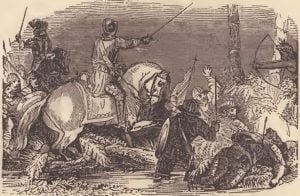
Narvaez in Florida

Prior to English settlement in North America, the Spanish and French made multiple attempts to colonize Florida, beginning with Juan Ponce de Leon’s explorations in 1512. These expeditions often resulted in confrontations with Native Americans and failure, exemplified by the disastrous missions of Hernando de Soto and others. Despite some initial friendly relations, the Spanish ultimately faced fierce resistance, leading to their eventual retreat. The arrival of French settlers introduced further conflict, culminating in the brutal expulsion of the French by Spanish forces and the tragic events surrounding their attempts to establish a foothold in Florida.
Will the Real Sequoya Please Stand Up?

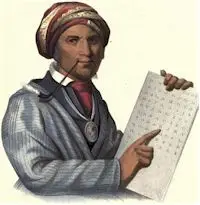
Sequoyah

Sequoya, born George Guess or Gist, was a prominent Cherokee figure and inventor of the Cherokee syllabary. His upbringing in eastern Tennessee and later life in Wills Town shaped his identity, which he embraced after becoming disillusioned with white settlers. Despite lacking formal education, he developed a writing system to enhance literacy among the Cherokees. His life story is often clouded by conflicting accounts, leading to debates about his heritage and contributions, particularly the origins of his syllabary and its acceptance within Native communities.

Mysterious Cherokee Raiders

1591 Floridae Americae Provinciae Map

The Early History of Jackson County, GA outlines the existence of the Bohuron tribe, located northeast of modern Atlanta, and notes their Arabic-derived name meaning “Nobility.” In 1770, the Bohurons were defeated by the Talasee Creeks and, known for raiding Native American villages, were often mistakenly blamed for these attacks. Historical accounts highlight them as part of a broader pattern of predatory groups in the region. Additionally, Cherokee legends recall their role in sacking the capital of Apalache, revealing a turbulent history of conflict among tribes.

Guide to Using the Final Rolls

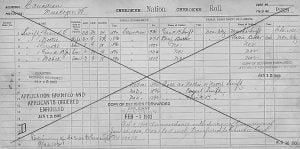
Frank T. Swift Enrollment Card

This guide provides instructions for searching the Final Rolls, or Dawes Rolls, to find information about enrollees including name, age, sex, and blood degree. It includes a letter guide from the National Archives denoting various statuses such as adopted, doubtful, or rejected. Successful searches depend on careful reading and understanding of the enrollment cards, as demonstrated through example searches. Accessing census card numbers can reveal additional family details and clarify previously marked statuses, enhancing the effectiveness of research into ancestral ties.

Old Indian Trails of Pike’s Peak

The principal Indian trail into the Pikes Peak area originated from the plains via Templetons Gap, crossing significant points like Monument Creek and the Garden of the Gods. This route, known as the Ute Pass trail, was utilized by various tribes for centuries. Notable historical figures such as Dr. Edwin James and Thomas J. Farnham documented this trail’s importance for trade and travel. The region saw frequent conflicts among tribes, especially between the Ute and the Cheyenne and Arapaho, until the arrival of white settlers in the mid-19th century.

Cherokee Proposals for Cession of their Land

In a series of letters dated from December 1820 to January 1821, Cherokee leaders, particularly from Creek Path Town, express concerns over land rights and representation within their nation. They appeal to Major General Andrew Jackson for assistance in securing a defined tract of land, fearing future dispossession by upper-nation chiefs and highlighting their exclusion from council decisions. They also request a fair distribution of treaty annuities, reflecting their long-standing grievances and the hope for a secure future on their ancestral lands.

The Cherokee Nation

History of Alabama and incidentally of Georgia and Mississippi, from the earliest period

The Cherokee Nation, one of the significant early Native American tribes in the southeastern United States, originally resided in Northern Georgia and Northwestern Carolina. The Cherokees established themselves along the Tennessee River and were noted for their alliances and conflicts with European settlers. Their society was characterized by a division into Upper and Lower factions, complex burial customs, and a rich cultural life including extensive dancing and storytelling traditions. Despite their initial strength, diseases and warfare led to significant population decline by the mid-18th century.

Exploit of Hi-a-de-o-ni

The account recounts the daring exploits of HI-A-DE-O-NI, a notable Seneca warrior and father of chief Young King. Seeking glory, he ventured alone into Cherokee territory, where he stealthily killed three men, collecting their scalps. While evading capture, he cleverly feigned sleep to escape detection by a victim’s mother. This tale exemplifies Iroquois valor and has been preserved as a testament to their martial heritage and the tribal rivalries that shaped their history, particularly against the Cherokees.

Senecas Embassy of Peace to the Cherokees

During the conflict between the Six Nations and the Cherokees, eight Seneca ambassadors, including Little Beard and Jack Berry, sought peace. They were initially well received by the Cherokees, but one chief demanded they first engage in warfare against a common enemy. After a skirmish, Seneca leader Awl was captured and faced execution. However, he impressed his captors with a death song, distracting them long enough to escape. The Senecas successfully negotiated peace and returned home.

Elucidation of a Convention, September 11, 1807

On September 11, 1807, the United States and the Cherokee Nation clarified the terms of a 1806 convention. This elucidation confirmed the cession of land between the Tennessee River and ridge, previously claimed by the Cherokees and Chickasaws. The eastern boundary was defined, and the Cherokees were to receive $2,000 for their participation in the negotiations, with the right to hunt on the ceded land until it became unsuitable for such activities. The agreement was signed by representatives from both parties, solidifying the terms of their cession.

Cherokee Bear Song

The Cherokee Bear Song is a traditional chant sung by bear hunters to attract bears while on their hunts. This song, passed down from the Ani-Tsâ´kahi, highlights four significant mountains where bears are believed to originate and gather for rituals before hibernation. Each verse begins with a loud “He!” and concludes with “Yoho!” emphasizing the connection to the bear’s spiritual essence and the hunters’ respect for the animals. The song serves as a cultural expression, intertwining Cherokee beliefs and practices regarding nature and wildlife.

Cherokee Formula for Separation of Lovers

The Cherokee Formula for Separation of Lovers is a ritual intended to dissolve the bonds between two individuals, particularly in cases of jealousy. The formula invokes the Blue Hawk, symbolizing the disruption of their connection. The speaker, a white man, claims an affinity with a woman from the Paint clan, asserting his presence will eliminate her loneliness and turn her affections toward him. The use of tobacco during the recitation is implied but not detailed, and the significance of colors is emphasized in the emotional outcomes of the ritual.

Plants Used in Cherokee Medicine

A review of twenty plants used in Cherokee medicine reveals varied properties and applications. Seven plants lack recognition in pharmacopoeias, raising questions about their efficacy compared to established medical practices. Some plants were used based on misguided beliefs or the doctrine of signatures. While a minority had confirmed medicinal uses, distinctions between Cherokee applications and modern methods often complicate their assessment. Overall, Cherokee practices reflect a mixture of traditional knowledge, cultural beliefs, and varying degrees of medicinal effectiveness.

The Cherokee Religion

The Cherokee religion is marked by its rich and authentic expressions, reflecting a deep-rooted belief system prior to European influence. Contrary to misconceptions, the Cherokee were fundamentally religious, with their practices not merely seen as superstitions. Their spirituality was complex, centered around polytheism and the spirit world, with prayers addressing tangible concerns like health and success. The significance of their religious expressions is underscored by their linguistic authenticity, offering invaluable insights into aboriginal thought and belief systems that stand apart from contemporary interpretations of morality.

The Inâli Manuscript

The Inâli Manuscript explores the legacy of Black Fox, a prominent full-blood Cherokee literary figure who passed away recently. Known for his extensive contributions to Cherokee culture and history, he held various esteemed roles, including councilor and Methodist preacher. His daughter revealed a vast collection of his writings, letters, and historical documents. This treasure trove, filled with important manuscripts and artifacts, offers invaluable insights into Cherokee heritage and the Civil War experiences of the Cherokee people, now preserved with the Bureau of Ethnology.

Other Manuscripts Used in Cherokee Formulas

Formulas were gathered from the shaman Tsiskwa, but their quality was poor due to his declining health and limited assistance. Attempts to document further formulas through dictation were unsatisfactory. Meanwhile, herb doctor Awani´ta compiled various medicinal plants and practices, including a battle protection formula. Another doctor, Takwati´hi, provided additional formulas, with his son documenting them. While his expertise was narrow, he offered accurate information on specific practices. These gathered formulas from Tsiskwa, Awani´ta, and Takwati´hi are now archived at the Bureau.

Ceremonies for Gathering Plants and Preparing Medicine

In the tradition of healing, shamans observe specific ceremonies and regulations while gathering medicinal plants. They approach plants from designated directions, perform rituals, and offer beads as compensation to the earth. The choice of plants, especially those facing east, is believed to enhance their potency. After collection, the plants are tested in water as a sign of the treatment’s potential success. The preparation of medicine follows strict guidelines, emphasizing the importance of authentic practitioners over impostors who lack the necessary knowledge of rituals.

The Cherokee Alphabet

The sacred Cherokee formulas, once transmitted orally, were recorded following the creation of the Cherokee syllabary by Sequoyah. This innovation allowed the tribe to preserve their religious practices in writing, while also enabling missionaries to translate the Bible into Cherokee. Unlike other Native American tribes, the Cherokee developed a unique alphabet for their cultural expressions, creating a vast repository of living faith. Despite the encroachment of new civilizations, the ancient religion remains influential among the Cherokee, with rituals still practiced today.

Cherokee Formula to Frighten Away A Storm

The Cherokee formula for frightening away a storm is a ceremonial practice aimed at protecting corn crops. The shaman recites a sacred song that addresses the storm directly, likening it to a rutting animal tracking its mate. By pointing to the heavens and urging the storm to follow the path of the tree tops, the shaman attempts to divert it. The ritual includes physical gestures, such as blowing in the storm’s direction and holding corn, to reinforce the intent of sending the storm away.

Importance Attached To Names in Cherokee Formulas

In Cherokee culture, names are viewed as integral to one’s identity, impacting both personal and spiritual well-being. Shamans incorporate the names and clans of clients or desired individuals into their formulas, believing that mishandling names can cause harm akin to physical wounds. This belief has led to practices surrounding name concealment and change, as seen in the cases of Powhatan and Pocahontas. If healing efforts fail, a shaman may rename a patient, hoping that the new identity will facilitate successful treatment.