Biography of Paul Brigham

Hon. Paul Brigham, born January 17, 1746, in Coventry, Connecticut, served as a Captain in the Continental Army from January 1777 to April 1781, participating in significant battles such as Germantown and Monmouth. After marrying Lydia Sawyer in 1767, he moved to Norwich, Connecticut, in 1782, where he built a notable residence on Brigham Hill. Brigham’s commitment to his country and his community is well-documented, with a diary providing insights into his experiences during the Revolutionary War. He died in 1810.
Biography of Honorable Daniel Buck

Daniel Buck, born on November 9, 1753, in Hebron, Connecticut, opened Norwich’s first law office in the mid-1780s after serving in the Revolutionary War. He became a respected attorney and public servant, representing Norwich at the 1791 convention considering Vermont’s admission to the Union. Buck served in the Vermont legislature and one term in the U.S. Congress. Despite his early success, his later years were marked by financial difficulties and personal struggles, leading to his death in Chelsea on August 16, 1816.

Biographical Sketch of Crispus Attucks

Crispus Attucks, a half-Indian, half-African American from Framingham, Massachusetts, is recognized as the first casualty of the Boston Massacre on March 5, 1770, marking a pivotal moment in the American Revolutionary struggle. His leadership during a confrontation between colonists and British troops led to his death, along with three others, igniting colonial resistance against British rule. Though details about his life are debated, Attucks is remembered as a sailor of notable stature. A monument honoring him was erected in Boston in 1888.

Illustrations, Famous American Belles

Mary Triplett

This post presents a collection of notable portraits and miniatures of prominent American women, highlighting their connections and historical significance. Featured are Emily Marshall, Marcia Burns, Theodosia Burr, and others, with artwork by renowned artists like Chester Harding, James Peale, and Thomas Sully. Each piece, often reproduced for the first time, is accompanied by details about ownership and permissions for reproduction, emphasizing the legacy of these figures in American history.

Mary Victoria Leiter, Baroness Curzon of Kedleston

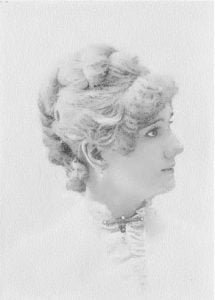
Mary Victoria Leiter

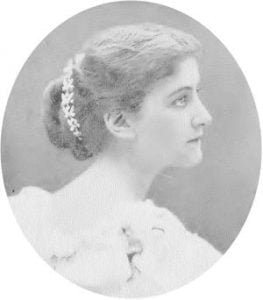
Mary Victoria Leiter, Baroness Curzon of Kedleston, emerged as an influential figure following her marriage to Lord Curzon, who became Governor-General of India in 1899. An American by birth, her transition from the social elite of Washington, D.C. to viceregal life in India was marked by charm and grace. She played a significant role in her husband’s political career and earned admiration from both British and Indian communities through her engagement in social issues, particularly during crises like the plague. Her impactful presence signified a new chapter in the history of American women in British governance.

Nellie Hazeltine, Mrs. Frederick W. Paramore

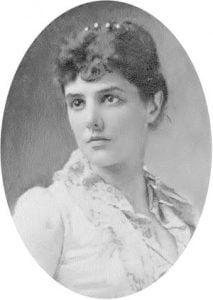
Nellie Hazeltine

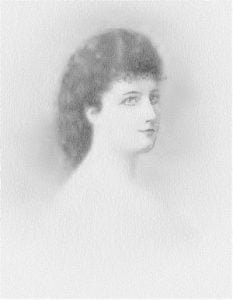
Nellie Hazeltine, later Mrs. Frederick W. Paramore, was a notable figure in St. Louis society, graduating from Mary Institute in 1873. Renowned for her physical beauty and charm, she captivated those around her, fostering positive connections without inciting envy. Educated and musically gifted, her accomplishments set her apart from her peers. Nellie married in 1881 but tragically passed away at twenty-seven, leaving behind a legacy celebrated by her community. Her beauty and character continue to be remembered, symbolizing an ideal of womanhood in her era.

Mattie Ould, Mrs. Oliver Schoolcraft

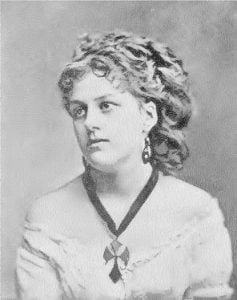
Mattie Ould

Mattie Ould, known as Mrs. Oliver Schoolcraft, captivated Richmond society in the late 1860s with her beauty, wit, and charm. Raised in a prominent family, her talents and independence made her a celebrated figure. Famed for her repartee and magnetic presence, she dazzled crowds both socially and in spirited performances. Ould’s marriage in 1876 to Oliver Schoolcraft was met with familial tension, yet her enchanting spirit endured until her untimely death. Her funeral drew immense crowds, reflecting her lasting impact on the community and Southern culture.

Kate Chase, Mrs. William Sprague

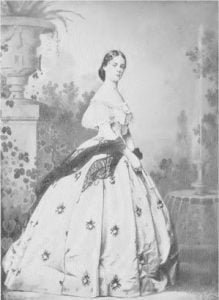
Kate Chase

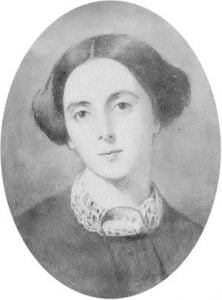
Kate Chase, known as Mrs. William Sprague, was a prominent figure in American political and social history, revered for her intellect and beauty but also criticized for her influence. Born on August 13, 1840, she was deeply devoted to her father, Salmon P. Chase, whose political ambitions shaped her own. Despite her brilliant mind and political acumen, her life was marred by personal disappointments and societal scrutiny. After a lavish marriage and subsequent divorce, she lived in relative seclusion, passing away on July 31, 1899, largely forgotten.

Emilie Schaumburg, Mrs. Hughes-Hallett

Emilie Schaumburg

Emilie Schaumburg, known as Mrs. Hughes-Hallett, epitomized Philadelphia’s social ideals in the late 19th century, unmatched in beauty and elegance since colonial times. Renowned for her striking looks, intellectual prowess, and charm, she captivated audiences both in America and Europe. Her lineage, steeped in military and social significance, further enhanced her status. Marrying Colonel Hughes-Hallett, she cultivated a vibrant social life in France, where her hospitable nature and artistic pursuits continued to draw admiration. Emilie’s legacy as a belle endures, reflecting the rich cultural heritage of her city.

Adele Cutts, Mrs. Robert Williams

Adele Cutts

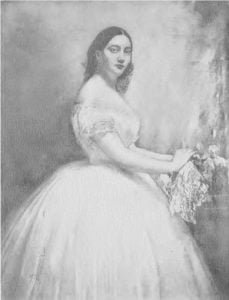
Adele Cutts, known as Mrs. Robert Williams, emerged as a prominent figure during Franklin Pierce’s presidency, celebrated for her beauty and charm. Born into a distinguished family with connections to both the Madison and Washington families, she captivated society with her grace and character. Her marriage to Stephen A. Douglas marked a notable chapter in her life, elevating her status further. After Douglas’ death, she married General Williams, transitioning from social royalty to devoted motherhood, leaving behind a lasting legacy of beauty and integrity.

Harriet Lane, Mrs. Henry Elliott Johnston

Harriet Lane

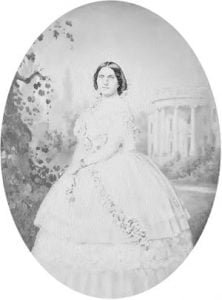
Harriet Lane, niece of President James Buchanan, played a significant role in her uncle’s presidency, bringing charm and sophistication to the White House. Orphaned at a young age, she became Buchanan’s ward and later a prominent social figure, known for her grace and beauty both in America and abroad. Following Buchanan’s presidency, she married Henry Elliott Johnston and was active in Baltimore’s social scene. Despite personal losses, including her sons and husband, she remains a figure of enduring elegance and dignity.

Jessie Benton, Mrs. John C. Fremont

In 1868, St. Louis unveiled a monument to Thomas Hart Benton, a prominent advocate for Western expansion. His daughter, Jessie Benton Fremont, unveiled the statue alongside her husband, General John C. Fremont, a key figure in exploring and settling the West. Jessie’s life intertwined with the exploration and development of the American frontier, embodying both her father’s vision and her husband’s adventures. She supported Fremont in his expeditions and political career, advocating for anti-slavery principles in California while navigating societal challenges.

Fanny Taylor, Mrs. Thomas Harding Ellis

Fanny Taylor

Fanny Taylor, also known as Mrs. Thomas Harding Ellis, was renowned as one of the celebrated Richmond Graces in the 19th century. Educated in Richmond, she became acclaimed for her beauty and grace, often captivating society at local gatherings. Fanny married Archibald Morgan Harrison and later Colonel Thomas Harding Ellis, with whom she shared a deep bond for nearly fifty years. Her life exemplified the charm and influence of Southern women, marked by her connections to prominent figures and rich social traditions of the era.

Octavia Walton, Madame Le Vert

Octavia Walton

Octavia Walton, known as Madame Le Vert, was a prominent figure in 19th-century American society, celebrated for her warmth and intellect. Born in 1810 to a family with notable historical ties, including a signer of the Declaration of Independence, she cultivated a vast social network across cultures. Educated at home, she became fluent in multiple languages and shared a deep appreciation for various civilizations. Madame Le Vert’s influential social standing, marked by her captivating personality and hospitality, shaped her legacy as a key cultural figure in the South. She passed away in 1877 in Augusta, Georgia.

Emily Marshall, Mrs. William Foster Otis

Emily Marshall

Emily Marshall Otis, celebrated for her extraordinary beauty, was a prominent figure in 19th-century Boston society. Born in 1807 to a notable merchant family, she embodied the ideal of feminine grace and charm. Her presence captivated many, inspiring admiration and devotion. Despite her remarkable looks, she displayed humility and kindness, deeply impacting those around her. Married to William Foster Otis, her life was tragically brief, ending in 1836, but her legacy as a timeless emblem of beauty and character endures in American history.

Cora Livingston, Mrs. Thomas Pennant Barton

Cora Livingston

Cora Livingston was born on June 16, 1806, in New Orleans to Edward Livingston and Louise Moreau. Despite lacking conventional beauty, she became a celebrated belle from 1820 to 1830, known for her grace and charm. Cora was deeply integrated into the political and social life of her era, often associated with notable figures, including President Andrew Jackson. In 1831, she married Thomas Pennant Barton, and after her parents’ passing, she lived at Montgomery Place. Cora passed away on May 23, 1873, remembered as a distinguished woman of her time.