Pioneers of Chambers County Texas

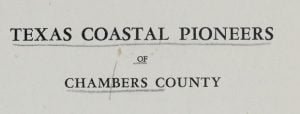
Texas coastal pioneers of Chambers County

“Texas Coastal Pioneers of Chambers County” by Varuna Hartmann Lawrence, published in 1952 by Royal Publishing Co., offers a genealogical history of the early settlers of Chambers County, Texas. This book details the cultural and spiritual development of the Gulf Coast region and includes sketches of many early families. Lawrence, a native of Chambers County, draws on her personal experiences and extensive knowledge of farm and ranch life to provide a rich historical narrative. Her work captures the transformation of the region, influenced by both agricultural practices and oil development. Through her writings, Lawrence preserves the legacy of the pioneering families of Chambers County, making a significant contribution to Texas history.
Vanderburgh County Indiana Will Abstracts, 1821-1873

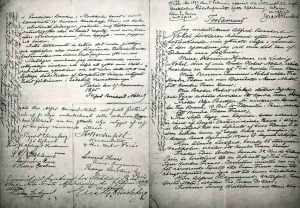
Sample Last Will and Testament

Abstracts of over 600 wills for Vanderburgh County, Indiana, extracted by Mrs. Arthur C. Bitterman. Book A was typed by Mrs. James A. Gentry, book B typed by Mrs. Marvin J. Huff, and published as one by the Vanderburgh Chapter of the DAR. Book A primarily covers wills written or filed within the time period of 1823-1849 and book B includes the years of 1849-1873. In both cases there are wills that fall outside those dates.

Narrative of Marie Le Roy and Barbara Leininger

The Narrative of Mary le Roy and Barbara Leininger. Who for four and a half years were captive among the Indians, and on the 6th May 1759 arrived happy in this city. From her own lips never written and promoted to the Press. This manuscript gives an account of the captivity and escape of these two girls, whose families lived on Penn’s Creek, in the present Union County, Pennsylvania. It also provides a lengthy list of names of other prisoners met by the two ladies in their captivity.

Conrad Weiser, Terachiawagon, Womelsdorf, Pennsylvania

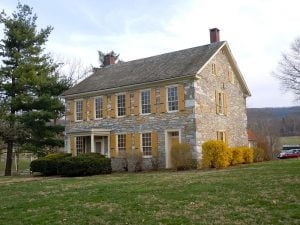
Conrad Weiser Homestead

Conrad Weiser, an adopted son of the Mohawk Nation, lived with Iroquois chief Quagnant at seventeen, mastering their language and customs. He befriended Chief Shikellamy and became the official interpreter for the Six Nations, fostering relations with white settlers. Weiser passed away on July 13, 1760, near Womelsdorf, deeply mourned by both Pennsylvanians and Native Americans. His grave, alongside several Indian chiefs, reflects their mutual respect. A monument in Conrad Weiser Memorial Park honors his legacy, echoing George Washington’s tribute to his significant contributions.