
Abington Massachusetts Marriage and Death Records
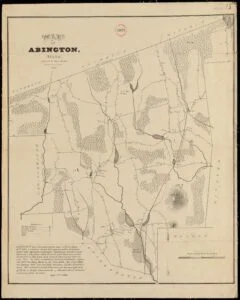
1830 Map of Abington, Massachusetts

Volume 2 of the Abington, Massachusetts vital records compiles marriage and death records up to 1850, complementing Volume 1, which contains birth records. Established in 1712, Abington’s boundaries have shifted, affecting historical jurisdiction. Extensive research from town records, cemeteries, and family Bibles ensured comprehensive documentation, including the identification of Black families recorded by given names. The volume is organized alphabetically by marriages and deaths.

Abington Massachusetts Birth Records

1830 Map of Abington, Massachusetts

Volume 1 of the Abington, Massachusetts vital records details births recorded in the town up to 1850, featuring comprehensive research from town records, cemeteries, and church documents. Established in 1712, Abington’s jurisdictional changes may affect genealogical searches. The records also include separate listings for Black families, primarily by given names. Additionally, various surnames are cataloged, emphasizing the need to consider alternate spellings. For marriages and deaths, researchers should consult Volume 2.

Genealogy of the Reed and Loud Families of Abington, Massachusetts

The Reed and Loud families, intertwined by marriage, have deep roots in Abington, Massachusetts. William Reed immigrated from England in 1635 and settled in Weymouth, where his descendants have played prominent roles in business and community affairs. Notably, Amos S. Reed established a successful lumber business in North Abington, which continues under his grandson, Arthur B. Reed. The Loud family, tracing back to Francis Loud from Scotland, produced several notable figures, including Major Edward Payson Reed, whose contributions as a soldier and business leader reflect the families’ legacy in the region.

Richard Dexter Genealogy, 1642-1904

Arms of Dexter

Being a history of the descendants of Richard Dexter of Malden, Massachusetts, from the notes of John Haven Dexter and original researches. Richard Dexter, who was admitted an inhabitant of Boston (New England), Feb. 28, 1642, came from within ten miles of the town of Slane, Co. Meath, Ireland, and belonged to a branch of that family of Dexter who were descendants of Richard de Excester, the Lord Justice of Ireland. He, with his wife Bridget, and three or more children, fled to England from the great Irish Massacre of the Protestants which commenced Oct. 27, 1641. When Richard Dexter and family left England and by what vessel, we are unable to state, but he could not have remained there long, as we know he was living at Boston prior to Feb. 28, 1642.