The Old Dutch Burying Ground in North Tarrytown New York
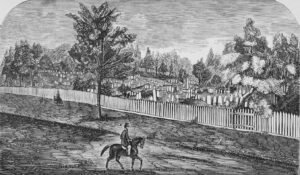
Old Dutch Church Graveyard

This book documents the early gravestones and inscriptions of the Old Dutch Burying Ground in North Tarrytown, New York, focusing on preservation efforts led by William Graves Perry. Commissioned for the church’s 250th anniversary, it records the deteriorating brownstone and marble markers, some dating back to the 18th century. The text highlights the artistry of gravestones and the community’s historical significance. Despite losses, surviving inscriptions are important for understanding the genealogy of early settlers in the area.
Over the Misty Blue Hills: The Story of Cocke County, Tennessee

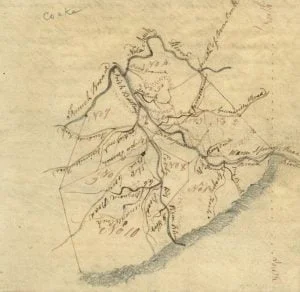
1836 Map of Cocke County, Tennessee

“Over the Misty Blue Hills: The Story of Cocke County, Tennessee,” written by Ruth Webb O’Dell and published in 1951, provides a historical account of Cocke County. The book covers various aspects of Cocke County’s history, including its political, social, religious, and industrial developments. The contents are divided into several detailed sections: the political history of Cocke County, the significance of local names, the natural resources and setting, early settlers, religious history, industrial development, and notable figures from the county. Additionally, it delves into specific family histories, offering insights into the lives of many influential families such as the Allens, Burnetts, Huff, McMahan, and many others.

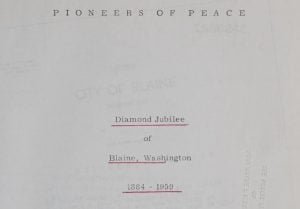
History of Blaine Washington, 1884-1959

Pioneers of peace - diamond jubilee anniversary, Blaine, Washington, 1884-1959

“History of Blaine Washington, 1884-1959” offers a comprehensive and engaging exploration of Blaine, Washington’s rich history and cultural heritage. Published in 1959 to commemorate the diamond jubilee of Blaine, this book captures the essence of a community that has thrived on the principles of peace and cooperation. Situated in Whatcom County, Blaine’s unique geographical location near the Canadian border plays a pivotal role in its identity, an aspect vividly illustrated through the symbol of the International Peace Arch.

Seabury Family of New Bedford, Massachusetts

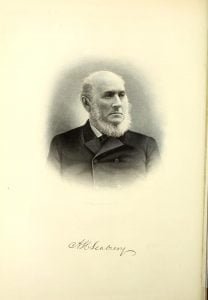
Alexander Seabury

The Seabury family, with variations in spelling, traces its American roots to John Seabury of Boston, who died before 1662. His son, Samuel, a physician, fathered several children and settled in Duxbury before moving to Little Compton, Rhode Island. Notable descendants include Alexander Hamilton Seabury, a key businessman in New Bedford, who contributed to the city’s industrial growth and maritime trade. The family’s connections to early American history are emphasized through their ties to Mayflower descendants and various significant local enterprises.

History of Kossuth, Hancock, and Winnebago Counties, Iowa

History of Kossuth, Hancock, and Winnebago counties, Iowa

History of Kossuth, Hancock, and Winnebago Counties, Iowa together with sketches of their cities, villages and townships, educational, civil, military and political history; portraits of prominent persons, and 638 biographies of representative citizens. Also included is a history of Iowa embracing accounts of the pre-historic races, and a brief review of its civil and military history.

Bloody Scenes in Alabama and Georgia

History of Alabama and incidentally of Georgia and Mississippi, from the earliest period

In June 1787, Colonel James Robertson led an expedition against Upper Creek and Cherokee tribes in North Alabama, following increasing Indian attacks on American settlements. After engaging in skirmishes, Robertson’s forces captured supplies and destroyed a town while suffering no casualties. Meanwhile, the Creeks launched violent assaults on Georgia, prompting the state to seek Congressional military support, which went unfulfilled. Conflict persisted, with Colonel McGillivray emerging as a powerful leader, refusing peace talks and instigating further hostilities, including the notorious massacre of Colonel Kirkland and his party in 1788.

Biographical Sketch of Paul Pinckney

Paul Pinckney, born on March 24, 1869, in South Carolina, is a distinguished newspaper figure and the editor-proprietor of the San Mateo Times. After the early loss of his parents, he chose to explore the world instead of pursuing higher education. His career spans roles as editor of the Southern Home Journal, a reporter for the San Francisco Chronicle, and service in the Spanish-American War. In 1903, he became a key figure at the San Mateo Times and has contributed to local commerce initiatives, serving as secretary of the San Mateo Board of Trade since 1905.

Slave Narrative of Dave Taylor

The interview with Dave Taylor offers a glimpse into his life as an ex-slave and soldier of fortune. Born on a Virginia plantation, his journey took him through perilous territories and naval adventures, ultimately landing him in Key West. Taylor recounts tales of survival, family, and resilience amidst the tumult of war and Reconstruction. Despite hardships, he remained loyal to his roots and his beloved wife, illustrating the complexities of life for former slaves in post-war America. His anecdotes reflect a unique blend of humor and hardship shaped by his experiences.