Sevier County 1830 Tennessee Census

1830 Sevier County Census transcription

Published in Knoxville, Tennessee in 1956 and distributed by the Genealogical Publishing Company of Baltimore, Maryland, Sevier County, Tennessee: Population Schedule of the United States Census of 1830 (Fifth Census) provides a transcription of the often difficult to read, 1830 Sevier County Tennessee census. Authored by Blanche C. McMahon and Pollyanna Creekmore, this meticulous reproduction of the original census record sheds light on the people of Sevier County in 1830.

Read Genealogy of Newport RI and Freetown MA

Old Families of Southeastern Massachusetts

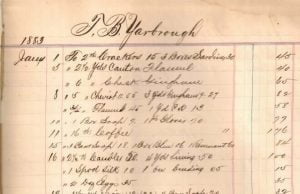
The Read family, with origins in Newport, R.I., traces back to John Reade, a cordwainer who arrived from England. His descendants played significant roles in Freetown, Mass., establishing a tannery that thrived for generations. Notable family members include Paddock Richmond Read, who became a prominent figure in Fall River before moving to Taunton, where he worked as a photographer. His family continued the legacy of education and service, with several members becoming teachers and community leaders.

Kingman Genealogy of Middleboro Massachusetts

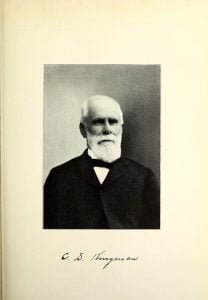
C. S. Kingman

The Kingman family of Middleboro, Massachusetts, descends from an early branch of the Weymouth Kingman lineage, tracing its roots back to Wales. Prominent figures include Maj. Bela Kingman and his son Calvin D. Kingman, who significantly impacted local industry by establishing a shoe manufacturing business that employed hundreds. The family’s legacy extends to civic and educational contributions, with Calvin serving as the first president of the Middleboro National Bank and actively participating in the Congregational Church. The Kingman lineage exemplifies dedication to both community and industry in Middleboro.

1923 Historical and Pictorial Directory of Angola Indiana

1923 Angola Indiana Directory Book Cover

Luedders’ historical and pictorial city directory of Angola, Indiana for the year 1923, containing an historical compilation of items of local interest, a complete canvass of names in the city, which includes every member of the family, college students, families on rural lines, directory of officers of county, city, lodges, churches, societies, a directory of streets, and a classified business directory.

1899 Directory for Middleboro and Lakeville Massachusetts

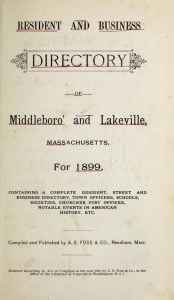
1899 Middleboro and Lakeville Massachusetts Directory Cover

The 1899 Directory for Middleboro and Lakeville, Massachusetts, compiled by A. E. Foss & Co., provides a comprehensive list of residents and businesses, alongside town officers, schools, churches, and societies. It includes notable historical events and offers a detailed account of the local community, featuring numerous surnames from both towns. This directory serves as an essential resource for understanding the demographics and social structure of Middleboro and Lakeville during that period.

Mission’s Among the Southern Indians

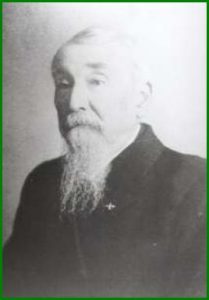
Reverend Hugh Wilson

In 1819, the Synod of South Carolina initiated a mission among Southern Indians, focusing on the Chickasaws. Rev. David Humphries and Rev. T. C. Stewart initially sought permission to establish a mission, which was granted by the Chickasaw king in 1820. Stewart, the sole missionary, founded Monroe Station in 1821, accompanied by two families. This mission became a pivotal center for education and Christianity, significantly influencing the Chickasaw community, fostering future leaders and laying the groundwork for their ongoing civilization.

The Discovery Of This Continent: It’s Results To The Natives

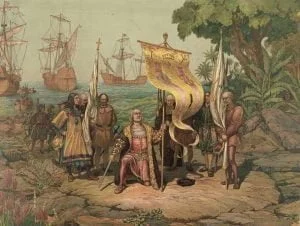
Columbus Landing on Hispaniola

In 1470, Christopher Columbus married Dona Felipa, daughter of a renowned navigator, and settled in Porto Santo, where they shared dreams of discovering lands to the West. Their ambitions fueled Columbus’s determination, leading to his 1492 voyage that resulted in the European discovery of the Americas. However, this event marked the beginning of devastation for native peoples, introducing warfare, disease, and colonization that would decimate their populations and cultures, ultimately transforming their rich, diverse societies into shadows of their former selves.

Bloody Scenes in Alabama and Georgia

History of Alabama and incidentally of Georgia and Mississippi, from the earliest period

In June 1787, Colonel James Robertson led an expedition against Upper Creek and Cherokee tribes in North Alabama, following increasing Indian attacks on American settlements. After engaging in skirmishes, Robertson’s forces captured supplies and destroyed a town while suffering no casualties. Meanwhile, the Creeks launched violent assaults on Georgia, prompting the state to seek Congressional military support, which went unfulfilled. Conflict persisted, with Colonel McGillivray emerging as a powerful leader, refusing peace talks and instigating further hostilities, including the notorious massacre of Colonel Kirkland and his party in 1788.

The Spaniards in Alabama and Mississippi

History of Alabama and incidentally of Georgia and Mississippi, from the earliest period

Following the American Revolution, England ceded territories in the south to Spain, including West Florida, while the U.S. was granted rights to navigate the Mississippi River. However, Spain occupied lands included in the new American boundaries, fostering tension. Amidst escalating conflicts over land and treaties, particularly involving Colonel McGillivray and the Creek Nation, the Georgians attempted to secure these territories, which led to significant disputes. The Creeks sought protection from Spain and engaged in diplomacy to safeguard their hunting grounds against encroachments by settlers.

A List of Choctaw Claims allowed in Mingo Mushulatubbe’s District

A September 7, 1831 true copy of Choctaw claims in Mingo Mushulatubbe’s District lists names, acreage, and outcomes such as relinquished, sold, kept, or provided for in treaty. Compiled by Special Agent F. W. Armstrong, the record documents land claims, captains’ allowances, cultivation rights, and transfers to individuals including Grant and Clement.

Slave Narrative of Carrie Nancy Fryer

Carrie Nancy Fryer, a 72-year-old former slave residing in Augusta, Georgia, shares her life experiences and memories from slavery. She describes her childhood on the Pickens plantation, her family’s struggle for sustenance, and her health remedies. Nancy reflects on her relationships, including those with her husband and children, alongside her profound spiritual experiences and insights into the supernatural. Despite her hardships, she emphasizes dignity and resilience, insisting on maintaining a clean household. She requests the interviewer to send a postcard to her former employer, expressing her ongoing struggles.

Slave Narrative of Matilda Brooks

Matilda Brooks, 79, born in South Carolina around 1857, was a slave on Governor Frank Pickens’ plantation, where conditions were relatively favorable. She described the governor as personally attentive to the slaves’ needs, providing comfortable quarters and medical care. Matilda’s family cultivated various crops and utilized traditional cooking methods. Following emancipation, her family moved to Monticello, Florida, where they became house servants and engaged in community life, including education and politics. Matilda still resides in Rooster-Town, a neighborhood associated with her family.

John Pickens, Choctaw

The case of John Pickens et al. v. Choctaw Nation (1896–1904) involved multiple generations of the Pickens family seeking enrollment as citizens by blood of the Choctaw Nation. John Pickens, the principal applicant, claimed descent from James Pickens, a Choctaw leader and signatory of the 1830 treaty. Initially denied by the Dawes Commission, the U.S. court admitted the family in 1898, but the Choctaw and Chickasaw Citizenship Court later overturned this ruling in 1902. Subsequent applications were dismissed due to this decision.