Guion Miller Application of Nancy Bradford
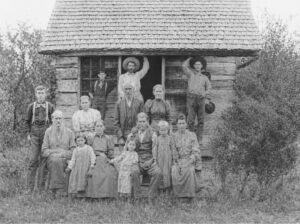
Fielding Samuel Family in Clifton, Arkansas, AI regenerated

Nancy Bradford’s Eastern Cherokee application was rejected after officials concluded she could not prove descent from a Cherokee ancestor living in the required 1835 or 1851 rolls. The file includes her claims, attorney correspondence, census research, and analysis of her family, slavery status, and possible links to the Samuel family of Missouri and the James family history.
Samuel Lane’s Journal, 1739-1803

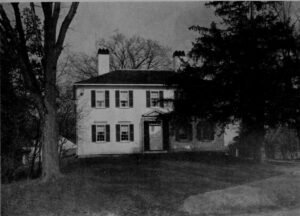
Jabez Lane House

Samuel Lane’s journal, covering 1739 to 1803, chronicles the life of a New Hampshire resident who experienced the colonial, Revolutionary, and early national periods. Lane transitioned from farming to various professions, including tanner and shoemaker, while actively participating in community roles. His meticulously kept journal captures local and national events, personal reflections, and societal changes. Edited by Charles Lane Hansen in 1937, it serves as a crucial primary source, offering insights into the daily life, hardships, and resilience of 18th-century New England.

Vital records of Stratham, New Hampshire, 1700-1867

Plan of the Town of Stratham

In 1934, Priscilla Hammond compiled vital records from Stratham, New Hampshire, covering the years 1700 to 1867, based on original town records. This compilation, transcribed with imperfect typing, was privately published and distributed to libraries and societies. The records are presented largely as found, with family members often grouped together. An index is included to assist in locating individual records. Users should be cautious with dates, especially those before 1752, as it is unclear if old dates were converted.

Abington Massachusetts Birth Records

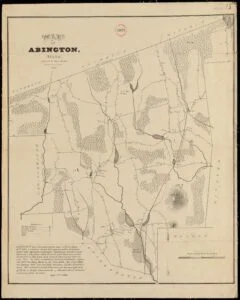
1830 Map of Abington, Massachusetts

Volume 1 of the Abington, Massachusetts vital records details births recorded in the town up to 1850, featuring comprehensive research from town records, cemeteries, and church documents. Established in 1712, Abington’s jurisdictional changes may affect genealogical searches. The records also include separate listings for Black families, primarily by given names. Additionally, various surnames are cataloged, emphasizing the need to consider alternate spellings. For marriages and deaths, researchers should consult Volume 2.

1932 New Hampshire Notables

1892 Map of New Hampshire

New Hampshire Notables,” published by the Concord Press in 1932, is a biographical compilation that follows a previous work by Henry H. Metcalf. It contains 474 brief sketches of notable individuals, both natives and residents of New Hampshire, recognized for their contributions across various fields such as public life, business, and education. This edition focuses on living subjects as of 1932, with an alphabetical index for easy reference. While not exhaustive, it serves as a valuable resource for researchers and libraries, preserving important biographical data.

History of Hampton New Hampshire vol 2

1892 Map of Hampton NH

The original version of this monumental work was published in 2 volumes. Volume 1 contains the history of the town of Hampton, New Hampshire from its settlement in 1638 to the autumn of 1892 and can be found here. Volume 2 featured the genealogical and biographical details of the early families of Hampton, NH up to the autumn of 1892 and this is the volume shown below. This manuscript was meticulously researched by Joseph Dow up until his death in 1889. Unfortunately his death preceded the final compilation of the genealogies and his daughter, Lucy Ellen Dow, took on the task after his decease. For genealogists this is an important fact. Lucy admits in her preface that she had difficulty bringing the genealogies down to date (1892) for lack of full understanding of Josiah Page’s notes and for the lack of accurate town records. As she laments about the town records “but whole decades are passed over with scarcely an entry of birth or marriage.” Indeed they are.

History of Derby Connecticut, 1642-1880

Edmund Leavenworth of Derby, Connecticut

The book titled “History of the Old Town of Derby, Connecticut, 1642-1880” presents a comprehensive account of Derby’s development, including the town’s Indian history, early settlers, and significant events like the Revolutionary War. It emphasizes education, commerce, and church influences, while offering an extensive collection of biographies and genealogies.

History of the Town of Cornwall Connecticut

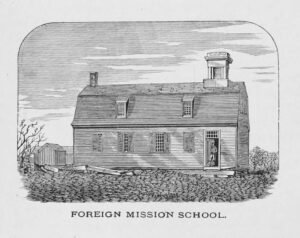
Foreign Mission School, Cornwall, Connecticut

The History of the Town of Cornwall Connecticut is a comprehensive account of the town’s evolution from colonial organization in 1731 to its involvement in national events like the Civil War. They include detailed geographical descriptions, ecclesiastical histories of local churches, and biographical sketches of families such as the Sedgwicks and Golds. The records also reflect social life, farming, early fashion, and the noteworthy Foreign Mission School.

Essex County Massachusetts Probate Records 1665-1674

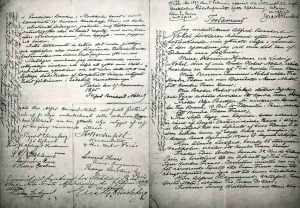
Sample Last Will and Testament

The “Governor and Company of Massachusetts Bay” established a judicial system in 1628, with a General Court in Boston and quarterly courts in major towns like Salem and Ipswich by 1635. These courts managed probate matters, and after Essex County’s formation in 1643, individual probate courts were later established in 1692. These are the probate records from 1665 to 1674, sourced from various original documents, including detailed wills and estate settlements.

Essex County Massachusetts Probate Records 1635-1664

Sample Last Will and Testament

The “Governor and Company of Massachusetts Bay” established a judicial system in 1628, with a General Court in Boston and quarterly courts in major towns like Salem and Ipswich by 1635. These courts managed probate matters, and after Essex County’s formation in 1643, individual probate courts were later established in 1692. These are the probate records from 1635 to 1664, sourced from various original documents, including detailed wills and estate settlements.

Ashfield Massachusetts Vital Records

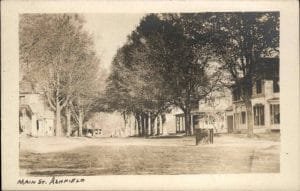
Main Street, Ashfield, Massachusetts

Alphabetical indexes to the vital records of Ashfield, Massachusetts, up to the year 1850, supplemented by information from bible records, church registers, cemetery inscriptions and other sources. PDF file is free to read and download.

Wahmaskie, A Lower Chinook Indian Genealogy

Clyde Chenois and unidentified man

This provides the descendants of Wahmaskie, a Lower Chinook Indian who married James Huckquist, a white man. Using census and vital records, as well as Native American specific records, this research provides several generations of her descendants through her son, Dixie James, who was the only surviving heir.

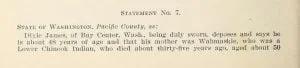
Statement No. 7 – Dixie James

Statement No 7, part 1, McChesney Rolls

The document details Statement No. 7 from Dixie James, a Lower Chinook Indian residing in Bay Center, Washington. Given to Charles E. McChesney in 1906, this sworn testimony confirms his age and lineage, identifying his mother, Wahmaskie, and noting he is her sole heir. This statement is part of the McChesney Rolls, which catalog enrolled Chinook individuals distinct from any reservations, and was published as House Document No. 133 during the 59th Congress.

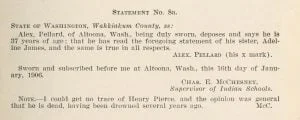
Statement No. 8a – Alexander Pellard, Jr. of Altoona

Statement No 8a

This document, communicated by the acting commissioner of Indian Affairs, addresses the rolls of specific Indian Tribes in Oregon and Washington, particularly in relation to an 1851 agreement. Statement No. 8a features Alexander Pellard, Jr., a member of the Lower Chinook Indians, affirming the accuracy of his sister Adeline’s statement in 1906. His sworn testimony, part of the McChesney Rolls, highlights the identification of enrolled Chinook individuals distinct from reservations and includes details about Pellard’s age.

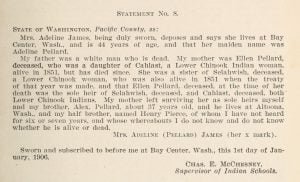
Statement No. 8 – Adeline (Pellard) James, of Bay Center

Statement No 8, McChesney Roll

Statement No. 8 is a sworn testimony by Adeline (Pellard) James, a member of the Lower Chinook tribe, recorded in 1906. In her account, she details her lineage back to her mother, Ellen Pellard, and her Lower Chinook ancestry, linking her family to the 1851 treaty with the United States, which was never ratified. Adeline discusses her deceased relatives who were alive during the treaty, their fates, and her remaining family members. This document serves as a historical reference for the Lower Chinook community.

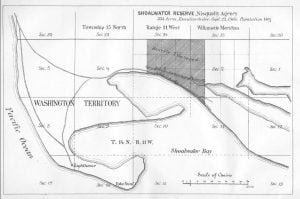
Shoalwater Bay Indian Tribe

Shoalwater Reserve, Nisqually Agency

The Shoalwater Bay Indian Tribe resides in Pacific County, Washington, near Willapa Bay. Established by a Presidential Executive Order in 1866, their reservation encompasses 355 acres. The tribe, federally recognized since 1971, comprises descendants of various Native American groups, including the Lower Chehalis and Chinook. Historically, the tribe preserved their land and cultural practices by refusing an unfavorable treaty in 1855, thereby maintaining their fishing and hunting rights. The tribe’s constitution, ratified in 1971, solidified their sovereignty and aimed to protect tribal resources and identity.

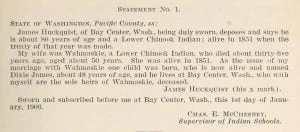
Statement No. 1 – James Huckquist, of Bay Center

Statement 1, McChesney Roll

This document outlines Statement No. 1 from James Huckquist of Bay Center, a Lower Chinook Indian, who provided testimony in January 1906 regarding his heritage and family ties. As part of the McChesney Rolls, Huckquist, approximately 80 years old, details his marriage to Wahmaskie and their surviving son, Dixie James. The statement highlights their status as heirs of Wahmaskie and links them to the 1851 treaty, separate from reservations. This testimony is recorded in House Document No. 133 from the 59th Congress.

Lower Chinook, Kathlamet, Tillamook, and Clatsop Indians, Alive in 1906

In 1906, Charles E. McChesney compiled a list of the Lower Chinook, Kathlamet, Tillamook, and Clatsop Indians, along with their heirs, who had treaty agreements with the U.S. government since 1851. The document includes numerous names and corresponding addresses across various locations, such as Oregon, Washington, and California. This registration underscores the ongoing recognition of these tribes and serves as an important historical record of their existence and relocations during that period.

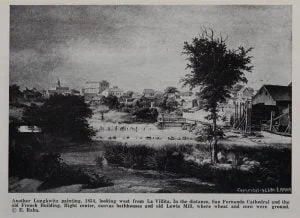
The San Antonio Story

San Antonio Texas in 1854 looking west from La Villita

“The San Antonio Story” by Sam Woolford, with contributions from his wife Bess Carroll Woolford, is a history of San Antonio, Texas. Published in 1950 by Joske’s of Texas, the book was conceived as a remedy for the lack of historical knowledge among San Antonio’s school children, a concern identified by Herbert U. Rhodius, chairman of the Municipal Advertising Commission of San Antonio in 1948-49. Rhodius and his colleagues believed that a readable and authentic history could address this educational gap, making it suitable supplementary reading for public junior high schools.

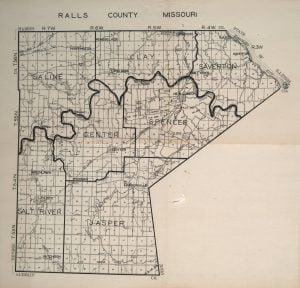
Early Settlers of Ralls County, Missouri

1930 Map of Ralls County, Missouri

The manuscript “Early Settlers of Ralls County, Missouri” compiled by Eunice Moore Anderson in 1951 serves as a valuable resource for those tracing their family genealogy in Ralls County. Divided into three parts, the compilation focuses on documenting early settlers prior to 1878, drawing from sources such as county atlases and historical records spanning Marion, Ralls, Pike Counties, and beyond. While not aiming to provide a comprehensive history, Anderson’s work catalogues pioneer families, offering insights into their origins, migration dates to Ralls County, and family connections. This structured approach, supplemented by an alphabetical index, aids researchers in navigating through ancestral records and locating further detailed information within related historical volumes.