
Families of Ancient New Haven

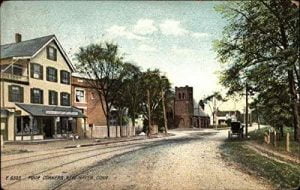
Four Corners New Haven Connecticut

The Families of Ancient New Haven compilation includes the families of the ancient town of New Haven, covering the present towns of New Haven, East Haven, North Haven, Hamden, Bethany, Woodbridge and West Haven. These families are brought down to the heads of families in the First Census (1790), and include the generation born about 1790 to 1800. Descendants in the male line who removed from this region are also given, if obtainable, to about 1800, unless they have been adequately set forth in published genealogies.
Slave Narrative of Della Fountain

Della Fountain, 69, recounts her childhood experiences and those shared by her parents about slavery. Born after the Civil War in Louisiana, she describes her grandmother’s capture in Africa and her family’s life as enslaved individuals under the care of a benevolent master, John Rogers. Della details their resourcefulness in daily life, celebrating community gatherings, and the bonds formed among families. She also reflects on the challenges after emancipation, asserting that her community adapted well despite hardship. Emancipation Day held special significance for them.

Slave Narrative of Mary Wallace Bowe

Mary Wallace Bowe, at 81, recalls her childhood during the Civil War in Durham, North Carolina. Sold with her family from one plantation to another, she describes interactions with her owners, particularly Mis Fanny and Mis Virginia. As Union soldiers approached, they hid valuables, showcasing resilience and defiance against threats. Bowe recounts a visit from a peddler who later revealed he was Abraham Lincoln in disguise, eliciting a furious reaction from Mis Virginia. This narrative captures the complexities of slavery and the Civil War’s impact on personal lives.

Biography of Green W. Fountain

Green W. Fountain, a Georgia native, settled in Pulaski County at eighteen, marrying Sarah Campbell and fathering five children. His son, William Jenks Fountain, emerged as a successful merchant and planter, enhancing the family mill and contributing to the local community through education and church involvement. Allen Turner Fountain, his grandson, furthered local education as superintendent, while also engaging in the cotton business. The Fountain lineage displays a strong commitment to community service, education, and Christian values, continuing to influence Pulaski County.

1910 Census of Fort Shaw Industrial Indian School

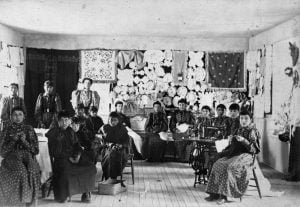
Girls at the Fort Shaw Indian School

Fort Shaw Industrial Indian Boarding School, established in Montana in 1891, ceased operations on June 30, 1910, due to decreasing enrollment. Known for its 1904 girls basketball team, which won a championship at the St. Louis World’s Fair, the school played a significant role in Indigenous education during its tenure. The 1910 census was compiled under the Department of the Interior to record enrolled students as part of Circular #448. Relevant records are preserved in the National Archives and the Family History Library.

Biography of William Fountain

William Fountain

William Fountain, born on March 3, 1838, in Madison County, Indiana, is a notable figure for his contributions to agriculture and community service. Despite being over seventy-five years old, he remains active in local affairs. He acquired 164 acres of valuable farmland and served as supervisor of his Township. Fountain was married to Susan Thompson, with whom he had five children. A devoted member of the Christian church and a lifelong Democrat, Fountain is held in high regard by his community for his dedication and integrity.