Essex County Massachusetts Probate Records 1665-1674
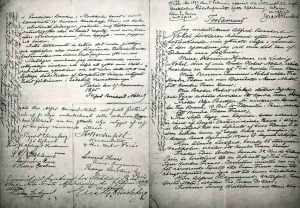
Sample Last Will and Testament

The “Governor and Company of Massachusetts Bay” established a judicial system in 1628, with a General Court in Boston and quarterly courts in major towns like Salem and Ipswich by 1635. These courts managed probate matters, and after Essex County’s formation in 1643, individual probate courts were later established in 1692. These are the probate records from 1665 to 1674, sourced from various original documents, including detailed wills and estate settlements.

Lower Chinook, Kathlamet, Tillamook, and Clatsop Indians, Alive in 1906

In 1906, Charles E. McChesney compiled a list of the Lower Chinook, Kathlamet, Tillamook, and Clatsop Indians, along with their heirs, who had treaty agreements with the U.S. government since 1851. The document includes numerous names and corresponding addresses across various locations, such as Oregon, Washington, and California. This registration underscores the ongoing recognition of these tribes and serves as an important historical record of their existence and relocations during that period.

1899 Directory for Middleboro and Lakeville Massachusetts

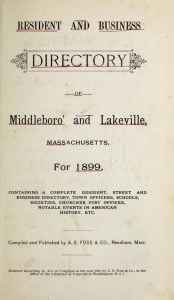
1899 Middleboro and Lakeville Massachusetts Directory Cover

The 1899 Directory for Middleboro and Lakeville, Massachusetts, compiled by A. E. Foss & Co., provides a comprehensive list of residents and businesses, alongside town officers, schools, churches, and societies. It includes notable historical events and offers a detailed account of the local community, featuring numerous surnames from both towns. This directory serves as an essential resource for understanding the demographics and social structure of Middleboro and Lakeville during that period.

Biography of John E. Casey

John E. Casey was born on January 10, 1861, in San Mateo and grew up on his father’s ranch. He initially managed the Palace Hotel Dairy in San Francisco for thirteen years before transitioning to the contracting business, focusing on street paving and notable private projects. Casey also served as a town and school trustee but declined further political roles to concentrate on his business. He married Anne Josephine Coleman and has two children, Harold and Irene.

Biography of James T. Casey

James T. Casey, born in 1861 near Colma, has been a pivotal figure in the development of San Mateo County. Growing up in a sparsely populated area, he rose from humble beginnings to own multiple butcher shops and engage in insurance and real estate. Elected as Supervisor in 1908, Casey initiated significant infrastructure improvements, replacing wooden bridges and constructing major roads. His leadership also fostered the establishment of multiple lighting districts. An active member of the community, he serves on various committees and directs local banks.

Slave Narrative of Julia Casey

Julia Casey, a former slave born in West Tennessee, recounts her life experiences. At six, the Civil War began, and her family was given to Miss Jennie McCullough as a wedding gift. Julia describes her mistress as kind and recalls having sufficient food and clothing. After the war, Julia lost many family members, including her mother. Despite lacking formal education, she learned life skills. Now, she struggles with health issues and relies on relief for support, hoping for an old-age pension.

Slave Narrative of Susan Snow

Susan Snow, born in 1850 in Wilcox County, Alabama, recounts her experiences as an ex-slave. At 87, she reflects on her upbringing, her mother’s fierce nature, and life on a plantation. Despite facing hardships, including punishments and a lack of formal education, she recalls the strong community of enslaved people and their songs. After the Civil War, Susan navigated a challenging world, ultimately finding faith and redemption. Her narrative captures personal resilience, cultural traditions, and the complexities of life in post-slavery America.

Biography of Anthony Casey

Anthony Casey, born in 1826 in Morgan County, Tennessee, was a prominent citizen known for his public spirit and patriotism. After moving to various counties in Arkansas and Missouri with his family, he became a farmer and a respected Primitive Baptist minister. Though he received limited education, he was an eloquent speaker. He served in the U.S. Army during the Civil War and had a successful agricultural career, accruing 200 acres of land. He married Sealey Self, with whom he had seven children before her death in 1890.

Biography of Dr. John M. Casey

Dr. John M. Casey, born on September 22, 1839, in Hardeman County, Tennessee, is a notable physician in Baxter County, Arkansas, esteemed for his successful medical practice and compassionate demeanor. After moving to Arkansas in 1855, he engaged in teaching before studying medicine at Popes Medical College. During the Civil War, he served as an assistant surgeon. He has held multiple positions, including postmaster, and actively participates in community and church affairs. Dr. Casey and his family are well-respected and prominent in their community.

Biography of Col. Randolph D.Casey

Colonel Randolph D. Casey, born on March 10, 1810, in Smith County, Tennessee, was a significant figure in the founding of Mountain Home, Arkansas, where he built the first house. An educated and accomplished man, he served as Hardeman County’s treasurer and clerk and later as a representative in the State Legislature. A veteran of the Civil War, he faced hardships but became a prosperous businessman. Casey was active in his community, contributing to local education and governance, and was involved in the resettlement of the Cherokee Indians. He was married three times and had several children.

Biography of William D. Casey

William D. Casey, born on November 19, 1871, in Carroll County, Missouri, became a prominent lawyer in Atchison, Kansas, after being admitted to the bar at a young age. Originally from a hardworking family, he pursued law studies and built a successful career while holding various public offices including city judge and postmaster. He was active in community and state bar associations and was involved in several fraternal organizations. Married to Ella Scott, he and his wife raised three children in Atchison.

S. E. Casey

Private S. E. Casey served in Company M of the 120th Infantry, 30th Division, after enlisting from Durham County, North Carolina, on November 1, 1915. He trained at Camp Sevier and Camp Merritt before sailing to France on May 17, 1918. During his service, he participated in key battles including Ypres, Bellicourt, Vaux Andigny, and Bohain, and also served along the Mexican border for five months. Casey returned to the U.S. on April 13, 1919, and was mustered out on April 17, 1919.

Casey, Velma Leona Hayes – Obituary

Velma L. Casey, 69, passed away on November 24, 1978, at Kittitas Valley Community Hospital. Born on September 15, 1909, in Ellensburg to James J. and Matilda Hayes, she was married twice, first to Ed Holmes in 1926 and then to Daniel Casey in 1947, both of whom predeceased her. Velma operated the Edison Hotel in Ellensburg and was a member of the Thorp Grange. She is survived by her children, grandchildren, a sister, and was preceded in death by three brothers. Funeral services will be held at Evenson Chapel.

Surnames Camp to Cummins

This document contains genealogical statements regarding various individuals and families of Creek, Choctaw, Chickasaw, and Mississippi Choctaw descent who sought recognition and enrollment in tribal rolls. The records, primarily from 1909 reports, detail claimants’ ancestry, enrollment issues, and tribal affiliations. Many individuals were denied enrollment due to factional disputes, legal technicalities, or failure to apply within deadlines. The document includes references to official reports and affidavits, offering insights into the complexities of Native American citizenship and land rights during the early 20th century.

Oscar Casey, Chickasaw

This record details the applications of Oscar Casey, Scott Casey (Walter Winfield Casey), and others for Chickasaw citizenship through the Dawes Commission (No. 191) in 1896. Claiming descent from Tempie Thomas, a Chickasaw woman, and William Casey, they presented affidavits and a prior Chickasaw court petition. Their application was denied, and no appeal was filed. Later, Scott Casey sought enrollment for himself and his children in 1902 but was rejected due to jurisdictional constraints. Similar cases involving Catherine Whittle, Sarah Whittle, and Eliza Jane Pearce for Choctaw citizenship are also documented, detailing legal proceedings and supporting testimony.

Rough Riders

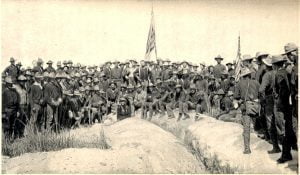
Rough Riders

The compiled military service records of 1,235 Rough Riders, including Theodore Roosevelt, have been digitized. Each record features individual jackets detailing the soldier’s name, organization, rank, and medical records. The records also contain personal information and documentation descriptions. Discharges occurred for various reasons, such as age, ability, discipline issues, or hardship. This initiative provides significant insights into the personnel of the 1st U.S. Volunteer Cavalry during the Spanish-American War.