Biographical and Portrait Cyclopedia of Chester County, PA

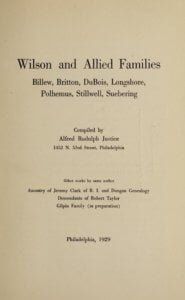
Title Page for Biographical and Portrait Cyclopedia of Chester County Pennsylvania

An introductory page for the Biographical and Portrait Cyclopedia of Chester County, Pennsylvania, this volume includes a historical sketch of the county by Samuel T. Wiley and more than 500 biographical sketches of prominent local men and leading citizens. It also outlines Chester County’s colonial origins, early boundaries, and its role in the formation of neighboring counties.

Gleanings from English Records about New England Families

Gleanings from English Records about New England Families

The classic work often cited by more contemporaneous authors on early New England families and the records of them found within the Principal Probate Registry, Somerset House, Strand, the Public Record Office, Fetter Lane, and the British Museum, Bloomsbury, while on a visit in London during the summer and fall of 1879.

Ancient Tumuli on the Savannah River

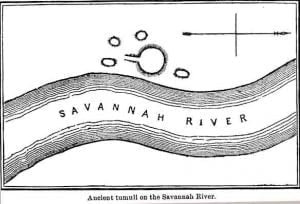
Ancient Tumuli on the Savannah River

In 1776, William Bartram explored the Savannah River, noting impressive ancient earthworks near Fort James, including a conical mound and terraced structures. Despite the passage of time and agricultural encroachment, the largest mound remained largely intact. Bartram speculated it may have served as a refuge or a temple for sun worship among the indigenous tribes, who were skilled agriculturalists. In recent visits, while many features eroded, evidence of ancient habitation and craftsmanship persisted, revealing the rich cultural history of the region’s early inhabitants.

Choctaw Indian Mounds

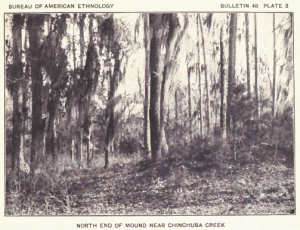
Bayou Lacomb Choctaw Mound

H. F. Buckner references Mr. Maxwell’s historical address, discussing the advanced military engineering of the Mound Builders in Carthage, Alabama, contrasting it with the warfare strategies of tribes encountered by De Soto. The mounds are suggested to have served as sepulchers for ancient leaders, drawing connections to traditions of the Choctaw and other tribes. Buckner emphasizes the need for further archaeological investigation to establish the Mound Builders’ link to North American Indians, particularly the Choctaws, who practiced distinct burial customs.

Journey of Bartram Through Alabama

History of Alabama and incidentally of Georgia and Mississippi, from the earliest period

William Bartram traveled through the Creek Nation and Mobile, where he observed a town with a mix of inhabited and abandoned structures, primarily occupied by the French and British settlers. He noted the prominent Indian trade conducted by Swanson and McGillivray and described the well-managed plantations along the Tensaw River. In Pensacola, Bartram received warm hospitality from local officials. His journey also included visits to various plantations and Indian towns, culminating with his return to Mobile and further travels into the Creek territory with a caravan of traders.